


 购物车
购物车 个人中心
个人中心

Тринадцята казка (Trinadcjata kazka)
¥27.22
Одного дня життя дев’ятир?чного хлопчика повн?стю зм?нилося. Дитяча ц?кав?сть обернулася страшною пожежею, внасл?док яко? хлопчик отримав оп?ки майже усього т?ла. Пробувши у л?карн? п’ять м?сяц?в, в?н пережив ампутац?ю пальц?в та бол?сну реаб?л?тац?ю. Але якщо рубц? на т?л? можна прикрити одягом, то що робити ?з душевними шрамами? Чи можна п?сля цього мр?яти про повноц?нне щасливе життя? ?У полум’?? — це книга-спов?дь про незламн?сть, пошук себе ? велику роботу на шляху до усп?ху. Вона написана на основ? реальних под?й, як? зм?нили життя багатьох людей.

Political Economy of Pipelines
¥576.83
With global demand for energy poised to increase by more than half in the next three decades, the supply of safe, reliable, and reasonably priced gas and oil will continue to be of fundamental importance to modern economies. Central to this supply are the pipelines that transport this energy. And while the fundamental economics of the major pipeline networks are the same, the differences in their ownership, commercial development, and operation can provide insight into the workings of market institutions in various nations.?Drawing on a century of the world's experience with gas and oil pipelines, this book illustrates the importance of economics in explaining the evolution of pipeline politics in various countries. It demonstrates that institutional differences influence ownership and regulation, while rents and consumer pricing depend on the size and diversity of existing markets, the depth of regulatory institutions, and the historical structure of the pipeline businesses themselves. The history of pipelines is also rife with social conflict, and Makholm explains how and when institutions in a variety of countries have controlled pipeline behavior-either through economic regulation or government ownership-in the public interest.
Economic Regulation and Its Reform
¥906.54
The past thirty years have witnessed a transformation of government economic intervention in broad segments of industry throughout the world. Many industries historically subject to economic price and entry controls have been largely deregulated, including natural gas, trucking, airlines, and commercial banking. However, recent concerns about market power in restructured electricity markets, airline industry instability amid chronic financial stress, and the challenges created by the repeal of the Glass-Steagall Act, which allowed commercial banks to participate in investment banking, have led to calls for renewed market intervention.Economic Regulation and Its Reform collects research by a group of distinguished scholars who explore these and other issues surrounding government economic intervention. Determining the consequences of such intervention requires a careful assessment of the costs and benefits of imperfect regulation. Moreover, government interventions may take a variety of forms, from relatively nonintrusive performance-based regulations to more aggressive antitrust and competition policies and barriers to entry. This volume introduces the key issues surrounding economic regulation, provides an assessment of the economic effects of regulatory reforms over the past three decades, and examines how these insights bear on some of today's most significant concerns in regulatory policy.
Reluctant Capitalists: Bookselling and the Culture of Consumption
¥229.55
Over the past half-century, bookselling, like many retail industries, has evolved from an arena dominated by independent bookstores to one in which chain stores have significant market share. And as in other areas of retail, this transformation has often been a less-than-smooth process. This has been especially pronounced in bookselling, argues Laura J. Miller, because more than most other consumer goods, books are the focus of passionate debate. What drives that debateAnd why do so many people believe that bookselling should be immune to questions of profit?In Reluctant Capitalists, Miller looks at a century of book retailing, demonstrating that the independent/chain dynamic is not entirely new. It began one hundred years ago when department stores began selling books, continued through the 1960s with the emergence of national chain stores, and exploded with the formation of "e;superstores"e; in the 1990s. The advent of the Internet has further spurred tremendous changes in how booksellers approach their business. All of these changes have met resistance from book professionals and readers who believe that the book business should somehow be "e;above"e; market forces and instead embrace more noble priorities.Miller uses interviews with bookstore customers and members of the book industry to explain why books evoke such distinct and heated reactions. She reveals why customers have such fierce loyalty to certain bookstores and why they identify so strongly with different types of books. In the process, she also teases out the meanings of retailing and consumption in American culture at large, underscoring her point that any type of consumer behavior is inevitably political, with consequences for communities as well as commercial institutions.

Collateral Knowledge
¥265.87
It has been more than twelve years since this project began.This book draws upon seventeen months of fieldwork conducted in Tokyo between summer 1997 and fall 2001 followed by frequent research visits in the years that followed.Research and writing were supported by the American Bar Foundation, a Howard Fellowship, an American Council of Learned Societies Fellowship, a residential fellowship at Girton College, Cambridge, and research grants from the Social Science Research Council, the Japan Foundation, and the National Endowment for the Humanities.During that time, I held visiting positions at the University of Tokyo Faculty of Law, the Department of Anthropology at Keio University, and the Institute of Social Science at the University of Tokyo.I am grateful to each of these institutions for their hospitality, and in particular to professors Yoshiko Terao, Satoshi Tanahashi, and Yuji Genda, respectively, for making each of these affiliations possible.
SuperFreakonomics
¥95.11
The New York Times best-selling Freakonomics was a worldwide sensation, selling over four million copies in thirty-five languages and changing the way we look at the world. Now, Steven D. Levitt and Stephen J. Dubner return with SuperFreakonomics, and fans and newcomers alike will find that the freakquel is even bolder, funnier, and more surprising than the first. Four years in the making, SuperFreakonomics asks not only the tough questions, but the unexpected ones: What's more dangerous, driving drunk or walking drunkWhy is chemotherapy prescribed so often if it's so ineffectiveCan a sex change boost your salarySuperFreakonomics challenges the way we think all over again, exploring the hidden side of everything with such questions as: How is a street prostitute like a department-store SantaWhy are doctors so bad at washing their handsHow much good do car seats doWhat's the best way to catch a terroristDid TV cause a rise in crimeWhat do hurricanes, heart attacks, and highway deaths have in commonAre people hard-wired for altruism or selfishness?Can eating kangaroo save the planetWhich adds more value: a pimp or a RealtorLevitt and Dubner mix smart thinking and great storytelling like no one else, whether investigating a solution to global warming or explaining why the price of oral sex has fallen so drastically. By examining how people respond to incentives, they show the world for what it really is good, bad, ugly, and, in the final analysis, super freaky. Freakonomics has been imitated many times over but only now, with SuperFreakonomics, has it met its match.
The Cycle of Leadership
¥101.00
In The Leadership Engine Noel Tichy showed how great companies strive to create leaders at all levels of the organization and how those leaders actively develop future generations of leaders. In this new book he takes the theme further showing how great companies and their leaders develop their business knowledge into achable points of view pend a great portion of their time giving their learnings to others sharing best practices and how they in turn learn and receive business ideas/knowledge from the employees they are teaching. Calling this exchange a virtuous teaching cycle Professor Tichy shows how business builders from Jack Welch at GE to Joe Liemandt at Trilogy create organizations that foster this knowledge exchange and how their efforts result in smarter more agile companies and winning results. Some of these ideas were showcased in Tichy's recent Harvard Business Review article entitled Ordinary Boot Camp. Using examples from GE Ford Dell Southwest Airlines and many others Tichy presents and analyzes these principles in action and shows how managers can begin to transform their own businesses into teaching organizations and consequently better performing companies

Leadership BS
¥168.37
Too many leadership failures. Too many career derailments. Too many toxic workplaces filled with disengaged, distrustful employees. Jeffrey Pfeffer, a professor at the Stanford Graduate School of Business and the author of Power, offers an incisive dissection of the multibillion-dollar leadership industry and presents ways to fix its many problems.In Leadership BS, Jeffrey Pfeffer pulls back the curtain, showing how leadership really works and why so many leadership development efforts fail. In this forthright and persuasive critique, Pfeffer argues that much of the oft-repeated wisdom about leadership is based more on hope than reality, on wishes rather than data, on beliefs instead of science. In an age when transparency is considered a virtue, Pfeffer makes the case that strategic misrepresentation isn't as harmful as you think, that breached agreements are a part of business, that immodesty is frequently a path to success, and that relying on the magnanimity of your boss is a bad bet.Using research findings from social psychology, sociology, and sociobiology, and filled with practical, actionable advice, Leadership BS encourages readers to finally stop accepting sugar-laced but toxic potions as cures and to understand the realities of organizations and human behavior.To make real change, Pfeffer argues, we need to get beyond the half-truths and self-serving stories that are so prominent in the mythology of leadership. In calling BS on so much conventional wisdom, Leadership BS offers both a provocative, scientific examination of how leadership actually works and how it doesn't and a pre*ion for leaders future and present.
Risk & Grow Rich
¥140.08
With her skill in selling real estate, her expertise in marketing, and her drive to succeed, Kendra Todd has mapped out an exciting and lucrative future for herself one that included taking the right kind of risks, profiting from them, and sharing her knowledge with others. Todd understands that the one thing that keeps people from making the big, bold moves that can improve their lives is a fear of risk, even more than lack of capital. The willingness to try new and different things, and the ability to keep your head on straight while your heart is pounding, is something that Todd knows well. Without risk, she doesn't have a business. Todd will address how men and women view risk from opposite sides of the galaxy, how anyone can become an entrepreneur, how you can set yourself up for success and what the ten steps are for turning risk into opportunity. With quizzes to test what kind of risk taker you are, and examples of successful risks that paid off, Todd is poised to become the hot voice of investment to her generation.
Profits Aren't Everything, They're the Only Thing
¥94.10
When small- and medium-sized business owners first hear George Cloutier's rules, they often think he's a madman. His controversial rules for doing business rules that aren't taught at Harvard Business School include:The best family business has one member.Weekends are for working, not playing golf or coaching.Never pay your vendors on time.Wear your control freak badge with pride.Quit denial: if your business is failing during a recession, it's your fault. As the founder and CEO of American Management Services, Cloutier has emerged as "the leading advocate for small business" (Reuters), having spent over thirty years guiding business owners through the tough choices that line the road to profitability. He and his company have worked with more than six thousand companies, averting certain ruin for some and generating seemingly impossible growth and profitability for others.Cloutier graduated from Harvard College and Harvard Business School, but the lessons in this book aren't from there. Unlike his classmates, most of whom headed straight to Wall Street, Cloutier has been on the docks at 2 a.m. counting heads of lettuce for food distributors to make sure nothing would disappear without a waybill. He's spent long, overnight hours in truck stops, making sure sticky fingers stayed out of the tills. Cloutier and his colleagues at American Management Services become personal pitt bulls to the CEOs who hire them, doing whatever it takes to bring their clients' businesses back into long-term profitability.Profits Aren't Everything, They're the Only Thing is the long- overdue wake-up call for 23 million small- and midsize business owners across America. This book serves up the hard-boiled, unadulterated truth to aspiring and established entrepreneurs, without apologies. His no-nonsense advice may be hard to hear at times, but it works.
Two Awesome Hours
¥94.10
Whether we love our jobs or not, the amount of work on our plate has reached unsustainable levels. We start each workday anxious about how we will get it all done, and which important tasks will have to be sacrificed again so we can keep our heads above water. We often respond to our out-of-control to-do lists by focusing on being more efficient trying to get more done in less time.According to Josh Davis, Ph.D., we're going about it the wrong way. The answer is not to get more done faster, but rather to create the conditions for at least two awesome hours of peak productivity each day.Neuroscience and psychology research is revealing what those conditions are. Drawing on this research, Davis explains that our minds operate according to complex factors that, when leveraged the right way, can make us truly effective. Davis shows us five deceptively simple strategies to create the conditions for incredible productivity and to restore sanity and balance to our lives: Maximize the moments in our day when we are between tasks, intentionally choosing what to tackle next Schedule tasks based on their cognitive and emotional demands Learn how to direct attention Feed and move our bodies for short-term benefit Identify how our environment affects our focus and alertness We are capable of impressive feats of comprehension, motivation, and performance when our psychological and biological systems are functioning optimally. Two Awesome Hours will show us how to be our most productive every day.
Four Seconds
¥94.10
All too often our best efforts to accomplish the things we want most to do our jobs well, to make meaningful contributions at home and at work, to have satisfying relationships with loved ones, friends, neighbors, and coworkers are built on bad habits that sabotage us. We feel overwhelmed by our increasingly large to-do list, so we automatically multitask to get more done and end up more stressed and more overloaded. We say something with the hopes of impressing the other person, but instead of end them then spend days trying to repair the damage. We give what we think is a pep talk to our team but they walk away demotivated.How can we be most effective and productive in a world that moves too fast and demands so much of us?In Four Seconds, Peter Bregman shows that the answer is to pause for as few as four seconds the length of a deep breath to replace bad habits and reactions with more productive behaviors. In his trademark style of blending personal anecdotes with practical advice, Bregman reveals some of our most common counter-productive tendencies and describes counter-intuitive strategies for acting more intentionally, including: Why setting goals can actually harm your performance How to use strategic disengagement to recover focus and willpower Why listening not arguing is the best strategy for changing someone's mind How taking responsibility for someone else's failure can actually help you succeed Drawn from Bregman's hugely popular Harvard Business Review blog, this engaging and wise book provides simple solutions to create the results you want without the stress.
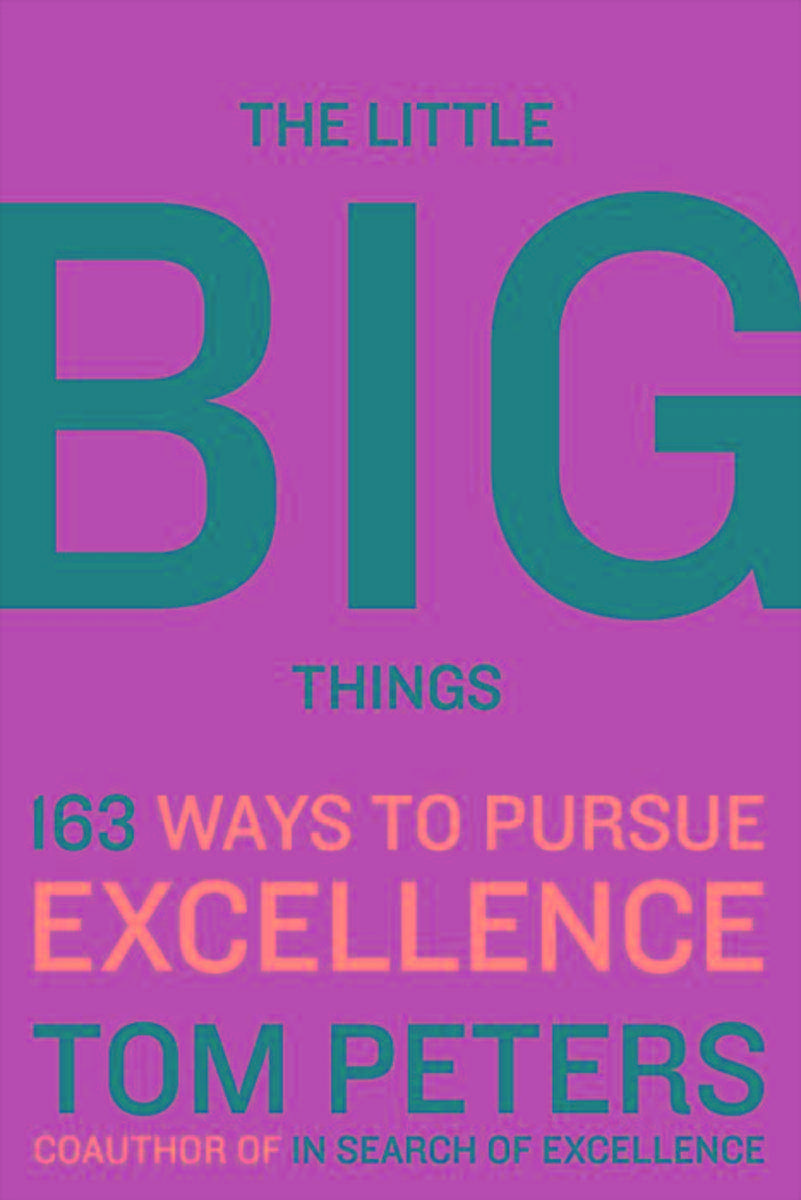
The Little Big Things
¥94.10
#131 The Case of the Two-Cent CandyYears ago, I wrote about a retail store in the Palo Alto environs a good one, which had a box of two-cent candies at the checkout. I subsequently remember that "little" parting gesture of the two-cent candy as a symbol of all that is Excellent at that store. Dozens of people who have attended seminars of mine from retailers to bankers to plumbing-supply-house owners have come up to remind me, sometimes 15 or 20 years later, of "the two-cent candy story," and to tell me how it had a sizable impact on how they did business, metaphorically and in fact.Well, the Two-Cent Candy Phenomenon has struck again with oomph and in the most unlikely of places.For years Singapore's "brand" has more or less been Southeast Asia's "place that works." Its legendary operational efficiency in all it does has attracted businesses of all sorts to set up shop there. But as "the rest" in the geographic neighborhood closed the efficiency gap, and China continued to rise-race-soar, Singapore decided a couple of years ago to "rebrand" itself as not only a place that works but also as an exciting, "with it" city. (I was a participant in an early rebranding conference that also featured the likes of the late Anita Roddick, Deepak Chopra, and Infosys founder and superman N. R. Narayana Murthy.)Singapore's fabled operating efficiency starts, as indeed it should, at ports of entry the airport being a prime example. From immigration to baggage claim to transportation downtown, the services are unmatched anywhere in the world for speed and efficiency.Saga . . . Immigration services in Thailand, three days before a trip to Singapore, were a pain. ("Memorable.") And entering Russia some months ago was hardly a walk in the park, either. To be sure, and especially after 9/11, entry to the United States has not been a process you'd mistake for arriving at Disneyland, nor marked by an attitude that shouted "Welcome, honored guest."Singapore immigration services, on the other hand:The entry form was a marvel of simplicity. The lines were short, very short, with more than adequate staffing.The process was simple and unobtrusive.And:The immigration officer could have easily gotten work at Starbucks; she was all smiles and courtesy.And:Yes!Yes!And . . . yes!There was a little candy jar at each Immigration portal!The "candy jar message" in a dozen ways:"Welcome to Singapore, Tom!! We are absolutely beside ourselves with delight that you have decided to come here!"Wow!Wow!Wow!Ask yourself . . . now:What is my (personal, department, project, restaurant, law firm) "Two-Cent Candy"?Does every part of the process of working with us/me include two-cent candies?Do we, as a group, "think two-cent candies"?Operationalizing: Make "two-centing it" part and parcel of "the way we do business around here." Don't go light on the so-called substance but do remember that . . . perception is reality . . . and perception is shaped by two-cent candies as much as by that so-called hard substance.Start: Have your staff collect "two-cent candy stories" for the next two weeks in their routine "life" transactions. Share those stories. Translate into "our world." And implement.Repeat regularly.Forever.(Recession or no recession you can afford two cents.)(In fact, it is a particularly Brilliant Idea for a recession you doubtless don't maximize Two-Cent Opportunities. And what opportunities they are.)
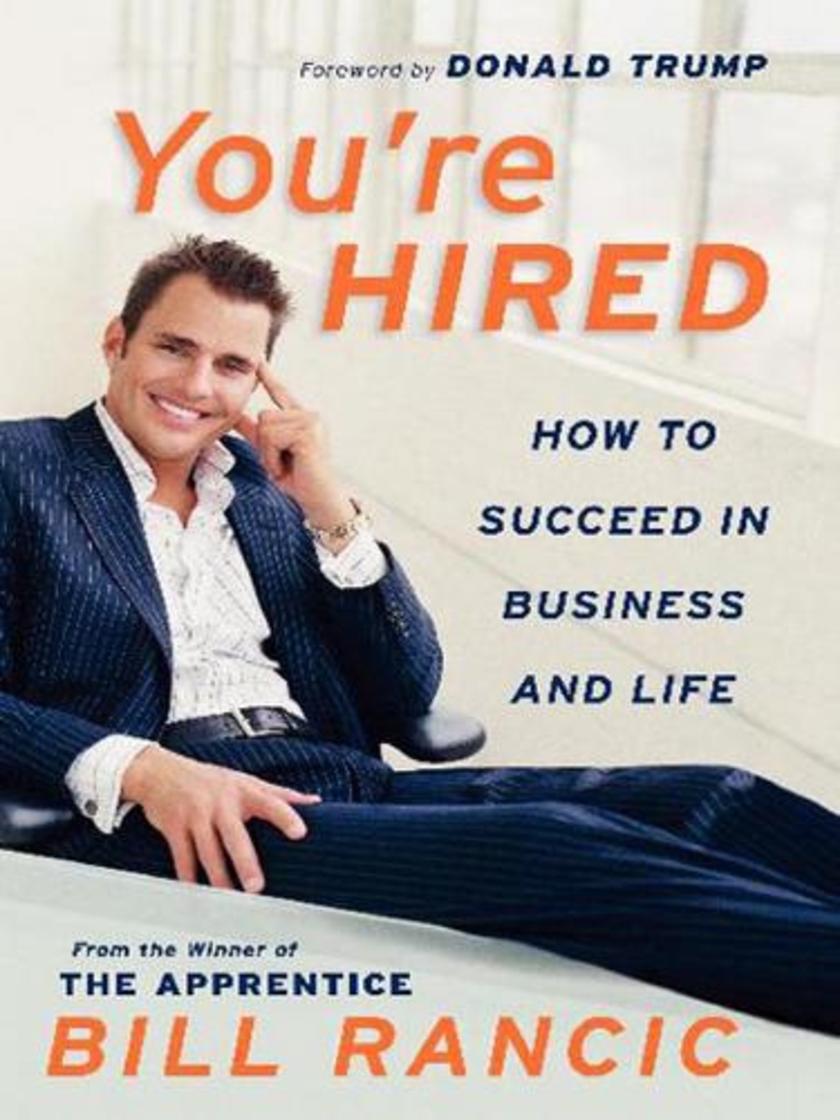
You're Hired
¥129.07
*Author will be named after the final show is aired in Australia*The winner of the hit TV show, The Apprentice, shows how anyone can become their own personal success in both business and life, using his or her own experiences as a self-made entrepreneur,his or her work ethic, top business strategies, and lessons learned competing on the show, working for Donald Trump and winning the most talked about reality shows in years.Foreword by Donald Trump.
Jamming
¥90.73
In today's competitive environment, creativity is no longer an option. Companies that understand how to manage creativity in their people, organize for creative results and willingly implement good new ideas will triumph.In Jamming, John Kao also offers an approach that demystifies a topic traditionally confounding to businesspeople everywhere. He begins by showing how creativity, like the musical discipline of jazz, has a vocabulary and a grammar. It is a process, and because of that it can be observed, analyzed, understood, replicated, taught and managed. He explains how creativity needs a particular environment in which to blossom and grow. Like musicians in a jam session, a group of businesspeople can take an idea, challenge one another's imagination and produce an entirely new set of possibilities. Kao reveals how managers can stimulate creativity in their employees, explores the impact of information technology on creativity, looks at the globalization of creativity and shows how to ensure the loyalty of people who design, build and deliver today's vital products and services.
The Great Hangover
¥99.65
Vanity Fair presents 21 true stories of the new hard times Where did all the billions goCommissioned by the editors at Vanity Fair magazine, The Great Hangover is an eye-opening collection of essays on the global economic crisis by fifteen of the most respected contemporary business writers in America, including:Bryan Burrough (Barbarians at the Gate) on the atmosphere of uncertainty and fear that preceded the demise of Bear Stearns . . . Michael Lewis (Liar's Poker) on Iceland's bizarre national implosion . . . Mark Bowden (Black Hawk Down) on the decline of The New York Times and the threat to the ailing newspaper industry . . . Mark Seal on the defining figure of the seriously tarnished New Gilded Age: the Grand Master of Greed, Bernie Madoff . . . Along with compelling and sometimes hair-raising pieces from a dozen other Vanity Fair contributors on the recent recession's myriad villains and victims and the worldwide impact of the financial downturn.
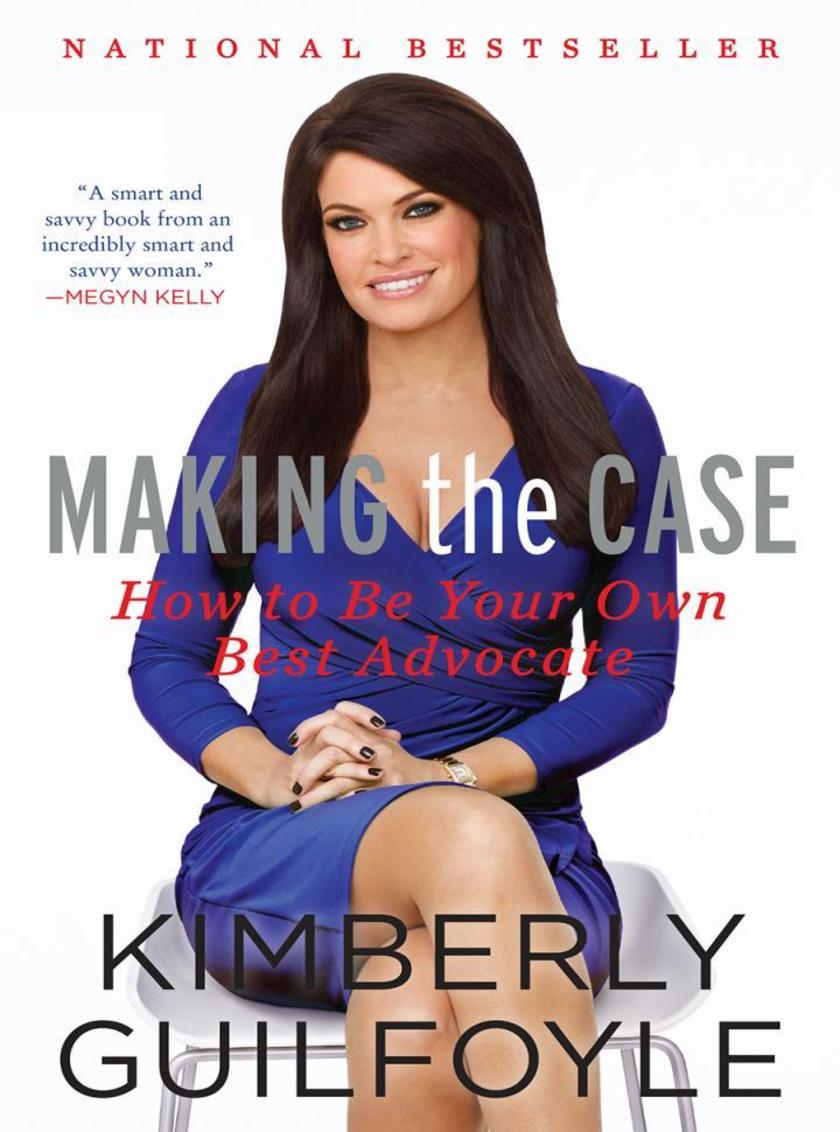
Making the Case
¥88.56
After an eleven-year-old Kimberly Guilfoyle lost her mother to leukemia, her dad wanted her to become as resilient and self-empowered as she could be. He wisely taught her to build a solid case for the things she wanted. Creating a strong logical argument was the best way to ensure she could always meet her needs. That childhood lesson led her to become the fearless advocate and quick-thinking spitfire she is today. In Making the Case, Guilfoyle interweaves stories and anecdotes from her life and career with practical advice that can help you win arguments, get what you want, help others along the way, and come out ahead in any situation.Learning how to state your case effectively is not just important for lawyers it's something every person should know how to do, no matter what stage of life they are in. From landing her dream job right out of school, switching careers seamlessly midstream, and managing personal finances for greater growth and stability to divorcing amicably and teaching her young child to advocate for himself, Guilfoyle has been there and done it. Now she shares those stories, showing you how to organize your thoughts and plans, have meaningful discussions with the people around you, and achieve your goals in all aspects of your life. You'll also learn the tips and strategies that make the best advocates so successful, some of which come directly from courtroom scenarios where the stakes are highest.Told in her winning and humorous voice, Guilfoyle's experiences and the wisdom drawn from them are a ready guide to help you reach your potential and live a fulfilling and happy life at work and at home.
The Girl's Guide to Starting Your Own Business
¥90.77
Geared toward the unique challenges faced by self-employed businesswomen and updated for the social media-driven, post-financial crisis world The Girl's Guide to Starting Your Own Business offers solutions and advice for handling a range of issues, including how to write a business plan, how to secure funding, and how to hire (and fire) employees. Caitlin Friedman and Kimberly Yorio share practical information drawn from their own extensive experience in the public relations, marketing, and consulting fields. Their concise and engaging advice is explained through entertaining tips, lists, and quizzes that speak directly to women who are dreaming of starting, or have already started, their own businesses.
The House of Harper
¥95.39
The epic story of a publishing giantIn 1817 four young brothers opened a printing shop in downtown Manhattan. Two centuries later, their small enterprise has grown into one of the world's largest and most successful publishing houses. The Harper brothers and their sons and successors created a grand cultural institution that has become a cornerstone of America's literary heritage.Eugene Exman's classic history, published in 1967, The House of Harper is the fascinating account of the birth and growth of a magnificent literary empire. Richly detailed, it is filled with portraits of dynamic publishers and editors, with remarkable anecdotes about the legendary artists and authors whose works they championed and brought to the general public Charles Dickens, George Eliot, Herman Melville, Mark Twain, Winslow Homer, Henry James, Edna St. Vincent Millay, Thomas Wolfe, and Aldous Huxley, to name but a few. More than the enthralling saga of a successful business venture, it is a story of the shaping of American literature and culture.

The E-Myth Contractor
¥95.39
With The E-Myth Contractor, Michael E. Gerber launches a series of books that apply the E-Myth to specific types of small businesses. The first is aimed at contractors.This book reveals a radical new mind-set that will free contractors from the tyranny of an unprofitable, unproductive routine. With specific tips on topics as crucial as planning, money and personnel management, The E-Myth Contractor teaches readers how to: Implement the ingenious turnkey system of management a means of creating a business prototype that reflects the business owner's unique set of talents and replicating and distributing them among employees and customers. Recognise and manage the four forms of money income, profit, flow and equity. Harness the power of change to expand the company. The book also provides help on a larger level, leading readers towards becoming business visionaries by relinquishing tactical work and embracing strategic work, by letting go to gain control. Once put into action, Gerber's revolutionary ideas promise not only to help contractors build successful businesses, but successful lives as well.

The Tyranny of Oil
¥90.77
Who's really driving oil and gas pricesHow much oil is leftHow far will Big Oil go to get it, and at what cost to the environment, human rights, the economy, worker safety, public health, and democracy?Here, at last, are the answers we've been looking for and the inside story on Big Oil.In The Tyranny of Oil, Antonia Juhasz investigates the true state of the companies collectively known as "Big Oil," uncovering their unparalleled global financial power, their political dominance, and their increasingly destructive plans for the future. And she tells us what we can do about it.A tool for meaningful change that blends history, original investigative research and reporting, candid interviews with key insiders, and a unique focus on activism, The Tyranny of Oil is required reading for every concerned global citizen.


