


 购物车
购物车 个人中心
个人中心

Curriculum Focus - History KS1
¥176.58
Part of a popular series that will inspire the teachers, especially the non-specialists, to teach history and geography with confidence. Each book contains: comprehensive background information, extensive photocopiable resources such as pictures, charts and diagrams, detailed lesson plans, differentiated activities at three ability levels, ideas for support and extension, suggestions for incorporating ICT. Famous Journeys chapters include: Roald Amundsen, Amelia Earhart, Ellen MacArthur and Neil Armstrong.

Un Corazón de Ranita. 3° volumen. El vals estelar de la vida
¥53.30
Pe Nicolae Breban l-am citit, din primul an de facultate, a?a cum i-am citit pe marii scriitori: de la primul la ultimul titlu. ?n cazul s?u, mai mult poate dec?t ?n al oric?rui alt romancier postbelic, acest exerci?iu de fidelitate este obligatoriu. Romanele sale nu sunt indiferente unul fa?? de altul, ci comunic?, toate, ?ntre ele, alc?tuind un sistem omogen, ?n care fiecare pies? este necesar? ?i contribuie la armonia ?ntregului. De altfel, Breban a avut ?nc? de la primele c?r?i ambi?ia operei monumentale, displ?c?ndu-i fragmentarismul ?i proiectele care ?ncep ambi?ios, dar sucomba levantin. Romanele care au ap?rut p?n? ?n 1990, dup? care cititorii s?i fideli de p?n? atunci ?nc? mai suspin? nostalgic, ?n care marile sale teme sunt clar delimitate, reprezint? un reper nu doar pentru literatura rom?n? a ultimei jum?t??i de secol, ci ?i pentru opera ulterioara a scriitorului. C?r?ile publicate ?n ultimii dou?zeci ?i ceva de ani pierd mult dac? sunt citite ??n sine“, f?r? a fi raportate la ?ntregul operei brebaniene. Mai mult dec?t ?nainte, scriitorul a ?nceput s? se ?ntoarc? din ce ?n ce mai des la propriile crea?ii, s? le lege ?ntr-un silogism epic nu ?ntotdeauna facil de sesizat. Cine nu proiecteaz? ?ns? personajele, cazurile contorsionate, ac?iunile din ultimele ispr?vi epice ale autorului la vechile sale realiz?ri pierde imaginea de ansamblu, pierde poate chiar ?i ?calea de acces“ c?tre nucleul acestei opere majore. (Bogdan Cre?u).Ai o imens? ?tabl? de ?ah“, care se ?nt?mpl? s? fie lumea, manevrat? de dou? sisteme aparent antagonice (dar care se ?n?eleg foarte bine, fiindc? au fost de aceea?i parte a frontului ?n r?zboi), c?rora li se subsumeaz? unele subsisteme cu interese colaterale (cum a fost Lumea a treia sau alian?a ??rilor nealiniate). Dincolo de milioanele de mici episoade locale sau regionale care coloreaza jocul, unde se consuma nevroze f?r? num?r ?i mistific?ri extrem de sofisticate, dou? mize profunde r?m?n mereu pe tabl?, estompate ca relevan?? sau voit obscurizate, pentru a nu le vedea adversarul: planetarizarea surselor de energie ?i necesitatea cre?rii unui sistem inovator de control informa?ional, din care va ie?i, ?n cele din urm?, lumea Internetului de azi. Adic?, daca ne g?ndim bine, chiar cele dou? domenii ?n care comuni?tii au fost pu?i s? piard? partida, intr?nd apoi ?n colaps sistemic ?i ?n insolven??. Aminti?i-v? de ce se spunea dup? '89: c? Ceau?escu a fost mefient fa?? de computere. N-a fost singurul, din lumea comunista. Q.e.d. (?tefan Borbely)
Rouletabille chez le Tsar
¥8.82
Et, cette nuit, cette nuit où elle sent Rouletabille quelque part, autour d’elle… voilà, vraiment, qu’elle est moins inquiète… et pourtant les policiers ne sont plus là !… Aurait-il raison, ce petit ?… Il est certain (elle ne saurait se le dissimuler) qu’elle est beaucoup plus tranquille… plus tranquille maintenant que les policiers ne sont plus là… elle ne passe pas son temps à rechercher leurs ombres, dans l’ombre… à t?ter l’ombre… les fauteuils… les canapés… à secouer leur torpeur… à les appeler tout bas, par leur petit nom et le petit nom de leur père… à leur promettre le natcha? important s’ils veillent bien… à les compter, pour savoir où ils sont tous… et, tout à coup, à leur jeter en plein visage le jet de lumière de sa petite lanterne sourde pour être s?re, bien s?re, qu’elle a en face d’elle, un de la police… et non point un autre… un autre avec une petite bo?te infernale sous le bras !…
![Celtic Fairy Tales: [Illustrated & Selected & Edited]](https://platform-permanent.ddimg.cn/pt-media-info-soa-resource/digital/product/44/60/1901164460_ii_cover.jpg?version=8660d481-fa6c-4d8e-9092-d4f7d2d40d87)
Celtic Fairy Tales: [Illustrated & Selected & Edited]
¥28.29
This Book, Originally published in 1892, this beautifully written collection of Celtic fairy tales is bound to enrapture. Filled to the brim with, as Joseph Jacob says, "both the best, and the best known folk-tales of the Celts," this is the first of his two collections of Celtic folklore. Included in this charming collection are tales of romance, tales that will make you laugh, and tales with sadness intertwined. ??The twenty-six story medley includes:??- Guleesh"?- Conal Yellowclaw"?- The Shepherd of Myddvai"?- The Story of Deirdre"?- The Wooing of Olwen"?- The Sea-Maiden"?- Jack and his Master"?- Beth Gellert"?- The Battle of the Birds"?- The Lad with the Goat-Skin"?And many more!??The magic of these stories is brought to life with fantastical sketches by John D. Batten that are interspersed throughout the pages, including eight full-page illustrations. The wonder, witchcraft, and magic found in Celtic tales are sure to enrapture all readers, young and old alike.

Sudbonosni susret
¥37.20
Ljubavni roman Melani Foster koji ?e vas ostaviti bez daha!
Vino i ljubav: 3D+
¥37.20
Mogu li se pomiriti dva, naizgled tako razli?ita, sveta? Da li je ljubav prepreka ili jedini mogu?i put?
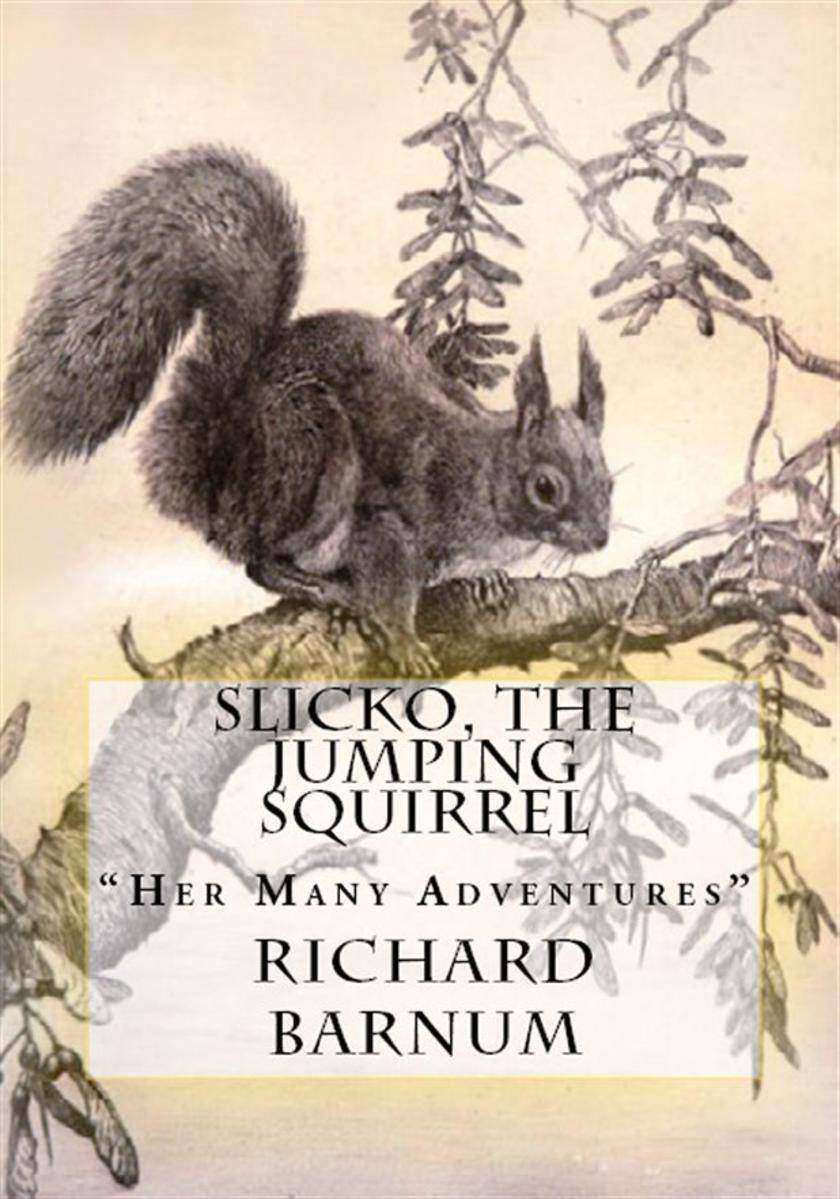
Slicko, The Jumping Squirrel: "Her Many Adventures"
¥18.88
Half way up the side of a tall tree there was a round hole in the trunk. The hole was lined with soft, dried leaves, and bits of white, fluffy cotton, from the milkweed plant. And, if you looked very carefully at the hole, you might see, peering from it, a little head, like that of a very small kitten, and a pair of very bright eyes.??But it was not a kitten that looked from the little hole in the trunk of the tree. Kitties can climb trees, but they do not like to live in them. They would rather have a warm place behind the stove, with a nice saucer of milk.??Now if I tell you that the little creatures who lived in this hole-nest had big, fluffy tails, and that they could sit up on their hind legs, and eat nuts, I am sure you can guess what they were.??Squirrels! That’s it! In the nest, half way up the big tree in the woods, lived a family of gray squirrels, and I am going to tell you about them, or, rather, more particularly, about one of the little girl squirrels whose name was Slicko.
Fairy Tales of Hans Christian Andersen: [Complete & Well Illustrated "126 Fairy"
¥65.09
ANDERSEN's FAIRY TALES, which have been translated into more than "125 languages", have become culturally embedded in the West's collective consciousness, readily accessible to children, but presenting lessons of virtue and resilience in the face of adversity for mature readers as well. Some of his most famous fairy tales include "THE EMPEROR's NEW CLOTHEs", "THE LITTLE MERMAID", "THE NIGHTINGALE", "THE SNOW QUEEN", "THE UGLY DUCKLING", "THUMBELINA", and many more. In this book, you will find "ALL STORIES" that writen by the Author Early and Later Stories as Fully Well illustrated "126 STORIEs".. This collection of “126 of the Stories” was translated by Mrs. Susannah Paull in 1872.Fairy tales and poetry: His initial attempts at writing fairy tales were revisions of stories that he heard as a child. Andersen then brought this genre to a new level by writing a vast number of fairy tales that were both bold and original. Initially they were not met with recognition, due partly to the difficulty in translating them and capturing his genius for humor and dark pathos. It was during 1835 that Andersen published the first two installments of his immortal Fairy Tales (Danish: Eventyr; lit. "fantastic tales"). More stories, completing the first volume, were published in 1837. The collection comprises nine tales, including "The Tinderbox", "The Princess and the Pea", "Thumbelina", "The Little Mermaid", and "The Emperor's New Clothes". The quality of these stories was not immediately recognized, and they sold poorly. At the same time, Andersen enjoyed more success with two novels, O.T. (1836) and Only a Fiddler (1837); the latter was reviewed by the young Soren Kierkegaard. STORIES: 1 . A Story2 . By the Almshouse Window3 . The Angel4 . Anne Lisbeth5 . The Conceited Apple-Branch6 . Beauty of Form and Beauty of Mind7 . The Beetle Who Went on His Travels8 . The Bell9 . The Bell-Deep10 . The Bishop of Borglum and His Warriors11 . The Bottle Neck12 . The Buckwheat13 . The Butterfly14 . A Cheerful Temper15 . The Child in the Grave16 . The Farm-Yard Cock and the Weather-Cock17 . The Daisy18 . The Darning-Needle19 . Delaying Is Not Forgetting20 . The Drop of Water21 . The Dryad22 . Jack the Dullard: An Old Story Told Anew23 . The Dumb Book24 . The Elf of the Rose25 . The Elfin Hill26 . The Emperor's New Suit27 . The Fir Tree28 . The Flax29 . The Flying Trunk30 . The Shepherd's Story of the Bond of Friendship31 . The Girl Who Trod on the Loaf32 . The Goblin and the Huckster33 . The Golden Treasure34 . The Goloshes of Fortune35 . She Was Good for Nothing36 . Grandmother37 . A Great Grief38 . The Happy Family39 . A Leaf from Heaven40 . Holger Danske41 . Ib and Little Christina42 . The Ice Maiden43 . The Jewish Maiden44 . The Jumper45 . The Last Dream of the Old Oak46 . The Last Pearl47 . Little Claus and Big Claus48 . The Little Elder-Tree Mother49 . Little Ida's Flowers50 . The Little Match-Seller51 . The Little Mermaid52 . Little Tiny or Thumbelina53 . Little Tuk54 . The Loveliest Rose in the World55 . The Mail-Coach Passengers56 . The Marsh King's Daughter57 . The Metal Pig58 . The Money-Box59 . What the Moon Saw60 . The Neighbouring Families61 . The Nightingale62 . There Is No Doubt About It63 . In the Nursery64 . The Old Bachelor's Nightcap65 . The Old Church Bell66 . The Old Grave-Stone67 . The Old House68 . What the Old Man Does Is Always Right69 . The Old Street Lamp70 . Ole-Luk-Oie, the Dream-God71 . Our Aunt72 . The Philosopher's Stone73 . The Garden of Paradise74 . The Pea Blossom75 . The Pen and the Inkstand76 . The Phoenix Bird77 . The Bird of Popular Song78 . The Portuguese Duck79 . The Porter's Son80 . Poultry Meg's Family81 . Children's Prattle82 . The Princess and the Pea83 . The Psyche84 . The Puppet-Show Man85 . The Races86 . The Red Shoes87 . Everything in the Right Place88 . A Rose from Homer's Grave89 . The Snail and the Rose-Tree90 . The Story of a Mother91 . The Saucy Boy92 . The Shadow93 . The Shepherdess and the Sheep94 . The Silver Shilling95 . The Shirt-Collar96 . The Snow Man97 . The Snow Queen98 . The Snowdrop99 . Something100 . Soup from a Sausage Skewer101 . The Storks102 . The Storm Shakes the Shield103 . A Story from the Sand-Hills104 . The Sunbeam and the Captive105 . The Swan's Nest106 . The Swineherd107 . The Toad108 . The Story of the Wind109 . The Story of the Year110 . The Thistle's Experiences111 . The Thorny Road of Honor112 . In a Thousand Years113 . The Brave Tin Soldier114 . The Tinder-Box115 . The Top and Ball116 . Ole the Tower-Keeper117 . The Travelling Companion118 . Two Brothers119 . Two Maidens120 . The Ugly Duckling121 . Under the Willow-Tree122 . In the Uttermost Parts of the Sea123 . What One Can Invent124 . The Wicked Prince125 . The Wild Swans126 . The Will-o'-the-Wisp Is in the Town, Says the Moor Woman127 . The Windmill
Forty-four Turkish Fairy Tales: [Illustrated & Rich Folklore?Tales From Oriental
¥27.88
THE STORIES comprising this collection have been culled with my own hands in the many-hued garden of Turkish folklore. They have not been gathered from books, for Turkey is not a literary land, and no books of the kind exist; but, an attentive listener to "THE STORY-TELLER" who form a peculiar feature of the social life of the Ottomans, I have jotted them down from time to time, and now present them, a choice bouquet, to the English reading public. ??The stories are such as may be heard daily in the purlieus of Stamboul, in the small rickety houses of that essentially Turkish quarter of Constantinople where around the tandir the native women relate them to their children and friends.??These tales are by no means identical with, nor do they even resemble, those others that have been assimilated by the European consciousness from Indian sources and the "ARABIAN NIGHTS." All real Turkish fairy tales are quite independent of those; rather are they related to the Western type so far as their contents and structure are concerned. ??Indeed, they may only be placed in the category of Oriental tales in that they are permeated with the cult of Islam and that their characters are Moslems. ??The kaftan encircling their bodies, the turban on their heads, and the slippers on their feet, all proclaim their Eastern origin. Their heroic deeds, their struggles and triumphs, are mostly such as may be found in the folklore of any European people. It is but natural that pagan superstition, inseparable from the ignorant, should be always cropping up in these stories. Like all real folklore they are not for children, though it is the children who are most strongly attracted by them, and after the children the women. They are mostly woven from the webs of fancy in that delectable realm, Fairyland; since it is there that everything wonderful happens, the dramatis person being as a rule supernatural beings.
![100 Puzzles Book of Magic Figures: [All Illustrated, Colored & Solutions]](https://platform-permanent.ddimg.cn/pt-media-info-soa-resource/digital/product/52/47/1901165247_ii_cover.jpg?version=facab99b-7664-43cc-86e6-c9d5576321ec)
100 Puzzles Book of Magic Figures: [All Illustrated, Colored & Solutions]
¥18.31
Hi, welcome, in this book, there are 100 puzzles of magic figures. Solutions are included, puzzles from six different categories. Each puzzle is unique. All the puzzles in this book are illustrated and colored. I self designed and produced all puzzels in this book. All different figure, different size and with different levels of difficulty. Some are easy, some are hard some are very difficult. They are very entertaining and easy rules and easy to understand For all my puzzles is fun, very challenging, educational, scientific. It is very helpful for all. My puzzles has been approved by the Scientific Institution (TBTAK-Scientific and Technological Research Council of Turkey) Puzzle solving make your brain fresh, fit, strongly and protects against stress. Have fun ! Autor: Mehmet Esabil Yurdakul Ankara/TURKEY
![The Waves: [Complete & Illustrated]](https://platform-permanent.ddimg.cn/pt-media-info-soa-resource/digital/product/45/64/1901164564_ii_cover.jpg?version=cf0c24cb-6f29-4866-a271-694399e76b21)
The Waves: [Complete & Illustrated]
¥28.04
The Waves, first published in 1931, is Virginia Woolf's most experimental novel. It consists of soliloquies spoken by the book's six characters: Bernard, Susan, Rhoda, Neville, Jinny, and Louis. Also important is Percival, the seventh character, though readers never hear him speak in his own voice. The soliloquies that span the characters' lives are broken up by nine brief third-person interludes detailing a coastal scene at varying stages in a day from sunrise to sunset.As the six characters or "voices" speak Woolf explores concepts of individuality, self and community. Each character is distinct, yet together they compose (as Ida Klitgard has put it) a gestalt about a silent central consciousness. The sun had not yet risen. The sea was indistinguishable from the sky, except that the sea was slightly creased as if a cloth had wrin-kles in it. Gradually as the sky whitened a dark line lay on the hori-zon dividing the sea from the sky and the grey cloth became barred with thick strokes moving, one after another, beneath the surface, following each other, pursuing each other, perpetually. As they neared the shore each bar rose, heaped itself, broke and swept a thin veil of white water across the sand. The wave paused, and then drew out again, sighing like a sleeper whose breath comes and goes unconsciously. Gradually the dark bar on the horizon became clear as if the sediment in an old wine-bottle had sunk and left the glass green. Be-hind it, too, the sky cleared as if the white sediment there had sunk, or as if the arm of a woman couched beneath the horizon had raised a lamp and flat bars of white, green and yellow spread across the sky like the blades of a fan. Then she raised her lamp higher and the air seemed to become fibrous and to tear away from the green surface flickering and flaming in red and yellow fibres like the smoky fire that roars from a bonfire. Gradually the fibres of the burning bonfire were fused into one haze, one incandescence which lifted the weight of the woollen grey sky on top of it and turned it to a million atoms of soft blue. The surface of the sea slowly became transparent and lay rippling and sparkling until the dark stripes were almost rubbed out. Slowly the arm that held the lamp raised it higher and then higher until a broad flame became visible; an arc of fire burnt on the rim of the horizon, and all round it the sea blazed gold.
![Don Quijote: [Completar & Ilustrado]](https://platform-permanent.ddimg.cn/pt-media-info-soa-resource/digital/product/54/49/1901165449_ii_cover.jpg?version=b5f2b331-37a8-42fc-8a85-bab5e0979f0b)
Don Quijote: [Completar & Ilustrado]
¥27.88
Por cuanto por parte de vos, Miguel de Cervantes, nos fue fecha relacion que habiades compuesto un libro intitulado El ingenioso hidalgo de la Mancha, el cual os habia costado mucho trabajo y era muy util y provechoso, nos pedistes y suplicastes os mandasemos dar licencia y facultad para le poder imprimir, y previlegio por el tiempo que fuesemos servidos, o como la nuestra merced fuese; lo cual visto por los del nuestro Consejo, por cuanto en el dicho libro se hicieron las diligencias que la prematica ultimamente por nos fecha sobre la impresion de los libros dispone, fue acordado que debiamos mandar dar esta nuestra cedula para vos, en la dicha razon; y nos tuvimoslo por bien. Por la cual, por os hacer bien y merced, os damos licencia y facultad para que vos, o la persona que vuestro poder hubiere, y no otra alguna, podais imprimir el dicho libro, intitulado El ingenioso hidalgo de la Mancha, que desuso se hace mencion, en todos estos nuestros reinos de Castilla, por tiempo y espacio de diez anos, que corran y se cuenten desde el dicho dia de la data desta nuestra cedula; so pena que la persona o personas que, sin tener vuestro poder, lo imprimiere o vendiere, o hiciere imprimir o vender, por el mesmo caso pierda la impresion que hiciere, con los moldes y aparejos della; y mas, incurra en pena de cincuenta mil maravedis cada vez que lo contrario hiciere. La cual dicha pena sea la tercia parte para la persona que lo acusare, y la otra tercia parte para nuestra Camara, y la otra tercia parte para el juez que lo sentenciare. Con tanto que todas las veces que hubieredes de hacer imprimir el dicho libro, durante el tiempo de los dichos diez anos, le traigais al nuestro Consejo, juntamente con el original que en el fue visto, que va rubricado cada plana y firmado al fin del de Juan Gallo de Andrada, nuestro Escribano de Camara, de los que en el residen, para saber si la dicha impresion esta conforme el original; o traigais fe en publica forma de cómo por corretor nombrado por nuestro mandado, se vio y corrigio la dicha impresion por el original.. O traigais fe en publica forma de como por corretor nombrado por nuestro mandado, se vio y corrigio la dicha impresion por el original, y se imprimio conforme a el, y quedan impresas las erratas por el apuntadas, para cada un libro de los que asi fueren impresos, para que se tase el precio que por cada volume hubieredes de haber. Y mandamos al impresor que asi imprimiere el dicho libro, no imprima el principio ni el primer pliego del, ni entregue mas de un solo libro con el original al autor, o persona a cuya costa lo imprimiere, ni otro alguno, para efeto de la dicha correcion y tasa, hasta que antes y primero el dicho libro este corregido y tasado por los del nuestro Consejo; y, estando hecho, y no de otra manera, pueda imprimir el dicho principio y primer pliego, y sucesivamente ponga esta nuestra cedula y la aprobacion, tasa y erratas, so pena de caer e incurrir en las penas contenidas en las leyes y prematicas destos nuestros reinos. Y mandamos a los del nuestro Consejo, y a otras cualesquier justicias dellos, guarden y cumplan esta nuestra cedula y lo en ella contenido. Fecha en Valladolid, a veinte y seis días del mes de setiembre de mil y seiscientos y cuatro anos... ? Miguel de Cervantes Saavedra:(Alcala de Henares, 1547-Madrid, 1616) fue un soldado, novelista, poeta y dramaturgo espanol. Esta considerado la maxima figura de la literatura espanola y es universalmente conocido por haber escrito Don Quijote de la Mancha, que muchos críticos han descrito como la primera novelamoderna y una de las mejores obras de la literatura universal, ademas de ser el libro mas editado y traducido de la historia, solo superado por la Biblia. Se le ha dado el sobrenombre de ?Principe de los Ingenios?. Desde el siglo XVIII esta admitido que el lugar de nacimiento de Miguel de Cervantes fue Alcala de Henares, dado que allí fue bautizado, segun su acta bautismal, y que de alli aclaro ser natural en la llamada Informacion de Argel (1580). El dia exacto de su nacimiento es menos seguro, aunque lo normal es que naciera el 29 de septiembre, fecha en que se celebra la fiesta del arcangel San Miguel, dada la tradicion de recibir el nombre del santoral del dia del nacimiento. Miguel de Cervantes fue bautizado el 9 de octubre de 1547 en la parroquia de Santa Maria la Mayor. El acta del bautizo reza: Domingo, nueve dias del mes de octubre, ano del Senor de mill e quinientos e quarenta e siete anos, fue baptizado Miguel, hijo de Rodrigo Cervantes e su mujer dona Leonor. Baptizole el reverendo senor Bartolome Serrano, cura de Nuestra Senora. Testigos, Baltasar Vazquez, Sacristan, e yo, que le baptice e firme de mi nombre. Bachiller Serrano. Sus abuelos paternos fueron el licenciado en leyes Juan de Cervantes y dona Leonor de Torreblanca, hija de Juan Luis de Torreblanca, un medico cordobes; su padre se llamaba Rodrigo de Cervantes (1509-1585) y nacio en Alcala de Henares por casualidad: su
Adventures of Huckleberry Finn: {Complete & Illustrated}
¥23.22
Scene: The Mississippi Valley Time: Forty to fifty years ago:??IN this book a number of dialects are used, to wit: the Missouri negro dialect; the extremest form of the backwoods Southwestern dialect; the ordinary "Pike County" dialect; and four modified varie-ties of this last. The shadings have not been done in a haphazard fashion, or by guesswork; but painstakingly, and with the trustworthy guidance and support of personal familiarity with these several forms of speech.?I make this explanation for the reason that without it many readers would suppose that all these characters were trying to talk alike and not succeeding.??? ? ? ? ? ? THE AUTHOR.???Now the way that the book winds up is this: ??Tom and me found the money that the robbers hid in the cave, and it made us rich. We got six thousand dollars apiece—all gold. It was an awful sight of money when it was piled up. Well, Judge Thatcher he took it and put it out at interest, and it fetched us a dollar a day apiece all the year round—more than a body could tell what to do with. ??The Widow Douglas she took me for her son, and allowed she would sivilize me; but it was rough living in the house all the time, considering how dismal regular and decent the widow was in all her ways; and so when I couldn't stand it no longer I lit out. I got into my old rags and my sugar-hogshead again, and was free and satisfied. But Tom Sawyer he hunted me up and said he was going to start a band of robbers, and I might join if I would go back to the widow and be respectable. So I went back.??The widow she cried over me, and called me a poor lost lamb, and she called me a lot of other names, too, but she never meant no harm by it. She put me in them new clothes again, and I couldn't do nothing but sweat and sweat, and feel all cramped up. Well, then, the old thing commenced again. The widow rung a bell for supper, and you had to come to time. When you got to the table you couldn't go right to eating, but you had to wait for the widow to tuck down her head and grumble a little over the victuals, though there warn't really anything the matter with them,—that is, nothing only everything was cooked by itself. In a barrel of odds and ends it is different; things get mixed up, and the juice kind of swaps around, and the things go better.??After supper she got out her book and learned me about Moses and the Bulrushers, and I was in a sweat to find out all about him; but by and by she let it out that Moses had been dead a considerable long time; so then I didn't care no more about him, because I don't take no stock in dead people.
The Story of Siegfried: Heroes & Giants
¥28.29
WHEN the world was in its childhood, men looked upon the works of Nature with a strange kind of awe. They fancied that every thing upon the earth, in the air, or in the water, had a life like their own, and that every sight which they saw, and every sound which they heard, was caused by some intelligent being. All men were poets, so far as their ideas and their modes of expression were concerned, although it is not likely that any of them wrote poetry. This was true in regard to the Saxon in his chilly northern home, as well as to the Greek in the sunny southland. ??In the north a different story was told, but the meaning was the same. Sometimes men told how Odin (the All-Father) had become angry with Brunhild (the maid of spring), and had wounded her with the thorn of sleep, and how all the castle in which she slept was wrapped in deathlike slumber until Sigurd or Siegfried (the sunbeam) rode through flaming fire, and awakened her with a kiss. Sometimes men told how Loki (heat) had betrayed Balder (the sunlight), and had induced blind old Hoder (the winter months) to slay him, and how all things, living and inanimate, joined in weeping for the bright god, until Hela (death) should permit him to revisit the earth for a time.??So, too, when the sun arose, and drove away the darkness and the hidden terrors of the night, our ancestors thought of the story of a noble young hero slaying a hideous dragon, or taking possession of the golden treasures of Mist Land. And when the springtime came, and the earth renewed its youth, and the fields and woods were decked in beauty, and there was music everywhere, they loved to tell of Idun (the spring) and her youth-giving apples, and of her wise husband Bragi (Nature's musician). When storm clouds loomed up from the horizon and darkened the sky, and thunder rolled overhead, and lightning flashed on every hand, they talked about the mighty Thor riding over the clouds in his goat-drawn chariot, and battling with the giants of the air. When the mountain meadows were green with long grass, and the corn was yellow for the sickles of the reapers, they spoke of Sif, the golden-haired wife of Thor, the queen of the pastures and the fields. When the seasons were mild, and the harvests were plentiful, and peace and gladness prevailed, they blessed Frey, the giver of good gifts to men.??To them the blue sky-dome which everywhere hung over them like an arched roof was but the protecting mantle which the All-Father had suspended above the earth. The rainbow was the shimmering bridge which stretches from earth to he-aven. The sun and the moon were the children of a giant, whom two wolves chased forever around the earth. The stars were sparks from the fire land of the south, set in the heavens by the gods. Night was a giantess, dark and swarthy, who rode in a car drawn by a steed the foam from whose bits sometimes covered the earth with dew. And Day was the son of Night; and the steed which he rode lighted all the sky and the earth with the beams which glistened from his mane ..
Lords of the World: (A Tale of the Fall of Carthage & Corinth)
¥28.29
The year 146 B.C. was an annus mirabilis in the development of Roman dominion. Of course it had long been a foregone conclusion that Carthage and Corinth must fall before her, but the actual time of their overthrow was made all the more striking by the fact that both cities perished in the same year, and that both were visited by the same fate. I have attempted in this story to group some picturesque inci-dents round the person of a young Greek who struggles in vain to resist the destiny of the conquering race. The reader will also find some suggestion of the thought which the Roman historian had in his mind when he wrote: "Carthage, the rival of the Roman Empire, perished root and branch, sea and land everywhere lay open before us, when at last Fortune began to rage against us and throw everything into confusion." The day when Rome rid herself of her rivals seemed to some of her more thoughtful sons to be the first of her corruption and decline. Ashley,April 22, 1897 THE FATE OF THE MELCART: THE Melcart, the sacred ship of Carthage, was on its homeward voyage from Tyre, and had accomplished the greater part of its journey in safety; in fact, it was only a score or so of miles away from its destination.It had carried the mission sent, year by year, to the famous shrine of the god whose name it bore, the great temple which the Greeks called by the title of the Tyrian Hercules. This was too solemn and important a function to be dropped on any pretext whatsoever. Never, even in the time of her deepest distress, had Carthage failed to pay this dutiful tribute to the patron deity of her mothercity; and, indeed, she had never been in sorer straits than now. Rome, in the early days her ally, then her rival, and now her oppressor, was resolved to destroy her, forcing her into war by demanding impossible terms of submission. Her old command of the sea had long since departed. It was only by ste-alth and subtlety that one of her ships could hope to traverse unharmed the five hundred leagues of sea that lay between her harbour and the old capital of Phoenicia. The Melcarthad hitherto been fortunate. She was a first-rate sailer, equally at home with the light breeze to which she could spread all her canvas and the gale which reduced her to a single sprit-sail. She had a picked crew, with not a slave on the rowing benches, for there were always freeborn Carthaginians ready to pull an oar in the Melcart. Hanno, her captain, namesake and descendant of the great discoverer who had sailed as far down the African coast as Sierra Leone itself, was famous for his seamanship from the Pillars of Hercules to the harbours of Syria.
![Limehouse Nights: [Illustrated & Introduction Added]](https://platform-permanent.ddimg.cn/pt-media-info-soa-resource/digital/product/54/25/1901165425_ii_cover.jpg?version=a268c7bd-27bb-44b3-8382-fa1ffbcb051b)
Limehouse Nights: [Illustrated & Introduction Added]
¥23.14
THOMAS BURKE (1886 – 1945) was a British author. He was born in Eltham, London (back then still part of Kent).His first successful publication was Limehouse Nights (1916), a collection of stories centred on life in the poverty-stricken Limehouse district of London. Many of Burke's books feature the Chinese character Quong Lee as narrator. LIMEHOUSE NIGHTS is a 1916 short story collection by the British writer Thomas Burke. The stories are set in and around the Chinatown that was then centred on Limehouse in the East End of London. It was a popular success and features several of Burke's best-known stories such as The Chink and the Child and Beryl and the Croucher. "You have not read a paragraph of Thomas Burke's 'Limehouse Nights' before you realize that you are in the presence of a master tale teller. For here is a man whose qualities of greatness are so apparent that it takes not the least discernment to discover them . . . Robert Louis Stevenson, could he have read these pellucid pages, would have reveled in them; Lafcadio Hearn, recognizing signs of his own exotic influence, perhaps, would have loved every line; O. Henry, seeing his own work in some ways resembled and in more surpassed, would have respected him as a master." --
![M?rchen für Kinder: [Komplett & Well Illustrierte Ausgabe]](https://platform-permanent.ddimg.cn/pt-media-info-soa-resource/digital/product/47/26/1901164726_ii_cover.jpg?version=c4cfae3a-9968-461b-9d7d-69d245e87d3b)
M?rchen für Kinder: [Komplett & Well Illustrierte Ausgabe]
¥27.80
MARCHEN FUR KINDER?? - Daumelieschen.?? - Die Storche.?? - Der fliegende Koffer.?? - Der Schneemann.?? - Es ist ein Unterschied.?? - Das Feuerzeug.?? - Das haBliche Entlein.?? - Die Stopfnadel.?? - Tolpelhans.?? - Funf in einer Schote.?? - Das Marchen vom Sandmann.?? - Die Theekanne.?? - Die Blumen der kleinen Ida.?? - Das kleine Madchen mit den Schwefelholzern.?? - Die wilden Schwane.?? - Die gluckliche Familie.?? - Der Engel.?? - Der standhafte Zinnsoldat.?? - Des Kaisers Nachtigall.?? - Die Schneekonigin. & Marchen in sieben Geschichten.?? - Fliedermutterchen.?? - Der Tannenbaum.?? - Das alte Haus.?? - Der Buchweizen.?? - Die roten Schuhe.??UBERSETZER:?PAUL ARNDT??Illustrationen:?Von Nikolai Karasin, A. Zick, P. Schnorr, F. ReiB,?E. Klimsch, E. Kepler, M. Flashar, H. Effenberger??Hans Christian Andersen (1805, 1875 in Kopenhagen) ist der bekannteste Dichter und Schriftsteller Danemarks. Beruhmt wurde er durch seine zahlreichen Marchen.???Biografie:?? Hans Christian Andersen wurde als Sohn des verarmten Schuhmachers Hans Andersen (1782–1816) und der alkoholkranken Wascherin Anne Marie Andersdatter (ca. 1775–1833) geboren.? ? Nach dem Tod seines Vaters ging er mit 14 Jahren nach Kopenhagen und bemuhte sich, dort als Schauspieler zum Theater zu kommen. Nachdem ihm das jedoch nicht gelang, versuchte er sich ebenso vergeblich als Sanger und verfasste schon erste kleine Gedichte. SchlieBlich nahm ihn Konferenzrat Jonas Collin, der damalige Direktor des Kopenhagener Koniglichen Theaters, in seine Obhut und in sein Haus auf. Dort fuhlte er sich besonders zu dem Sohn seiner Gasteltern, Edvard Collin, hingezogen, den diese Zuneigung jedoch eher befremdete und der diese nicht erwiderte. Eine enge Freundschaft verband ihn mit der jungsten Tochter Louise Collin.? ? Von der Theaterdirektion unterstutzt und durch Konig Friedrich VI. gefordert, konnte er von 1822 bis 1826 bei Rektor Simon Meisling eine Lateinschule in der kleinen Provinzstadt Slagelse besuchen, von 1826 bis 1828 eine weitere Lateinschule in Helsingor und anschlieBend die Universitat Kopenhagen.
Gothic Fiction Collection
¥9.00
The Castle of Otranto - Horace Walpole The History of Caliph Vathek - William Beckford The Mysteries of Udolpho - Ann Radcliffe Caleb Williams - William Godwin Wieland: or, The Transformation - Charles Brockden Brown Northanger Abbey - Jane Austen Frankenstein - Mary Shelley Melmoth the Wanderer (Lock and Key Version) - Charles Robert Maturin The Legend of Sleepy Hollow - Washington Irving The Private Memoirs and Confessions of a Justified Sinner - James Hogg St. John's Eve - Nikolai Gogol The Hunchback of Notre Dame - Victor Hugo The Queen of Spades - Alexander Pushkin Berenice - Edgar Allan Poe Young Goodman Brown - Nathaniel Hawthorne The Nose - Nikolai Gogol The Minister's Black Veil - Nathaniel Hawthorne Oliver Twist - Charles Dickens Ligeia - E. A. Poe The Fall of the House of Usher - E. A. Poe The Masque of the Red Death - E. A. Poe The Oval Portrait - E. A. Poe The Pit and the Pendulum - E. A. Poe The Black Cat - E. A. Poe The Tell-Tale Heart - E. A. Poe Rappaccini's Daughter - Nathaniel Hawthorne The Double - Fyodor Mikhailovich Dostoyevsky Jane Eyre - Charlotte Bront? Wuthering Heights - Emily Bront? Varney the Vampire - James Malcom Rymer Villette - Charlotte Bront? The House of the Seven Gables - Nathaniel Hawthorne Bleak House - Charles Dickens Great Expectations - Charles Dickens Uncle Silas - Joseph Sheridan Le Fanu The Mystery of Edwin Drood - Charles Dickens The Brothers Karamazov - Fyodor Dostoyevsky Strange Case of Dr Jekyll and Mr Hyde - Robert Louis Stevenson The Damned (Là-bas) - Joris-Karl Huysmans The Picture of Dorian Gray - Oscar Wilde The Yellow Wallpaper - Charlotte Perkins Gilman Trilby - George du Maurier Dracula - Bram Stoker The Beetle - Richard Marsh The Turn of the Screw - Henry James The Real Thing - Henry James The House on the Borderland - William Hope Hodgson The Phantom of the Opera - Gaston Leroux The Lair of the White Worm - Bram Stoker The Outsider - Howard Phillips Lovecraft
Collected Novels
¥8.82
This book, newly updated, contains now several HTML tables of contents that will make reading a real pleasure! The first table of contents (at the very beginning of the ebook) lists the titles of all novels included in this volume. By clicking on one of those titles you will be redirected to the beginning of that work, where you'll find a new TOC that lists all the chapters and sub-chapters of that specific work. This book contains the complete novels of Charles Dickens in the chronological order of their original publication. - The Pickwick Papers - Oliver Twist - Nicholas Nickleby - The Old Curiosity Shop . - Barnaby Rudge - Martin Chuzzlewit - Dombey and Son - David Copperfield - Bleak House - Hard Times - Little Dorrit - A Tale of Two Cities - Great Expectations - Our Mutual Friend - The Mystery of Edwin Drood
10 Reisegeschichten
¥9.00
Der Schut Durch das Land der Skipetaren Durch die Wüste Durchs wilde Kurdistan In den Schluchten des Balkan Von Bagdad nach Stambul Winnetou 1 Winnetou 2 Winnetou 3 Winnetou 4
Anne of Green Gables Collection
¥8.82
Don't Miss a Moment with Anne Shirley in this Anne of Green Gables Bundle This bundle includes: ? Anne of Green Gables ? Anne of Avonlea ? Anne of the Island ? Anne's House of Dreams ? Rainbow Valley ? Rilla of Ingleside ? Chronicles of Avonlea ? Further Chronicles of Avonlea This Anne of Green Gables Collection has been professionally formatted for e-readers and contains a bonus book club leadership guide and discussion questions. We hope you'll share this book with your friends, neighbors and colleagues and can't wait to hear what you have to say about it.


