


 购物车
购物车 个人中心
个人中心

Our Best Pal:Gander
¥15.60
An inspiring and heart-warming short story of canine devotion and bravery. Animals have accompanied man into battle since war first waged. Gander, faithful friend to WWII Canadian soldiers, was smuggled onto a troop ship in 1940, where he was given a personal kit bag, awarded the rank of Sergeant and allowed to drink beer. In return for the kindness and admiration of his fellow soldiers, the huge Newfoundland dog gave his life to save the injured men he lived alongside. Extracted from the bestselling title The Dog That Saved My Life, this is the short story of one incredible dog that refused to give up; a dog that showed devotion and unquestioning loyalty even in the darkest days.
Liverpool v Manchester United:Seeing Red (A Short Pass)
¥9.71
‘Seeing Red’ is an exclusive extract from the best-selling ‘Mad For It’, published in association with FourFourTwo magazine. It examines one of the greatest sporting rivalries from the viewpoint of the people that matter; the fans. ‘Mad For It’ proves that some football matches are far more than just a game. These short extracts, from the original book published in association with FourFourTwo magazine, provide a fresh and revealing insight into the people that make these matches matter – the fans – using their own words and stories to illuminate the conflicts, tensions, histories and celebrations behind these unforgettable games. This first essay examines the biggest rivalry in English, if not World, football. Led by Sir Alex Ferguson and Kenny Daglish, games between Manchester United and Liverpool stir up some of the strongest emotions of any sporting event. On match days, two of the biggest cities in the UK come to a standstill. ‘Seeing Red’ gets to the root cause of the rivalry and examines why it matters so much.
Songs from the Steppes:The Poems of Makhtumkuli
¥56.90
An oddity among Aldiss works - verse translations. Song from the Steppes is the collected poems of Makhtumkuli, eighteenth century poet-hero of Turkmenistan. In this book, Aldiss renders prose translations made by Dr Youssef Azemoun, an expert on Turkic languages and literature, from the original into verse.

Green Races Red
¥46.11
Originally published in 1997 and now available as an ebook. This edition does not include illustrations. Eddie Irvine is a breath of fresh air in the serious world of Formula 1. Selected to drive for Ferrari alongside double world champion Michael Schumacher, the 1996 season proved to be a frustrating period for the Irishman as he struggled to get to grips with a temperamental car and live up to the high expectations of the media and the tifosi. But as he demonstrates in his fascinating insight into the world of Ferrari, Irvine's flamboyant personality and aggressive driving style meant he was never far from the action, both on and off the track. Irvine lifts the lid on his attempts to prove his worth at Ferrari and recalls all the crashes and crises, thrills and spills of the 1997 season.

Shadow in Tiger Country
¥46.11
The extraordinary diary and memoir of just under one year in a woman’s life. Louise Arthur was diagnosed in February 1999 as terminally ill with a malignant brain tumour. It was inoperable. She was then 28, had been married to Tim for 5 years: and they have a 4 year old daughter. After reading Ruth Picardie’s book, Louise decided to write her diary – named Shadow Diary – on the web. She started in April – it was frank, poignant, funny, brilliantly observed. Tim also contributed – occasionally – and showed what life was like for him, for their love together. By June 1999, the ‘hits’ to the web site were running at 1,000 a day: she started a column in the Daily Mail: and Channel 4 decided to do a documentary on her. On January 11, 2000, Louise Arthur died. Shadow in Tiger Country contains selections from both Louise’s and Tim’s contributions to the Shadow Diary, but has also been written by Tim since her death, and includes samples of both Louise’s earlier writing and her photographs.

Mansell: My Autobiography (Text Only Edition)
¥46.11
The ebook edition of Nigel Mansell’s bestselling autobiography is an absorbing account of one man's rollercoaster ride to the top. Nigel Mansell is one of motor racing's all-time greats. An ordinary bloke who took on the best and most ruthless drivers in the world's most glamorous sport and won; the epitome of speed, daring and sheer bloody determination. His refusal to be beaten endeared him to millions, but few inside the sport or outside it have fully understood what motivates him in his quest to be number one. Here, for the first time Nigel reveals the secrets of his driving technique, his hunger for racing and the psychological approach that helped him outwit legends like Niki Lauda, Nelson Piquet, Alain Prost and Ayrton Senna.

Titter Ye Not!
¥46.11
A master of the innuendo and the raised eyebrow, Frankie Howerd – inimitable star of the classic ‘Carry On’ films – became a cult hero. As much at home in the Oxford Union as in high-camp pantomime, he was adored by millions, old and young alike. From his first memory of falling downstairs as a toddler and landing on his head (and thus uttering the original ‘Oooo … ahhaah!’) to his countless radio, stage, TV and fillm appearances, Frankie Howerd was nevertheless a shy man, a perfectionist haunted by self-doubt and a battle with depression. Rich in anecdotes and revelations, with many of his friends contributing their own stories, Titter Ye Not! is an affectionate portrait of a comic genius whose like will never be seen again.
Banco: The Further Adventures of Papillon
¥57.09
Here at last is the sensational sequel to "Papillon" - the great story of escape and adventure that took the world by storm. "Banco" continues the adventures of Henri Charriere - nicknamed 'Papillon' - in Venezuela, where he has finally won his freedom after thirteen years of escape and imprisonment. Despite his resolve to become an honest man, Charriere is soon involved in hair-raising exploits with goldminers, gamblers, bank-robbers and revolutionaries - robbing and being robbed, his lust for life as strong as ever. He also runs night-clubs in Caracas until an earthquake ruins him in 1967 - when he decides to write the book that brings him international fame. Henri Charriere died in 1973 at the age of 66.
Little Labours
¥73.67
AN OBSERVER BOOK OF THE YEAR A droll and dazzling compendium of observations, stories, lists, and brief essays about babies. ‘Beguiling … A wunderkabinett of baby-related curios … A peculiar book, and astonishing in its effect.’ Boston Globe One August day, a baby was born, or as it seemed to Rivka Galchen, a puma moved into her apartment. Her arrival felt supernatural, she seemed to come from another world. And suddenly, the world seemed ludicrously, suspiciously, adverbially sodden with meaning. But Galchen didn’t want to write about the puma. She had never been interested in babies, or in mothers before. Now everything seemed directly related to them and she specifically wanted to write about other things because it might mean she was really, covertly, learning something about babies, or about being near babies. The result is Little Labours, a slanted enchanted miscellany. Galchen writes about babies in art (with wrongly shaped head) and babies in literature (rarer than dogs or abortions, often monstrous); about the effort of taking a passport photo for a baby not yet able to hold up her head and the frightening prevalence of orange as today’s chic colour for baby gifts; about Frankenstein as a sort of baby and a baby as a sort of Godzillas. In doing so she opens up an odd and tender world of wonder.
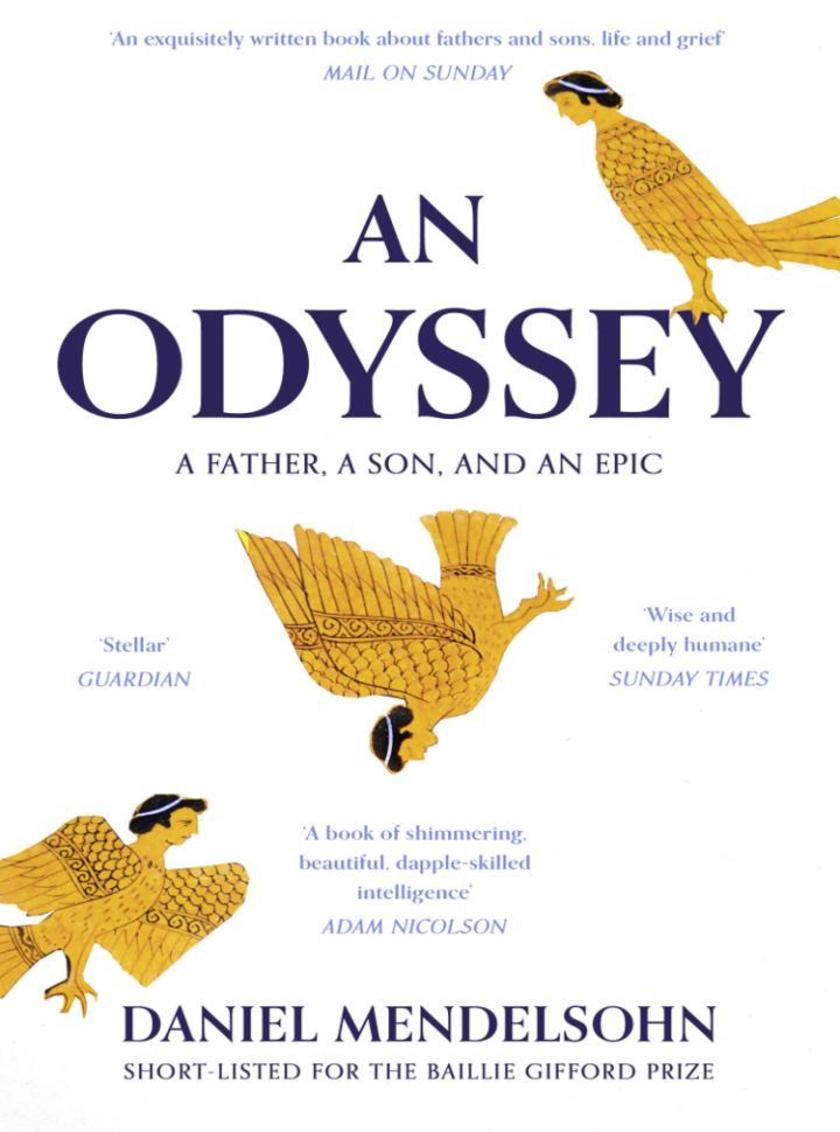
An Odyssey: A Father, A Son and an Epic: SHORTLISTED FOR THE BAILLIE GIFFORD PRI
¥73.58
SHORTLISTED FOR THE BAILLIE GIFFORD PRIZE 2017 SHORTLISTED FOR THE LONDON HELLENIC PRIZE 2017 WINNER OF THE PRIX M?DITERRAN?E 2018 From the award-winning, best-selling writer: a deeply moving tale of a father and son’s transformative journey in reading – and reliving – Homer’s epic masterpiece. When eighty-one-year-old Jay Mendelsohn decides to enrol in the undergraduate seminar on the Odyssey that his son Daniel teaches at Bard College, the two find themselves on an adventure as profoundly emotional as it is intellectual. For Jay, a retired research scientist who sees the world through a mathematician’s unforgiving eyes, this return to the classroom is his ‘one last chance’ to learn the great literature he’d neglected in his youth – and, even more, a final opportunity to understand his son. But through the sometimes uncomfortable months that follow, as the two men explore Homer’s great work together – first in the classroom, where Jay persistently challenges his son’s interpretations, and then during a surprise-filled Mediterranean journey retracing Odysseus’ legendary voyages – it becomes clear that Daniel has much to learn, too. For Jay’s responses to both the text and the travels gradually uncover long-buried secrets that allow the Daniel to understand his difficult father at last. As this intricately woven memoir builds to its wrenching climax, Mendelsohn’s narrative comes to echo the Odyssey itself, with its timeless themes of deception and recognition, marriage and children, the pleasures of travel and the meaning of home. Rich with literary and emotional insight, An Odyssey is a renowned writer’s most revelatory entwining yet of personal narrative and literary exploration.

Blue: All Rise: Our Story
¥139.99
For the first time, more than 15 years after four boys from London were first thrown together to form what would go on to become one of the most successful and infamous groups of the boyband era, Lee, Antony, Duncan and Simon tell their full, no-holds-barred story in their own inimitable words. Blue first rose to fame and mega-stardom in 2001. With 3 UK Number 1 Platinum-selling albums, 2 Brit Awards and 16 million records to their name, they quickly became the crushes of choice for the noughties generation. But their tendency to say exactly what they think, wear their hearts on their sleeves and court controversy (usually unintentionally) has meant that they’ve rarely left the limelight, or public hearts and minds, since. Blue: All Rise: Our Story is the boys’ intimate tell-all account charting the highs and the lows of their incredible career, the stories behind the headlines, and our favourite face-palm-worthy Blue moments. With explosive new reveals, never-before-seen photos, and all the latest updates – including Simon’s engagement and his struggle with depression, Lee’s brush with cancer, Duncan’s devastation at the passing away of his best friend, original It Girl Tara Palmer-Tomkinson, and how Antony’s adapting to fatherhood all over again, this is the story every 2000s teen has been waiting for, from four lads who’ve come out the other side older, wiser and closer than ever.
The Baby Mind Reader: Amazing Psychic Stories from the Man Who Can Read Babies’
¥61.51
Psychic Derek Ogilvie is the baby mind reader -- called in when parents have tried all else, Derek communicates with children to find the reasons behind their problem behaviour, tantrums and sleepless nights. This gripping memoir of his psychic adventures accompanies the Five TV series -- a fascinating cross between 'Supernanny' and 'Most Haunted'. Derek Ogilvie is one of Scotland's best-known and respected psychics. He can be seen on Five TV in 2006 with his new show 'The Baby Mind Reader', where he exhibits his rare ability of being able to communicate telepathically with babies and young children. In this, his fascinating first book published alongside his TV series, Derek shares the story of his rollercoaster life and how he rediscovered his psychic powers and his true calling in life. At the age of nine Derek realised he was psychic when his dead neighbour started visiting him every night while he was in bed. But as a young man, Derek's psychic abilities took a back seat as he concentrated on building a business empire and becoming a millionaire. However, five years ago, Derek's business went bust, his house was repossessed, his partner left him and his grandmother died. Only then did Derek take stock of his life and reconnect with his psychic gift to start helping other people. It was at this point that Derek realised he could also communicate with babies and young children, as well as animals. Funny and poignant, this is Derek's amazing story.
The Goldberg Variations
¥68.57
From football hooligan to opera singer, from the Cockney Reds to Catullus, from a hectic household to tranquility of spirit, Mark Glanville has travelled many paths, been many people – this is his remarkable story.

A Clear Blue Sky: A remarkable memoir about family, loss and the will to overcom
¥66.22
THE SPORTS BOOK OF THE YEAR Daily Mail As a young boy of eight, Jonny Bairstow was dealt a cruel blow. His father David ‘Bluey’ Bairstow, the combative and very popular wicketkeeper and captain of Yorkshire, took his own life at the age of forty-six. David left behind Jonny, Jonny’s sister Becky and half-brother Andy, and his wife Janet, who had recently been diagnosed with cancer at the time of his death. From these incredibly tough circumstances, Jonny and his family strived to find an even keel and come to terms with the loss of their father and husband. Jonny found his way through his dedication to sport. He was a gifted and natural athlete, with potential careers ahead of him in rugby and football, but he eventually chose cricket and came to build a career that echoed his father’s, eventually reaching the pinnacle of the sport and breaking the record for most Test runs in a year by a wicketkeeper. Written with multiple-award-winning writer Duncan Hamilton, this is an incredible story of triumph over adversity and a memoir with far-reaching lessons about determination and the will to overcome.
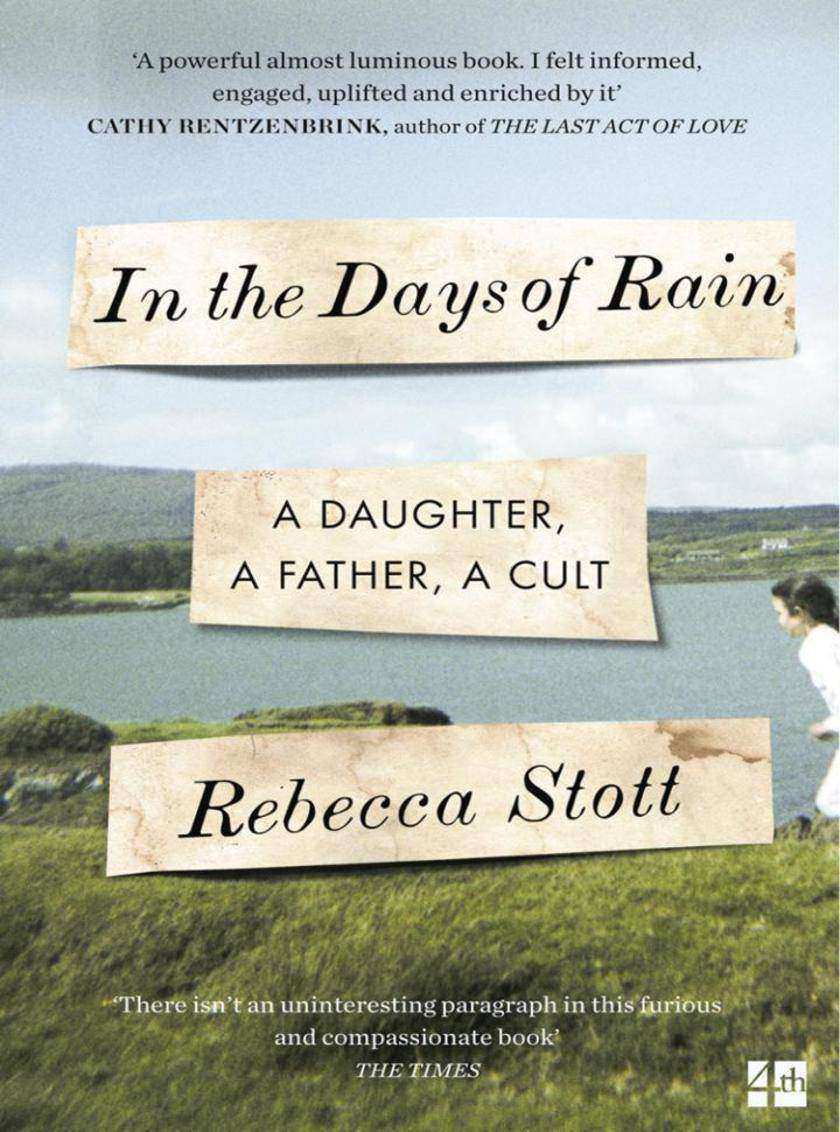
In the Days of Rain: WINNER OF THE 2017 COSTA BIOGRAPHY AWARD
¥73.58
WINNER OF THE 2017 COSTA BIOGRAPHY AWARD In the vein of Bad Blood and Why be Happy when you can be Normal?: an enthralling, at times shocking, and deeply personal family memoir of growing up in, and breaking away from, a fundamentalist Christian cult. As heard on Jeremey Vine ‘At university when I made new friends and confidantes, I couldn’t explain how I’d become a teenage mother, or shoplifted books for years, or why I was afraid of the dark and had a compulsion to rescue people, without explaining about the Brethren or the God they made for us, and the Rapture they told us was coming. But then I couldn’t really begin to talk about the Brethren without explaining about my father…’ As Rebecca Stott’s father lay dying he begged her to help him write the memoir he had been struggling with for years. He wanted to tell the story of their family, who, for generations had all been members of a fundamentalist Christian sect. Yet, each time he reached a certain point, he became tangled in a thicket of painful memories and could not go on. The sect were a closed community who believed the world is ruled by Satan: non-sect books were banned, women were made to wear headscarves and those who disobeyed the rules were punished. Rebecca was born into the sect, yet, as an intelligent, inquiring child she was always asking dangerous questions. She would discover that her father, an influential preacher, had been asking them too, and that the fault-line between faith and doubt had almost engulfed him. In In the Days of Rain Rebecca gathers the broken threads of her father’s story, and her own, and follows him into the thicket to tell of her family’s experiences within the sect, and the decades-long aftermath of their breaking away.

Hotel Tiberias: A Tale of Two Grandfathers
¥77.01
Part history, part travel journal and part autobiography, ‘Hotel Tiberias’ is a journey of many layers and resonances, as Sebastian Hope follows the tumultuous story of his family’s hotel in Palestine.
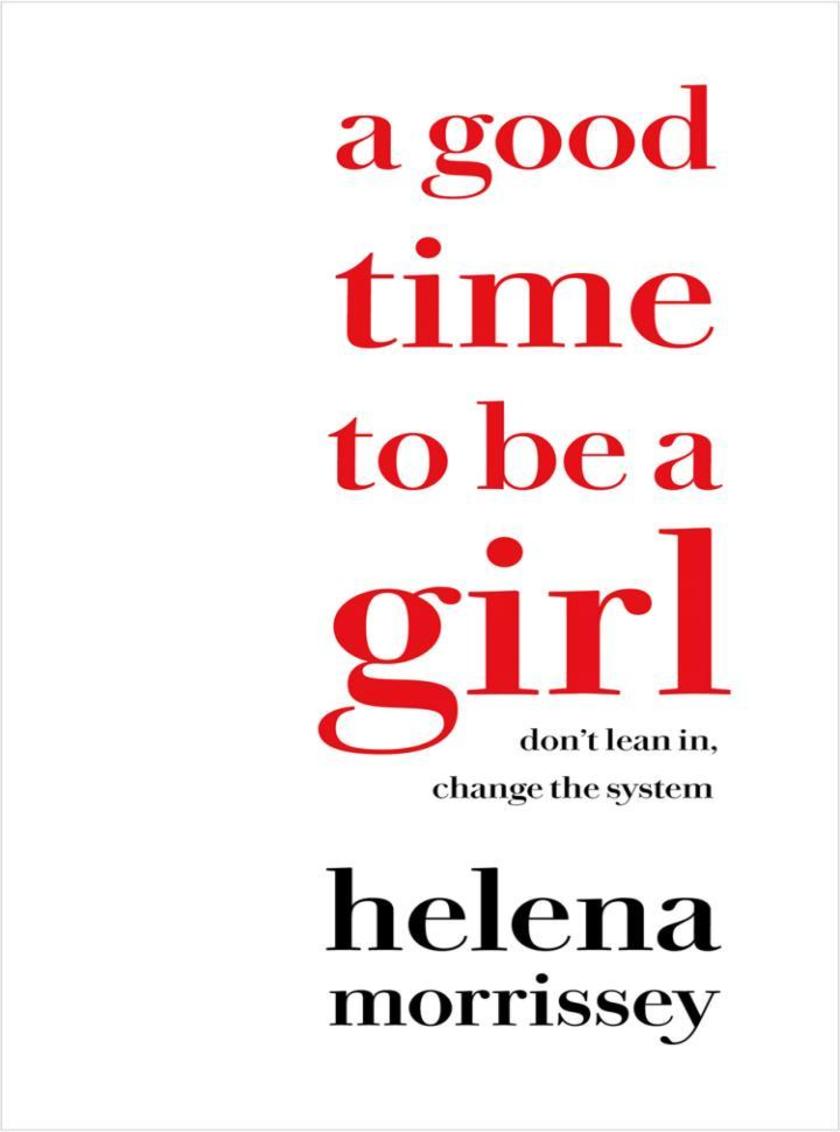
A Good Time to be a Girl: Don’t Lean In, Change the System
¥110.46
Five years have passed since women were exhorted to ‘Lean In’. Over that time, the world has transformed beyond all expectations. But why should anyone ‘lean in’ to a patriarchal system that is out of date? Why not change it entirely for the good of us all? In A Good Time to be a Girl, Helena Morrissey sets out how we might achieve the next big breakthrough towards a truly inclusive modern society. Drawing on her experience as a City CEO, mother of nine, and founder of the influential 30% Club which campaigns for gender-balanced UK company boards, her manifesto for new ways of working, living, loving and raising families is for everyone, not just women. Making a powerful case for diversity and difference in any workplace, she shows how, together, we can develop smarter thinking and broader definitions of success. Gender balance, in her view, is an essential driver of economic prosperity and part of the solution to the many problems we face today. Her approach is not aimed merely at training a few more women in working practices that have outlived their usefulness. Instead, this book sets out a way to reinvent the game – not at the expense of men but in ways that are right and relevant for a digital age. It is a powerful guide to success for us all.

Being Wagner: The Triumph of the Will
¥73.58
The perfect introduction to the Master. One hundred and thirty-five years after his death, Richard Wagner’s music dramas stand at the centre of the culture of classical music. They have never been more popular, nor so violently controversial and divisive. As a man, he was a walking contradiction: aggressive, flirtatious, disciplined, capricious, heroic, visionary and poisonously anti-Semitic. His ten great mature masterpieces constitute an unmatched body of work, created against a backdrop of poverty, revolution, violent controversy, critical contempt and hysterical hero-worship. His work often dealt with myth, but his own life had the character of a fable. At one point, in his early fifties, desperately poor after a life of heroic productivity, he had four lengthy operas written with no hope of seeing them done, when, as if in a fairy-tale, he was rescued by a beautiful young king with limitless wealth. When one of those works, Tristan and Isolde, was at last performed, it revolutionised classical music at a stroke. Wagner went on to create The Ring of the Nibelung: a vast epic in four massive segments, ushering gods and dwarves, heroes and thugs, dragons and rainbows onto the stage. This was the apotheosis of German art as he saw it, so extreme in its demands that he had to train a generation of singers and players to perform it, and erect a custom-built theatre to house it. Wagner died, exhausted, after creating one final piece – Parsifal – that seems to point to an even more radical new future for music. Simon Callow plunges the reader headlong into Wagner’s world, examining the intellectual and artistic climate in which Wagner, a composer like no other who ever lived, extreme in everything, creator of perhaps the most sublime and most troubling body of work in the history of music.

Prince Harry: The Inside Story
¥66.22
Prince Henry of Wales has emerged as the unexpected jewel in the crown of the modern British monarchy. Despite his unruly antics, for which he’s made headlines all over the world, Harry’s popularity rivals that of the Queen herself. Heartthrob and loveable rogue, he has won the public’s heart Duncan Larcombe’s insightful and highly entertaining biography of the rebellious royal recalls Harry’s Eton days, his military career and his tempestuous love life. Despite a string of exploits (not forgetting the notorious Nazi fancy dress incident), Harry has a mysterious gift. With a twinkle in his eye and natural charm in abundance, he can seemingly withstand even the most scandalous of media storms. Since his military career has ended, all eyes are on Harry wondering what life, career and love have in store for the maverick prince. This is the inside story of how the cheeky teenager has grown and matured into a respected soldier, charitable fundraiser and national figurehead who still retains his reputation as the most entertaining resident of Buckingham Palace.

The True Story of the Novel (Text Only)
¥76.91
Margaret Anne Doody is Andrew W Mellon Professor of Humanities at Vanderbilt University, USA. She is the author of several books, including the novel Aristotle Detective and a biography of Frances Burney.

Anything You Can Imagine: Peter Jackson and the Making of Middle-earth
¥147.35
The definitive history of Peter Jackson’s Middle-earth saga, Anything You Can Imagine takes us on a cinematic journey across all six films, featuring brand-new interviews with Peter, his cast & crew. From the early days of daring to dream it could be done, through the highs and lows of making the films, to fan adoration and, finally, Oscar glory. Lights A nine-year-old boy in New Zealand’s Pukerua Bay stays up late and is spellbound by a sixty-year-old vision of a giant ape on an island full of dinosaurs. This is true magic. And the boy knows that he wants to be a magician. Camera Fast-forward twenty years and the boy has begun to cast a spell over the film-going audience, conjuring gore-splattered romps with bravura skill that will lead to Academy recognition with an Oscar nomination for Heavenly Creatures. The boy from Pukerua Bay with monsters reflected in his eyes has arrived, and Hollywood comes calling. What would he like to do next? ‘How about a fantasy film, something like The Lord of the Rings…?’ Action The greatest work of fantasy in modern literature, and the biggest, with rights ownership so complex it will baffle a wizard. Vast. Complex. Unfilmable. One does not simply walk into Mordor – unless you are Peter Jackson. Anything You Can Imagine tells the full, dramatic story of how Jackson and his trusty fellowship of Kiwi filmmakers dared take on a quest every bit as daunting as Frodo’s, and transformed JRR Tolkien’s epic tale of adventure into cinematic magic, and then did it again with The Hobbit. Enriched with brand-new interviews with Jackson, his fellow filmmakers and many of the films’ stars, Ian Nathan’s mesmerising narrative whisks us to Middle-earth, to gaze over the shoulder of the director as he creates the impossible, the unforgettable, and proves that film-making really is ‘anything you can imagine’.


