万本电子书0元读

万本电子书0元读

Avu?ia na?iunilor
Avu?ia na?iunilor
Smith Adam
¥24.44
Scriitorul francez Xavier de Maistre (1763-1852) este fratele mai mic ?i mai pu?in celebru al g?nditorului Joseph de Maistre. Ironist fin ?i amator de filosofie, el ??i invit? cititorul ?ntr-o c?l?torie prin propria camer?, prilejuit? de cele ?ase s?pt?m?ni de arest cu care a fost pedepsit pentru participarea la un duel. Umorul ?i ingeniozitatea fac din acest text aparent banal o critic? spumoas? ?i fascinant? a viciilor umane ?i sociale bogat ?i expresiv ilustrate de contemporanii autorului ?i ai cititorului deopotriv?. Leprosul din Cetatea Aosta, un text prea pu?in semnificativ ca dimensiuni, constituie ?i el una dintre cele mai mi?c?toare incursiuni ?n arcanele condi?iei umane.
Limba Rom?n?. Admiterea la drept. 1200 de ?ntreb?ri ?i r?spunsuri
Moroianu Cristian, Stoicescu Adrian
¥48.97
Numele lui Comenius s-a ?nscris ?n istoria literaturii cehe ?i universale prin cea mai important? lucrare a sa de beletristic?, romanul alegoric Labirintul lumii ?i raiul inimii. Cartea cuprinde dou? p?r?i. ?n prima, Labirintul lumii, este ?nf??i?at? alegoric lumea sub forma unui ora? medieval, amintind de un labirint pe care ?l parcurge c?l?torul-povestitor. ?n cea de-a doua parte, Raiul inimii, c?l?torul se retrage dezam?git ?n l?ca?ul inimii sale, unde ?l ?nt?lne?te pe Dumnezeu, iar credin?a ?i aduce pacea ?i alinarea. C?l?torul este de fapt reprezentarea alegoric? a curiozit??ii omene?ti; el str?bate ora?ul-lume c?ut?ndu-?i o ?ndeletnicire pl?cut? sufletului ?i trupului.Labirintul lumii ?i raiul inimii face parte din a?a-numita serie de scrieri de consolare, prin care Comenius ?ncerca s? arate c? destinul oamenilor este condus prin dreapta decizie a lui Dumnezeu. Romanul este considerat de critica literar? ceh? ca fiind cea mai reu?it? lucrare a literaturii vechi, cel mai frecvent tip?rit? p?n? ?n zilele noastre.
Action
Action
Jiddu Krishnamurti
¥51.91
The passages in this Study Book have been taken directly from Krishnamurti’s talks and books from 1933 through 1967. The compil- ers began by reading all the passages from this period which contained the word action—the theme of this book. This would not have been possible without the use of a full text computer database, produced by the Krishnamurti Foundation Trust of England. Over 750 passages were studied in all, and the aspects of “action” most frequently addressed by Krishnamurti were noted. These aspects then formed the outline for the contents of this book.The material selected has not been altered from the way it was originally printed except for limited correction of spelling, punctua- tion, and missing words. Words or phrases that appear in brackets are not Krishnamurti’s, but have been added by the compilers for the sake of clarity. Ellipses introducing a passage, or ending it, indicate that the passage begins or ends in mid-sentence. Ellipses in the course of a passage indicate words or sentences omitted. A series of asterisks between paragraphs shows that there are paragraphs from that talk which have been omitted. Captions, set off from the body of the text, have been used with many passages. Most captions are statements taken directly from the text, with some being a combination of phrases from the passage.Krishnamurti spoke from such a large perspective that his entire vision was implied in any extended passage. If one wishes to see how a statement flows out of his whole discourse, one can find the full context from the references at the foot of each passage. These refer primarily to talks which have been published in The Collected Works of J. Krishnamurti. This seventeen-volume set covers the entire period from which this study book has been drawn. A complete bibliography is included at the end of this book. Students and scholars may also be interested in additional passages on action not used in the book, available for study upon written request, in the archives of the Krishna- murti Foundation of America.This Study Book aims to give the reader as comprehensive a view as possible, in 140 pages, of the question of action as explored by Krishnamurti during the period covered. Most of the material presented has not been previously published, except in the Verbatim Reports which were produced privately, in limited numbers, primarily for those who attended Krishnamurti’s talks.
满3件6折 重大时代课题与科学理论体系(马克思主义理论研究与当代中国书系)
重大时代课题与科学理论体系(马克思主义理论研究与当代中国书系)
颜晓峰
¥34.00
本书是作者研究党的十八大以来*新时代中国特色社会主义思想的相关成果,从新时代中国特色社会主义的基本支柱、实践基础、根本原则、历史使命、总体布局、安全保证、领导力量、领导方法等方面,系统回答了“新时代坚持和发展什么样的中国特色社会主义、怎样坚持和发展中国特色社会主义”这一重大时代课题,阐述了重大时代课题是科学理论体系的基石。 本书有两大特:*,以新时代中国特色社会主义的重要问题和*新时代中国特色社会主义思想的重要内容为研究对象,具有现实性。第二,研究内容既内含实践逻辑,又内生出理论逻辑,具有思辨性。
Symposium
Symposium
Plato
¥40.79
Of all the works of Plato the Symposium is the most perfect in form, and may be truly thought to contain more than any commentator has ever dreamed of; or, as Goethe said of one of his own writings, more than the author himself knew. For in philosophy as in prophecy glimpses of the future may often be conveyed in words which could hardly have been understood or interpreted at the time when they were uttered.
Euthyphro
Euthyphro
Plato
¥40.79
In the Meno, Anytus had parted from Socrates with the significant words: 'That in any city, and particularly in the city of Athens, it is easier to do men harm than to do them good;' and Socrates was anticipating another opportunity of talking with him. In the Euthyphro, Socrates is awaiting his trial for impiety. But before the trial begins, Plato would like to put the world on their trial, and convince them of ignorance in that very matter touching which Socrates is accused. An incident which may perhaps really have occurred in the family of Euthyphro, a learned Athenian diviner and soothsayer, furnishes the occasion of the discussion.
Theaetetus
Theaetetus
Plato
¥40.79
Some dialogues of Plato are of so various a character that their relation to the other dialogues cannot be determined with any degree of certainty. The Theaetetus, like the Parmenides, has points of similarity both with his earlier and his later writings. The perfection of style, the humour, the dramatic interest, the complexity of structure, the fertility of illustration, the shifting of the points of view, are characteristic of his best period of authorship. The vain search, the negative conclusion, the figure of the midwives, the constant profession of ignorance on the part of Socrates, also bear the stamp of the early dialogues, in which the original Socrates is not yet Platonized.

Sophist
Sophist
Plato
¥40.79
There are no descriptions of time, place or persons, in the Sophist and Statesman, but we are plunged at once into philosophical discussions; the poetical charm has disappeared, and those who have no taste for abstruse metaphysics will greatly prefer the earlier dialogues to the later ones. Plato is conscious of the change, and in the Statesman expressly accuses himself of a tediousness in the two dialogues, which he ascribes to his desire of developing the dialectical method.
On the Gait of Animals
Aristotle
¥40.79
We have now to consider the parts which are useful to animals for movement in place (locomotion); first, why each part is such as it is and to what end they possess them; and second, the differences between these parts both in one and the same creature, and again by comparison of the parts of creatures of different species with one another. First then let us lay down how many questions we have to consider.
Discourse on Inequality
Jean-Jacques Rousseau
¥40.79
Rousseau first exposes in this work his conception of a human state of nature, presented as a philosophical fiction, and of human perfectibility, an early idea of progress. He then explains the way, according to him, people may have established civil society, which leads him to present private property as the original source and basis of all inequality.
The Social Contract
The Social Contract
Jean-Jacques Rousseau
¥40.79
A book in which Rousseau theorized about the best way to establish a political community in the face of the problems of commercial society, which he had already identified in his Discourse on Inequality. The Social Contract helped inspire political reforms or revolutions in Europe, especially in France. The Social Contract argued against the idea that monarchs were divinely empowered to legislate. Rousseau asserts that only the people, who are sovereign, have that all-powerful right.
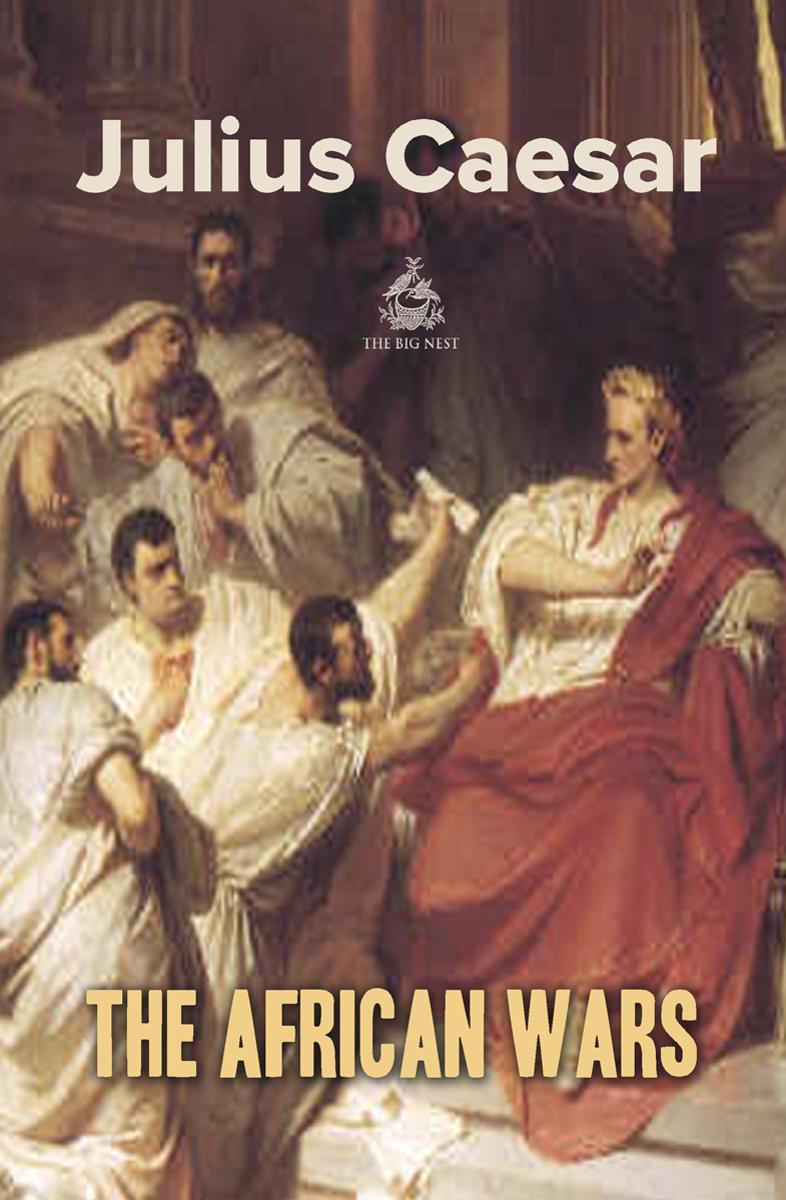
The African Wars
The African Wars
Julius Caesar
¥40.79
Caesar, advancing by moderate journeys, and continuing his march without intermission, arrived at Lilybaeum, on the 14th day before the calends of January. Designing to embark immediately, though he had only one legion of new levies, and not quite six hundred horse, he ordered his tent to be pitched so near the sea-side that the waves lashed the very foot of it. This he did with a view that none should think he had time to delay, and that his men might be kept in readiness at a day or an hour's warning. Though the wind at that time was contrary, he nevertheless detained the soldiers and mariners on board, that he might lose no opportunity of sailing; the rather, because the forces of the enemy were announced by the inhabitants of the province, to consist of innumberable cavalry not to be numbered; four legions headed by Juba, together with a great body of light-armed troops; ten legions under the command of Scipio; a hundred and twenty elephants, and fleets in abundance. Yet he was not alarmed, nor lost his confident hopes and spirits. Meantime the number of galleys and transports increased daily; the new-levied legions flocked in to him from all parts; among the rest the fifth, a veteran legion, and about two thousand horse.
The Spanish Wars: English and Latin Language
Julius Caesar
¥40.79
On the defeat of Pharnaces and reduction of Africa, those who escaped from those battles fled to young Cn. Pompey, who had taken possession of Further Spain, while Caesar was detained in Italy in exhibiting games. Pompey began to throw himself on the protection of every state, in order the more readily to establish the means of defense against him. Accordingly, with a considerable force which had been collected, partly by entreaty, partly by force, he began to lay waste the province. Under these circumstances some states voluntarily sent him supplies, others shut the gates of their towns against him. If any of these chanced to fall into his hands by assault, although some citizen in it had deserved well of Cn. Pompey (his father), yet some cause was alleged against him on account of the greatness of his wealth, so that, he being dispatched, his fortune might become the reward of the soldiers.
The History of Animals
Aristotle
¥40.79
Generally seen as a pioneering work of zoology, Aristotle frames his text by explaining that he is investigating the existing facts about animals. History of Animals is one of the major texts on biology.
Enders
Enders
Lissa Price
¥65.32
Dialoguri cu Vasile Dem. Zamfirescu consemnate de Leonid DragomirLa Facultatea de Filosofie din Bucure?ti unde eram studen?i exista pe atunci mult? libertate ?n alegerea cursurilor pe care doream s? le urm?m. Se afi?a la ?nceputul anului universitar o list? a cursurilor obligatorii ?i op?ionale, acestea din urm? fiind majoritare. A?a am descoperit cursul de Psihanaliz? filosofic? al profesorului Vasile Dem. Zamfirescu, despre care ?tiam vag c? fusese unul dintre discipolii lui Constantin Noica. Atmosfera de libertate ?n care ne mi?cam se reg?sea ?n totalitate aici. Cursul ne interesa at?t prin con?inutul lui — care adolescent n-a fost fascinat de psihanaliz?! — c?t ?i prin rigoarea ?i claritatea expunerii. De?i nu mai predase p?n? atunci, Vasile Dem. Zamfirescu era cu adev?rat profesor. Seminariile erau ?ns? ale noastre. Aici se iscau polemici, se propuneau interpret?ri insolite, se scriau ?i se citeau eseuri inspirate de noile probleme ?i lecturi. De obicei dep??eam limitele temei propuse, astfel ?nc?t totul ar fi putut degenera ?ntr-un dialog al surzilor sau ?n divaga?ii sterile dac? n-ar fi existat polul magnetic: profesorul. Nu numai c? el aducea, cu mult tact, discu?ia pe f?ga?ul normal, la obiect, dar opiniile noastre, oric?t de ?ndr?zne?e, vizau direct sau indirect aprobarea lui. Aceasta uneori venea, alteori nu, dar ceea ce conta pentru noi era faptul de a ne ?ti asculta?i. Sim?eam c? el poate s? vad? ?n spusele noastre sau dincolo de ele personalitatea noastr? ?ntreag?. De aceea voiam s? d?m totul ?n acele seminarii care treceau at?t de repede, de?i discu?iile se prelungeau ?n pauze ?i dup? ?ncheierea lor.
Káin
Káin
George Gordon Byron
¥8.83
...amikor apaként elmegyek az óvodába, hogy elhozzam a kisfiamat, akkor milyen alapon választom ki, hogy kit viszek haza Talán megkérdezem az óvóntl, hogy melyik gyerek viselkedett a legjobban Vagy krülnézek, hogy melyik klyk a legszebb s ha az óvón azzal fogad, hogy az én gyerekem elpáholta t csoporttársát, és egy pohár kefirt nttt a takarító néni fejére, akkor ott hagyom, és választok egy normális gyereket Nem. Minden krülmények kzt a sajátomat viszem haza. Azért, mert az enyém! Ez a vele való kapcsolatom alapja. s ha ez az alap megvan, hazaviszem t, és otthon elbeszélgetek vele a pohár kefirrl, az ovistársakról, a takarító nénirl és a verekedésrl. Milyen egyszernek és természetesnek tnik mindez, ha a saját gyermekeinkrl van szó, de ha Jézus mondja ugyanezt az Atyáról, akkor zavarba jvünk, mert a szégyen és a félelem által belénk vésdtt kalmárszellem olyan mélyen járja át a lelkünket, hogy el sem tudjuk képzelni, hogy csak úgy, minden feltétel nélkül szeretni való emberek vagyunk...” BOLYKI LSZL 1973-ban született Budapesten. Zenész (Bolyki Brothers, Budapesti Fesztiválzenekar, Erkel Ferenc Kamarazenekar), spirituális szemlélet lelkigondozó, párkapcsolati és nismereti témákra szakosodott tréner, a Milyen zenét szeret Isten cím ktet szerzje. Bolyki László munkája azt tanítja nekünk, hogy a múlt si kultúrájának szimbolikus értékei a mai ember problémáiban is eleven lélektani, spirituális útmutatást tudnak nyújtani.” dr. SLE FERENC, a volt Országos Pszichiátriai és Neurológiai Intézet Valláslélektani Osztályának forvosa A Kegyelem és kalmárszellem nem csak egy knyv a sok kzül; fontos, hogy minél tbb olvasóhoz eljusson! Mindenkinek ajánlom szeretettel.” SZENCZY SNDOR a Baptista Szeretetszolgálat Alapítvány vezetje
Don Quijote de la Mancha
Miguel de Cervantes Saavedra
¥8.83
Valamikor a muzsika egyszer volt, szerény és tiszteletreméltó, ma cicomás lett és zrzavaros, méltóságát és értékét veszített, gyalázatos iparrá süllyedt.” Mikor volt a muzsika egyszer, szerény és tiszteletreméltó, és vajon milyen úton-módon veszítette el méltóságát és értékét Meg tudjuk határozni, hogy melyek a zene zrzavaros és cicomás stíluselemei Tudjuk-e, hogy hogyan és miért süllyedt a zene gyalázatos iparrá Végül, de nem utolsósorban fel tudjuk-e mérni annak jelentségét, hogy a fenti idézet a 6. századból származik, a nagy keresztény gondolkodó, Boethiusz tollából E knyv a zene és a kereszténység hagyományosan feszültségektl terhelt kapcsolatát vizsgálja, a valamikor” és a ma” szakrális zenéjének tükrében. A szerz szándéka, hogy a zene a dicséret és magasztalás eszkze, és ne a feszültségek állandó forrása legyen a keresztény egyházak és gyülekezetek életében. BOLYKI LSZL 1994-ben szerezte mvész-tanári diplomáját a budapesti Zeneakadémián. A Bolyki Brothers énekegyüttes, a Budapesti Fesztiválzenekar és az Erkel Ferenc Kamarazenekar tagjaként rendszeresen fllép Európa, Amerika és zsia legjelentsebb zenei kzpontjaiban. Spirituális szemlélet lelkigondozó, párkapcsolati és nismereti témákra szakosodott tréner, a Kegyelem és kalmárszellem cím ktet szerzje.
Be? Kavram, Be? Deneme: (inan?, ?zgür irade, ya?am?n anlam?, ahlak, mutluluk)
Prof. Dr. Oğuz İnel
¥9.40
Bu alma ilk olarak ekim 2007`de bir internet sitesinde (exlibrary.com) e-kitap formunda yaymland; daha sonra birinci kitabmn ikinci blümünde yer ald. Bu almay tekrar gzden geirip küük baz düzeltmeler yaptm. Bu kitapn ilham kayna Thomas Nagel’in “Her ey Ne Anlama Geliyor” balkl eseridir. 70 sayfalk bu küük ama youn kitab okuduumda hayran olmutum. Nagel almasnn giri blümünde unlar yazm: “Günümüzün ve gemiin büyük filozoflarndan seilmi metinler ieren birok harika giri el kitab vardr. Elinizdeki bu küük kitap onlarn yerine geecek türden bir kitap deildir. Onun, yalnzca, konuya olabildii kadar ak ve dorudan bir ilk deerlendirme sunmasn umuyorum.” Ben de aynsn umarak bu almaya ykündüm ve ortaya bu be deneme kt. Daha nce yaymlanm bu denemelerin yeniden yaymlanmasnn anlam hakl olarak sorulabilir. Ben de derim ki belki yeni baz okurlarn ilgisini ekebilir belki de yeniden okunabilir. Bu sefer de neden yeniden okunsun ki diyenler kabilir; ben de Borges’in bir szünü aktarmakla yetinirim: “Okumak nemli deildir, nemli olan yeniden okumaktr.” Yazar Hakknda Prof. Dr., 1955 doumlu. 1976 da Ankara niversitesi Fen Fakültesi kimya mühendislii blümünden mezun oldu. Eskiehir Anadolu ve Eskiehir Osmangazi niversitesinde retim üyesi olarak alt. 2002 de emekli oldu. Akademik yaynlar haricinde felsefe konusunda sobil yaynclk tarafndan yaymlanm ü kitab vardr: 1.“Düünmek zerine Düünmek” (2009), 2. “Zorunluluk ve Sorumluluk” (2012), 3.“Nietzsche ve Schopenhauer ile küük bir sylei” (2018).
On Memory and Reminiscence
Aristotle
¥40.79
We have, in the next place, to treat of Memory and Remembering, considering its nature, its cause, and the part of the soul to which this experience, as well as that of Recollecting, belongs. For the persons who possess a retentive memory are not identical with those who excel in power of recollection; indeed, as a rule, slow people have a good memory, whereas those who are quick-witted and clever are better at recollecting.
Metaphysics
Metaphysics
Aristotle
¥40.79
All men by nature desire to know. An indication of this is the delight we take in our senses; for even apart from their usefulness they are loved for themselves; and above all others the sense of sight. For not only with a view to action, but even when we are not going to do anything, we prefer seeing (one might say) to everything else. The reason is that this, most of all the senses, makes us know and brings to light many differences between things.
The Beauty of Death
The Beauty of Death
J. Krishnamurti
¥73.49
"Only in peace can a human being flower in goodness - not in war, not in violence, not in disorder, but only when there is a deep abiding peace. And to understand this whole phenomenon of hate, destruction and disorder, one has to enquire not merely intellectually - because such an enquiry is futile, worthless and has no meaning whatsoever - but actually what order means, what violence means, and the significance of peace; one has to enquire non-verbally, non-intellectually - [intellectual inquiry] really has very little meaning, because most of us have read or indulged in theory what peace should be, how to get rid of violence, and how to establish order.." Krishnamurti gave these talks in India and Europe. The talks span the whole of human existence, exploring what it means to live rightly in a world full of confusion and misery.