


 购物车
购物车 个人中心
个人中心
Wood'stown
¥8.82
"L'emplacement était superbe pour b?tir une ville. Il n'y avait qu'à déblayer les bords du fleuve, en abattant une partie de la forêt, de l'immense forêt vierge enracinée là depuis la naissance du monde. Alors abritée tout autour par des collines boisées, la ville descendrait jusqu'aux quais d'un port magnifique, établi dans l'embouchure de la Rivière-Rouge, à quatre milles seulement de la mer."
Collected Works: Complete Editions: Sense and Sensibility, Pride and Prejudice
¥9.24
This carefully crafted ebook is formatted with a functional and detailed table of contents.Jane Austen (16 December 1775 – 18 July 1817) was an English novelist whose works of romantic fiction, set among the landed gentry, earned her a place as one of the most widely read writers in English literature. Her realism, biting irony and social commentary as well as her acclaimed plots have gained her historical importance among scholars and critics. Austen lived her entire life as part of a close-knit family located on the lower fringes of the English landed gentry. She was educated primarily by her father and older brothers as well as through her own reading. The steadfast support of her family was critical to her development as a professional writer. From her teenage years into her thirties she experimented with various literary forms, including an epistolary novel which she then abandoned, wrote and extensively revised three major novels and began a fourth. From 1811 until 1816, with the release of "Sense and Sensibility" (1811), "Pride and Prejudice" (1813), "Mansfield Park" (1814) and "Emma" (1815), she achieved success as a published writer. She wrote two additional novels, "Northanger Abbey" and "Persuasion", both published posthumously in 1818, and began a third, which was eventually titled "Sanditon", but died before completing it. Austen's works critique the novels of sensibility of the second half of the 18th century and are part of the transition to 19th-century realism. Her plots, though fundamentally comic, highlight the dependence of women on marriage to secure social standing and economic security. Her works, though usually popular, were first published anonymously and brought her little personal fame and only a few positive reviews during her lifetime, but the publication in 1869 of her nephew's "A Memoir of Jane Austen" introduced her to a wider public, and by the 1940s she had become widely accepted in academia as a great English writer. The second half of the 20th century saw a proliferation of Austen scholarship and the emergence of a Janeite fan culture.This collection contains the following works:- Sense and Sensibility- Pride and Prejudice- Mansfield Park- Emma- Northanger Abbey- Persuasion- Cancelled Chapter of 'Persuasion'- Lady Susan- The Watsons- Plan of a Novel- Sandition- Poems: Happy the Lab'rer / I've a Pain in my Head / Miss Lloyd has now went to Miss Green / Mock Panegyric on a Young Friend / My Dearest Frank, I Wish You Joy / Ode to Pity / Of A Ministry Pitiful, Angry, Mean / Oh! Mr Best You're Very Bad / See they come, post haste from Thanet / This Little Bag / To the Memory of Mrs. Lefroy / When Stretch'd on One's Bed / When Winchester races- Prayers
Winnetou 2
¥9.00
In diesem Band, der als wahre Reiseerz?hlung betrachtet werden kann, führt es den Ich-Erz?hler Old Shatterhand kreuz und quer durch die USA. Zun?chst verfolgen er und Winnetou noch den M?rder Santer, müssen sich dann aber trennen, und man erf?hrt dann, wie Old Shatterhand über St. Louis nach New Orleans gelangt, von wo er nach Europa zurück segeln will. Da er aber kurz nach Verlassen des Hafens in einen Hurrikan ger?t und dabei seinen gesamten Besitz verliert, verschl?gt es ihn zun?chst nach New York, wo er – um sich das Geld für die ?berfahrt zu verdienen – einen Job als Detektiv annimmt. Nach mehreren erfolgreich gel?sten F?llen, über die man nichts weiter erf?hrt, wird er damit beauftragt, einen dem Wahnsinn verfallenen Bankierssohn, der einem Betrüger in die H?nde gefallen ist, zu seinem Vater zurück zu bringen.
Malgré les vents contraires
¥28.37
En 1908, CAMILLE, jeune artiste-peintre en devenir, vit dans la misogynie générale de ce début de XXème siècle. Le décès de son père, un enlèvement, la tentative d'un mariage forcé, une expo ratée, son premier amour, son départ pour les USA, la gloire, sa vie avec un pianiste de jazz noir, ses démêlées avec le KKK qui l'obligeront à un retour à Marseille avant la 2ème guerre mondiale, etc… Elle parviendra au sommet de son Art, for?ant l’admiration des hommes par son talent et son caractère, ni suffragette, ni féministe.
Riders of the Purple Sage
¥8.82
Riders of the Purple Sage is a classic of the Western genre. It is the story of Lassiter, a gunslinging avenger in black, who shows up in a remote Utah town just in time to save the young and beautiful rancher Jane Withersteen from having to marry a Mormon elder against her will.
Le Petit Chose
¥8.82
'Le Petit Chose' para?t en feuilleton en 1867. Daudet s'inspire des souvenirs d'une jeunesse douloureuse : humiliations à l'école, mépris pour le petit proven?al, expérience de répétiteur au collège et enfin coup de foudre pour une belle jeune femme. L'écrivain manifeste une tendresse, une pitié et un respect remarquables à l'égard des malchanceux et des déshérités de la vie.

The Strange Story Book
¥28.37
Now as this is the very last book of all this series that began in the long long ago, perhaps you may like to hear something of the man who thought over every one of the twenty-five, for fear lest a story should creep in which he did not wish his little boys and girls to read. He was born when nobody thought of travelling in anything but a train—a very slow one—or a steamer. It took a great deal of persuasion to induce him later to get into a motor and he had not the slightest desire to go up in an aeroplane—or to possess a telephone. ??Somebody once told him of a little boy who, after giving a thrilling account at luncheon of how Randolph had taken Edinburgh Castle, had expressed a desire to go out and see the Museum; 'I like old things better than new,' said the child! 'I wish I knew that little boy,' observed the man. 'He would just suit me.' And that was true, for he too loved great deeds of battle and adventure as well as the curious carved and painted fragments guarded in museums which show that the lives described by Homer and the other old poets were not tales made up by them to amuse tired crowds gathered round a hall fire, but were real—real as our lives now, and much more beautiful and splendid. ??All beasts were his friends, just because they were beasts, unless they had been very badly brought up. He never could resist a cat, and cats, like beggars, tell each other these things and profit by them. A cat knew quite well that it had only to go on sitting for a few days outside the window where the man was writing, and that if it began to snow or even to rain, the window would be pushed up and the cat would spend the rest of its days stretched in front of the fire, with a saucer of milk beside it, and fish for every meal.??But life with cats was not all peace, and once a terrible thing hap-pened when Dickon-draw-the-blade was the Puss in Possession. His master was passing through London on the way to take a journey to some beautiful old walled towns in the south of France where the English fought in the Hundred Years War, and he meant to spend a few weeks in the country along the Loire which is bound up with the memory of Joan of Arc. ??Unluckily, the night after he arrived from Scotland Dickon went out for a walk on the high trellis behind the house, and once there did not know how to get down again. Of course it was quite easy, and there were ropes of Virginia creeper to help, but Dickon lost his presence of mind, and instead of doing anything sensible only stood and shrieked, while his master got ladders and steps and clambered about in the dark and in the cold, till he put Dickon on the ground again. Then Dickon's master went to bed, but woke up so ill that he was obliged to do without the old towns, and go when he was better to a horrid place called Cannes, all dust and tea-parties.
A Dream of Red Hands
¥8.82
"A Dream of Red Hands" is a short story by Bram Stoker. It was first published in the July 11, 1894 issue of The Sketch: A Journal of Art and Actuality, London.
Rilla of Ingleside
¥9.00
Anne Shirley has left Redmond College behind to begin a new job and a new chapter of her life away from Green Gables. Now she faces a new challenge: the Pringles. They're known as the royal family of Summerside - and they quickly let Anne know she is not the person they had wanted as principal of Summerside High School. But as she settles into the cozy tower room at Windy Poplars, Anne finds she has great allies in the widows Aunt Kate and Aunt Chatty – and in their irrepressible housekeeper, Rebecca Dew. As Anne learns Summerside's strangest secrets, winning the support of the prickly Pringles becomes only the first of her delicious triumphs.
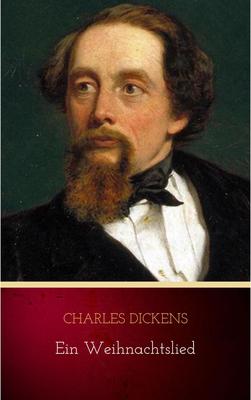
Ein Weihnachtslied
¥8.82
Die Erz?hlung handelt von Ebenezer Scrooge, einem alten, grantigen Geizhals, der in einer einzigen Nacht zun?chst Besuch von seinem verstorbenen Teilhaber Jacob Marley und dann von drei weiteren Geistern erh?lt, die ihm schlie?lich dazu verhelfen, sein Leben zu ?ndern.

Red Rock: "A Chronicle of Reconstruction"
¥27.88
The old Gray plantation, “Red Rock,” lay at the highest part of the rich rolling country, before it rose too abruptly in the wooded foothills of the blue mountains away to the westward. As everybody in the coun-try knew, who knew anything, it took its name from the great red stain, as big as a blanket, which appeared on the huge bowlder in the grove, beside the family grave-yard, at the far end of the Red Rock gardens. And as was equally well known, or equally well believed, which amounted almost to the same thing, that stain was the blood of the Indian chief who had slain the wife of the first Jacquelin Gray who came to this part of the world: the Jacquelin who had built the first house at Red Rock, around the fireplace of which the present mansion was erected, and whose portrait, with its piercing eyes and fierce look, hung in a black frame over the mantel, and used to come down as a warning when any peril impended above the house. The bereft husband had exacted swift retribution of the murderer, on that very rock, and the Indian’s heart blood had left that deep stain in the darker granite as a perpetual memorial of the swift vengeance of the Jacquelin Grays. This, at least, was what was asserted and believed by the old negroes (and, perhaps, by some of the whites, too, a little). And if the negroes did not know, who did? So Jacquelin often pondered.Steve Allen, who was always a reckless talker, however, used to say that the stain was nothing but a bit of red sandstone which had out-cropped at the point where that huge fragment was broken off, and rolled along by a glacier thousands of years ago, far to the northward; but this view was to the other children’s minds clearly untenable; for there never could have been any glacier there—glaciers, as they knew from their geographies, being confined to Switzerland, and the world having been created only six thousand years ago. The children were well grounded by their mothers and Miss Thomasia in Bible history. Besides, there was the picture of the “Indian-killer,” in the black frame nailed in the wall over the fireplace in the great hall, and one could not go anywhere in the hall without his fierce eyes following you with a look so intent and piercing that Mammy Celia was wont to use it half jestingly as a threat effectual with little Jacquelin when he was refracto-ry—that if he did not mind, the “Indian-killer” would see him and come after him. How often Mammy Celia employed it with Jacquelin, and how severe she used to be with tall, reckless Steve, because he scoffed at the story, and to tease her, threatened, with appropriate ges-ture, to knock the picture out of the frame, and see what was in the secret cabinet behind it! What would have happened had Steve carried out his threat, Jacquelin, as a boy, quite trembled to think; for though he admired Steve, his cousin, above all other mortals, as any small boy admires one several years his senior, who can ride wild horses and do things he cannot do, this would have been to engage in a contest with something supernatural and not mortal. Still he used to urge Steve to do it, with a certain fascinating apprehensiveness that made the chills creep up and down his back.

The Seventh Man
¥8.98
The Seventh Man by Max Brand, tells part of the story of the larger-than-life western character, Dan Barry, known as “Whistling Dan,” and his alter-ego companions, Black Bart, the wolf-dog, and Satan, the indomitable black stallion. It’s also the story of Kate Cumberland and the incredible five-year-old daughter of Kate and Dan, Joan. We first see Dan as a gentle, caring man with a deep sense of fairness. But then, after six years of a peaceful life in their mountain cabin Dan, more feral than human, sets out to revenge an injustice by killing seven men. Ultimately, it is his devotion to his daughter and Kate’s love for the child that brings about the climax of the tale. Warning: don’t look for a typical cowboy story here – it’s far deeper and stronger than that.
Titus Andronicus
¥9.00
Titus Andronicus may be Shakespeare's earliest tragedy; it is believed to have been written sometime between 1584 and the early 1590s. It depicts a Roman general who is engaged in a cycle of revenge with his enemy Tamora, the Queen of the Goths. The play is by far Shakespeare's bloodiest work. It lost popularity during the Victorian era because of its gore, and has only recently begun to revive its fortunes.
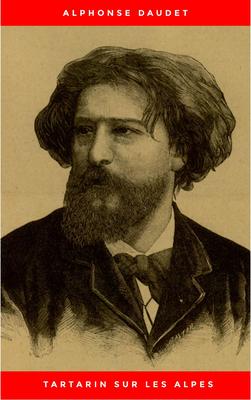
Tartarin sur les Alpes: Nouveaux exploits du héros tarasconnais
¥8.82
Tartarin s'essaie à l'alpinisme afin de redorer son blason et déjouer les remises en cause de son statut de gloire tarasconnaise. En chemin, il multiplie les péripéties : infiltrations de cercles anarchistes russes en exil, visite touristique de monuments historiques, catastrophes de montagne... Ce roman est le second volet des aventures de Tartarin, explorant les mentalités tarasconnaises toujours aussi savoureuses. Au menu : vantardise, extravagance et mensonge, matinés de l?cheté, de peur et de jalousie, faiblesses ? combien humaines...
Midsummer Night's Dream
¥9.00
A Midsummer Night's Dream is a romantic comedy by William Shakespeare, suggested by "The Knight's Tale" from Geoffrey Chaucer's The Canterbury Tales, written around 1594 to 1596. It portrays the adventures of four young Athenian lovers and a group of amateur actors, their interactions with the Duke and Duchess of Athens, Theseus and Hippolyta, and with the fairies who inhabit a moonlit forest. The play is one of Shakespeare's most popular works for the stage and is widely performed across the world.
David Copperfield
¥8.82
David Copperfield is the novel that draws most closely from Charles Dickens's own life. Its eponymous hero, orphaned as a boy, grows up to discover love and happiness, heartbreak and sorrow amid a cast of eccentrics, innocents, and villains. Praising Dickens's power of invention, Somerset Maugham wrote: "There were never such people as the Micawbers, Peggotty and Barkis, Traddles, Betsey Trotwood and Mr. Dick, Uriah Heep and his mother. They are fantastic inventions of Dickens's exultant imagination...you can never quite forget them."

The Story of Noah's Ark
¥9.40
THE WARNING!?In the early days of the world lived the patriarch Noah, a good and venerable man whose years already numbered six hundred.?Now Noah was warned that a great flood was to come, which would pour down from the clouds and drown the whole earth. He straightway told his neighbors what was to happen, but they refused to believe, and scoffed at him, and said: "Let it rain."??BUILDING THE ARK:?Then Noah went his way, and set to work to build him a great ship, to be ready for the day of deluge.?And he laid the keel in the pasture fields, among the daisies; while the idlers came to look on and laugh at such folly—a ship for a rainy day!

The Classics Collection
¥8.82
This book contains the Classics Collection of Bram Stoker in the chronological order of their original publication. - Under the Sunset - The Invisible Giant - The Dualitists - Dracula - The Jewel of Seven Stars - The Man - The Lair of the White Worm - Dracula's Guest - The Judge's House - A Dream of Red Hands - The Burial of the Rats - Crooken Sands
Durch die Wüste
¥9.00
Durch die nordafrikanische Wüste reiten Kara Ben Nemsi und Hadschi Halef Omar. Der Fund einer Leiche am Schott Dscherid wird zum Ausgangspunkt eines langen Abenteuers. Sie befreien eine Gefangene aus einem Harem, werden von Piraten überfallen, gelangen nach Mekka, lernen Sir David Lindsay kennen, lenken ein Araberheer im "Tal der Stufen" und befinden sich schlie?lich auf einer Rettungsmission.

Novelas Ejemplares
¥8.82
Las Novelas ejemplares son una serie de novelas cortas que Miguel de Cervantes escribió entre 1590 y 1612, y que después acabaría publicando en 1613 en una colección editada en Madrid por Juan de la Cuesta, dada la gran acogida que obtuvo con la primera parte del Quijote. En un principio recibieron el nombre de Novelas ejemplares de honestísimo entretenimiento. Se trata de doce novelas cortas que siguen el modelo establecido en Italia. Su denominación de ejemplares obedece a que son el primer ejemplo en castellano de este tipo de novelas y al carácter didáctico y moral que incluyen en alguna medida los relatos.
The Children's Book of Birds
¥18.56
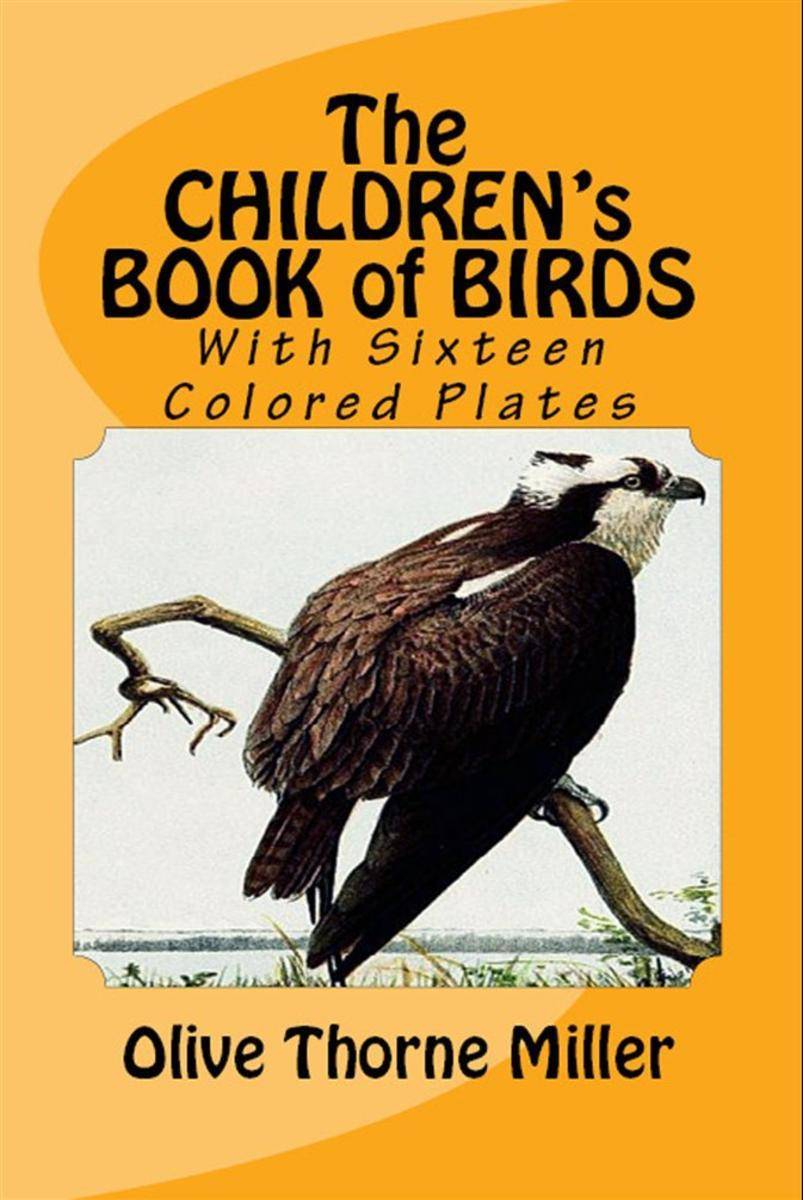
The Children's Book of Birds combines under a single cover the First and Second Books of Birds, originally published in 1899 and 1901 respectively and still popular with children in and out of school and with other beginners in the study of birds.??The book is intended to interest young people in the ways and habits of birds and to stimulate them to further study. It has grown out of my experience in talking to schools. ??From the youngest kindergarten scholar to boys and girls of sixteen and eighteen, I have never failed to find young people intensely interested so long as I would tell them about bow the birds live.?Some of the results of these talks that have come to my knowledge have been astonishing and far-reaching, such as that of one boy of seven or eight, who persuaded the village boys around his summer home to give up taking eggs and killing birds, and watch them instead, and who was dubbed "Professor" by his eager followers. ??The effect has always been to make children love and respect the living bird.??It has therefore seemed to me that what is needed at first is not the science of ornithology,—however diluted,—but some account of the life and habits, to arouse sympathy and interest in the living bird, neither as a target nor as a producer of eggs, but as a fellow-creature whose acquaintance it would be pleasant to make.


