


 购物车
购物车 个人中心
个人中心

Королева пустел?: Одна ж?нка здатна зм?нити х?д ?стор??
¥28.29
Un incredibile tornado si abbatte sul Kansas travolgendo la fattoria della piccola Dorothy e trasportandola, insieme con il suo cagnolino Toto, in un paese lontano e sconosciuto. Qui, dopo aver schiacciato la malvagia Strega dell'est, la bambina è accolta come un'eroina dal popolo che la megera teneva in ostaggio. Ma per tornare a casa Dorothy dovrà affrontare mille avventure accompagnata da uno Spaventapasseri, un Taglialegna di Latta e un Leone Vigliacco. Insieme sperano di incontrare il potente Mago di Oz nella splendida città di Smeraldo, l'unico che si dice sarà in grado di aiutarli.
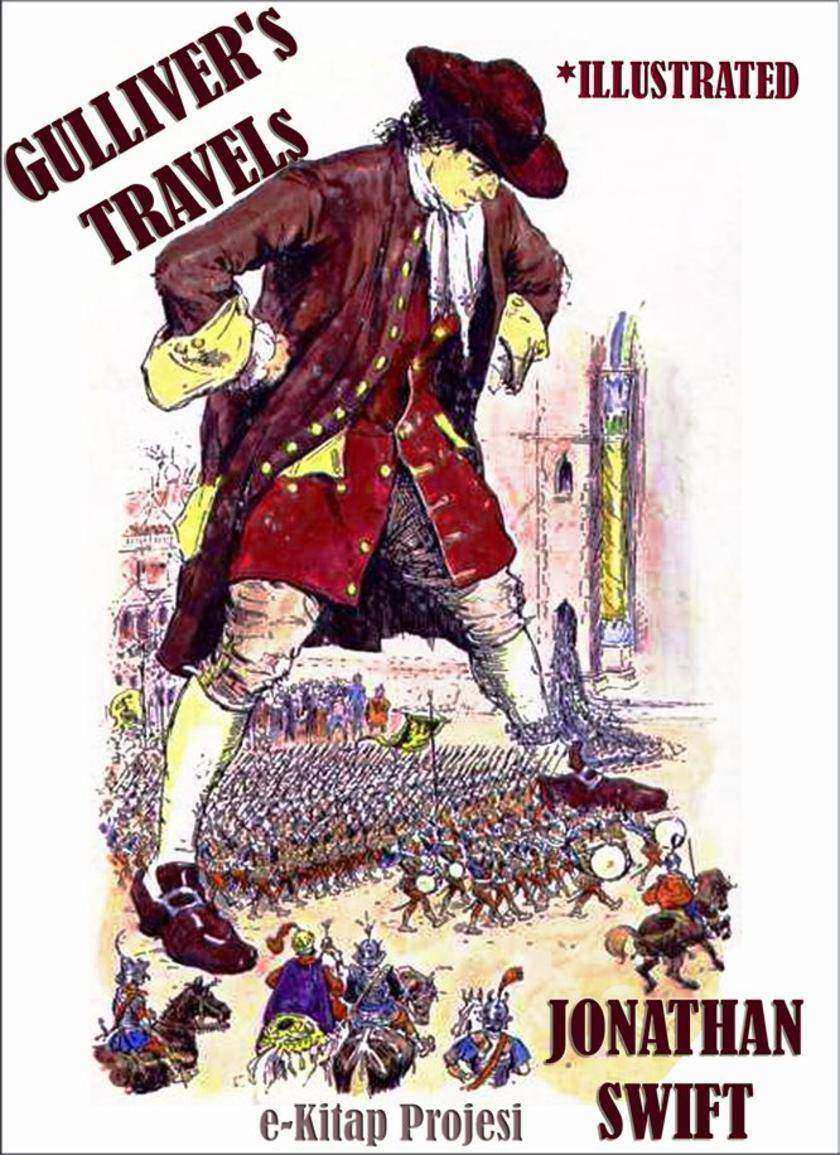
Gulliver's Travels
¥28.04
Fear cut through the unconscious mind of Wilbur Hawkes. With almost physical violence, it tightened his throat and knifed at his heart. It darted into his numbed brain, screaming at him. He was a soft egg in a vast globe of elastic gelatine. Two creatures swam menacingly through the resisting globe toward him. The gelatine fought against them, but they came on. One was near, and made a mystic pass. He screamed at it, and the gelatine grew stronger, throwing them back and away. Suddenly, the creatures drew back. A door opened, and they were gone. But he couldn't let them go. If they escaped.... Hawkes jerked upright in his bed, gasping out a hoarse cry, and the sound of his own voice completed the awakening. He opened his eyes to a murky darkness that was barely relieved by the little night-light. For a second, the nightmare was so strong on his mind that he seemed to see two shadows beyond the door, rushing down the steps. He fought off the illusion, and with straining senses jerked his head around the room. There was nothing there. Sweat was beading his forehead, and he could feel his pulse racing. He had to get out—had to leave—at once!He forced the idea aside. There was something cloudy in his mind, but he made reason take over and shove away some of the heavy fear. His fingers found a cigarette and lighted it automatically. The first familiar breath of smoke in his lungs helped. He drew in deeply again, while the tiny sounds in the room became meaningful. There was the insistent ticking of a clock and the soft shushing sound of a tape recorder. He stared at the machine, running on fast rewind, and reversed it to play. But the tape seemed to be blank, or erased. He crushed the cigarette out on a table-top where other butts lay in disorder. It looked wrong, and his mind leaped up in sudden frantic fear, before he could calm it again. This time, reason echoed his emotional unease.Hawkes had never smoked before!But his fingers were already lighting another by old habit. His thoughts lurched, seeking for an answer. There was only a vague sense of something missing—a period of time seemed to have passed. It felt like a long period, but he had no memory of it. There had been the final fight with Irma, when he'd gone stalking out of the house, telling her to get a divorce any way she wanted. He'd opened the mail-box and taken out a letter—a letter from a Professor....His mind refused to go further. There was only a complete blank after that. But it had been in midwinter, and now he could make out the faint outlines of full-leafed trees against the sky through the window! Months had gone by—and there was no faintest trace of them in his mind. They'll get you! You can't escape! Hurry, go, GO!...The cigarette fell from his shaking hands, and he was half out of the bed before the rational part of his mind could cut off the fear thoughts. He flipped on the lights, afraid of the dimness. It didn't help. The room was dusty, as if unused for months, and there was a cobweb in one corner by the mirror.His own face shocked him. It was the same lean, sharp-featured face as ever, under the shock of nondescript, sandy hair. His ears still stuck out too much, and his lips were a trifle too thin. It looked no more than his thirty years; but it was a strained face, now—painted with weeks of fatigue, and grayish with fear, sweat-streaked and with nervous tension in every corded tendon of his throat. His somewhat bony, average-height figure shook visibly as he climbed from the bed.Hawkes stood fighting himself, trying to get back in the bed, but it was a losing battle. Something seemed to swing up in the corner of the room, as if a shadow moved. He jerked his head toward it, but there was nothing there. He heard his breath gasping harshly, and his knuckles whitened. There was the taste of blood in the corner of his mouth where he was biting his lips.Get out! They'll be here at once! Leave—GO!

Democracy in America: Book One
¥28.04
A young girl named Fanny Price comes to live with her wealthy uncle and aunt, Sir Thomas and Lady Bertram. Fanny's family is quite poor; her mother, unlike her sister Lady Bertram, married beneath her, and Fanny's father, a sailor, is disabled and drinks heavily. Fanny is abused by her other aunt, Mrs. Norris, a busybody who runs things at Mansfield Park, the Bertrams' estate. The Bertram daughters, Maria and Julia, are shallow, rather cruel girls, intent on marrying well and being fashionable. The elder son, Tom, is a roustabout and a drunk. Fanny finds solace only in the friendship of the younger son, Edmund, who is planning to be a clergyman. Fanny grows up shy and deferential, caught as she typically is between members of the Bertram family. Sir Thomas leaves Mansfield Park for Antigua, where he owns plantations. In his absence, two new figures arrive at Mansfield: Henry and Mary Crawford, the brother and sister of the local minister's wife. Henry and Mary are attractive and cheerful, and they soon become indispensable members of the Mansfield circle. Henry flirts extensively with Maria, who is engaged to marry the boring but wealthy Rushworth. He also flirts with Julia when it suits his purposes. At first, Mary is interested in Tom, the older son and heir, but she soon realizes that he is boring and not really interested in her. She finds herself increasingly attracted to Edmund, although the prospect of marrying a clergyman does not appeal to her, and she is often cruel to him on this account. In the meantime, Fanny has innocently fallen in love with Edmund, although she does not even admit this to herself. Yates, a visiting friend of Tom's, proposes that the group should put on a play. His idea is eagerly received by all except for Edmund and Fanny, who are horrified at the idea of acting. The play goes on anyways, however; Maria and Henry, as well as Mary and Edmund (who has been prevailed upon to take a role to avoid bringing in an outsider to play it), get to play some rather racy scenes with one another. When one of the women cannot make a rehearsal, Fanny is pressured to take a role. She is almost forced to give in when Sir Thomas makes a sudden entrance, having arrived from Antigua. Sir Thomas is unhappy about the play and quickly puts a stop to the improprieties. Since Henry has not declared his love, Maria is married to Rushworth. She and Julia leave Mansfield Park for London. Relationships between the Crawfords and the Bertrams intensify. Edmund nearly proposes to Mary several times, but her condescension and amorality always stop him at the last minute. He confides his feelings to Fanny, who is secretly upset by them. In the meantime, on a lark, Henry has decided to woo Fanny. He is surprised to find himself sincerely in love with her. Fanny has become indispensable as a companion to her aunt and uncle, and on the occasion of her brother William's visit, they give a ball in her honor. Some time after the ball, Henry helps William get a promotion in the Navy. Using this as leverage, he proposes to Fanny, who is mortified and refuses. He continues to pursue her. Her uncle is disappointed that she has refused such a wealthy man, and, as an indirect result, she is sent to stay with her parents in their filthy house. Meanwhile, Edmund has been ordained and continues to debate over his relationship with Mary, to Fanny's dismay. Henry comes to see Fanny at her parents' and renews his suit. He then leaves to take care of business on his estate. Fanny continues to receive letters from Mary encouraging her to take Henry's proposal. A series of events then happen in rapid succession: Tom Bertram falls dangerously ill as a result of his partying and nearly dies; Henry, who has gone not to his estate but to see friends, has run off with the married Maria; Julia, upset over her sister's rash act, elopes with Yates, Tom's friend. Julia and Yates are reconciled to the family. Edmund finally comes and marries Fanny

Один под парусами вокруг света, т.10
¥17.74
Mon Agent Андрея М. Мелехова – третий роман об Аналитике. Как и предыдущие книги серии – Malaria и Analyste – Mon Agent представляет из себя необычную комбинацию приключенческого романа и мистического триллера. Он предлагает читателю не только получить удовольствие от весьма неожиданных поворотов нескольких сюжетных линий, но и задуматься над широким кругом философских, религиозных и мировоззренческих проблем, волнующих современного человека.Действие романа происходит в Лондоне и Москве, в Раю и в Преисподней. Его персонажами являются террористы и агенты спецслужб, герои Библии и герои тайных операций, великие пророки прошлого и политики настоящего, ангелы Божьи и слуги Сатаны, люди и говорящие животные. В произведении нашлось место большой любви и большой ненависти, острой политической сатире и тонкому юмору. Как и все книги Мелехова, Mon Agent написан для тех, кто способен подвергнуть сомнению догмы, стереотипы и предубеждения, кто может рассмеяться, говоря даже о весьма серьёзных вещах. Если вы хотите узнать, чем простые (и непростые!) смертные смогли помочь вдруг начавшим стареть и умирать обитателям Рая и как отнеслись бы сегодня люди к новому пришествию Христа – эта книга для вас, читатель! Вам предлагается новая редакция романа.

Assassin's Creed: Reneszánsz
¥71.69
The story starts in London on Tuesday, October 1, 1872. Fogg is a rich English gentleman and bachelor living in solitude at Number 7 Savile Row, Burlington Gardens. Despite his wealth, which is ?40,000 (roughly ?3,020,000 today), Fogg, whose countenance is described as "repose in action", lives a modest life with habits carried out with mathematical precision. Very little can be said about his social life other than that he is a member of the Reform Club. Having dismissed his former valet, James Foster, for bringing him shaving water at 84 °F (29 °C) instead of 86 °F (30 °C), Fogg hires a Frenchman by the name of Jean Passepartout, who is about 30 years old, as a replacement. Later on that day, in the Reform Club, Fogg gets involved in an argument over an article in The Daily Telegraph, stating that with the opening of a new railway section in India, it is now possible to travel around the world in 80 days. He accepts a wager for ?20,000 (roughly ?1,510,000 today) from his fellow club members, which he will receive if he makes it around the world in 80 days. Accompanied by Passepartout, he leaves London by train at 8:45 P.M. on Wednesday, October 2, 1872, and thus is due back at the Reform Club at the same time 80 days later, Saturday, December 21, 1872. Mr. Phileas Fogg lived, in 1872, at No. 7, Saville Row, Burlington Gardens, the house in which Sheridan died in 1814. He was one of the most noticeable members of the Reform Club, though he seemed always to avoid attracting attention; an enigmatical personage, about whom little was known, except that he was a polished man of the world. People said that he resembled Byron—at least that his head was Byronic; but he was a bearded, tranquil Byron, who might live on a thousand years without growing old. Certainly an Englishman, it was more doubtful whether Phileas Fogg was a Londoner. He was never seen on 'Change, nor at the Bank, nor in the counting-rooms of the "City"; no ships ever came into London docks of which he was the owner; he had no public employment; he had never been entered at any of the Inns of Court, either at the Temple, or Lincoln's Inn, or Gray's Inn; nor had his voice ever resounded in the Court of Chancery, or in the Exchequer, or the Queen's Bench, or the Ecclesiastical Courts. He certainly was not a manufacturer; nor was he a merchant or a gentleman farmer. His name was strange to the scientific and learned societies, and he never was known to take part in the sage deliberations of the Royal Institution or the London Institution, the Artisan's Association, or the Institution of Arts and Sciences. He belonged, in fact, to none of the numerous societies which swarm in the English capital, from the Harmonic to that of the Entomologists, founded mainly for the purpose of abolishing pernicious insects. Phileas Fogg was a member of the Reform, and that was all. The way in which he got admission to this exclusive club was simple enough. He was recommended by the Barings, with whom he had an open credit. His cheques were regularly paid at sight from his account current, which was always flush. Was Phileas Fogg rich? Undoubtedly. But those who knew him best could not imagine how he had made his fortune, and Mr. Fogg was the last person to whom to apply for the information. He was not lavish, nor, on the contrary, avaricious; for, whenever he knew that money was needed for a noble, useful, or benevolent purpose, he supplied it quietly and sometimes anonymously. He was, in short, the least communicative of men. He talked very little, and seemed all the more mysterious for his taciturn manner. His daily habits were quite open to observation; but whatever he did was so exactly the same thing that he had always done before, that the wits of the curious were fairly puzzled. ABOUT AUTHOR: Jules Gabriel Verne (1828 – 1905) was a French novelist, poet, and playwright best known for his adventure novels and his profound influence on the literary genre of science fiction. Born to bourgeois parents in the seaport of Nantes, Verne was trained to follow in his father's footsteps as a lawyer, but quit the profession early in life to write for magazines and the stage. His collaboration with the publisher Pierre-Jules Hetzel led to the creation of the Voyages Extraordinaires, a widely popular series of scrupulously researched adventure novels including Journey to the Center of the Earth, Twenty Thousand Leagues Under the Sea, and Around the World in Eighty Days.

Избавляемся от болей в ногах, коленях
¥17.74
Соловей – життствердна надзвичайно зворушлива сторя, що розгортаться на тл Друго свтово вйни пд час нацистсько окупац Франц. Двох сестер – В’янн та забель Морак – роздлили час обставини, змусивши кожну йти свом шляхом. Одну – приднатися до партизанського руху спротиву, ншу – длити дах з ворогом та пережити нелюдськ страждання заради порятунку власних дтей. Ця книга – вдверта розповдь про Другу свтову очима жнки та роль у цй вйн, про материнство справжню сестринську любов, про вддансть , зрештою, перемогу.

Воздушные блинчики, оладьи, вафли.
¥17.99
Кра?на, яку залишили ?? творц?, винах?дники та мислител?, приречена на в?йну, голод ? смерть. Владу захоплюють нев?гласи, корупц?онери й мародери. ?стор?я трива? бодай тому, що одна вольова ж?нка на ?м’я Да?н? Та??арт переконана, що досконалий св?т справжн?х ц?нностей ?сну?. Вона намага?ться зламати сценар?й неминучо? катастрофи. ?? Атлантида не м?ф. У св?т? ще ? см?ливц?, спроможн? створити сусп?льний лад, де нема? конфл?кт?в, не виника? потреби в самопожертв?, жодна людина не становить загрози для мети ?нших. Бунт?вн? атланти знають, що розум таки переможе. Риторичне питання, хто такий Джон ?олт, насправд? ма? в?дпов?дь, а неймов?рн? ?де? — сво? вт?лення, яке проголомшу? людську уяву. В останн?й частин? свого фундаментального роману ?дей Айн Ренд змальову? ц?л?сну ф?лософську систему, яка дос? виклика? палк? дискус??, де в?д захвату до обурення — один крок.

Дорога в рай (Doroga v raj)
¥17.99
Tai pasakojimas apie ma?ut? ?irnio s?kl?, kuri per skyl? ?krenta ? vieno namo stogo pal?p?. Tame name gyvena moteris su dukrele, vardu Karolina. Mergait? sunkiai serga ir d?l to jau seniai guli lovoje. Karolina susidom?jusi stebi ma?? augaliuk?, kuris i?auga i? s?klos. Kas nutiks sergan?ios mergait?s gyvenime? Perskaitykite patys. Pasakojim? papildo gra?ios, spalvotos iliustracijos.

Нонсенс: Осягнути ? перемогти
¥28.61
Quando ‘Il Capitano’ muore, lasciando nel proprio baule la mappa di un’isola dove sembra sia stato nascosto un favoloso tesoro, il dodicenne Jim Hawkins si imbarca con una ciurma non proprio onesta e affidabile, alla ricerca dell’isola. Inattesi ammutinamenti, pericolosi naufragi, fughe e scontri all’ultimo sangue, indimenticabili personaggi come Long John Silver e il pirata abbandonato Ben Gunn sono il contorno della più straordinaria storia di pirati di tutti i tempi.
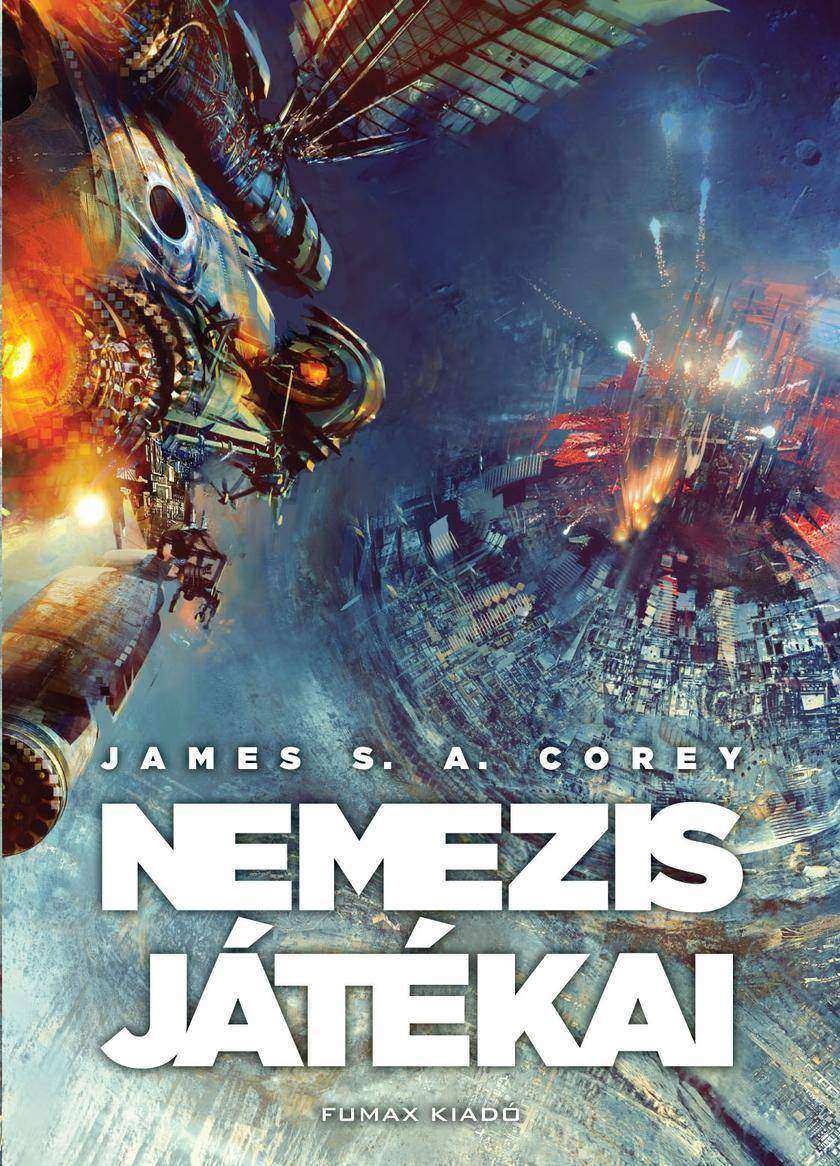
Nemezis játékai
¥71.69
You're a bad lot, Bernard Brooks. I don't think I ever knew a wuss boy." "Thank you for the compliment, Mr. Snowdon. Let me suggest, however, that wuss is hardly correct English." The speaker was fifteen years of age, but as tall as most boys of seventeen. He had a bold, aggressive manner, which he only assumed with those he thought were hostile or unfriendly. He could be a devoted friend, and a loyal subordinate to one who gained his good will. Mr. Snowdon he did not look upon as a friend, though he had been placed in his charge two months before by a cousin of his deceased father. Ezekiel Snowdon, a man of perhaps sixty, tall and with stooping shoulders, colored with anger at the boy's sarcastic words. He claimed to have been educated at a small Wes-tern college, and on the strength of it had established himself in the country and advertised for private pupils at a low rate. These were mostly young, and not competent to see his deficiencies, but Bernard was old enough and well enough educated to perceive and comment on them. This greatly annoyed Mr. Snowdon, who felt that the boy did not treat him with proper respect. "Quit your impudence!" said Snowdon with a vicious look in his greenish lived eyes. "I don't need no criticisms from a whipper snapper like you." "I intended it for your benefit, Mr. Snowdon," said Bernard demurely. "Besides, you criticise me. You called me a bad lot." "And so you are. A wuss—a worse boy I never seen." "Saw would be more correct, Mr. Snowdon." "Young man, you'd better look out. I won't submit to your aggravating impudence. Besides, you are ignorant of the fact that Chaucer and Spenser use seen for saw. Them are my favorite poets, so it is not strange that I should occasionally make use of their diction." "Thank you for the information, Mr. Snowdon. I did not know that you had such high authority. I have read a little of Chaucer and Spenser, and I never observed the word you mention." "Perhaps you have not read the same works as I," said Mr. Snowdon. "Very likely," remarked Bernard, struggling to suppress a smile.

A tó úrn?je
¥102.27
These tales are translated from a variety of authors. The translator has been chiefly led to the task by the hope of composing an entertaining volume out of materials not generally accessible. The works in which many of them are found, are by no means common, and the indelicacy with which almost all collections of Italian tales are polluted, deservedly excludes them from general perusal. Such care has, however, been employed in the following selection, and such liberties taken with the originals, when they appeared objectionable on this account, that it is hoped this little book will escape the censure too justly cast upon Italian works of humour, in general—a censure which falls heavily upon many of the otherwise admirable tales of Boccaccio. While, however, such trifling alterations have been made as appeared necessary, these tales may still justly be considered as fair specimens of the Italian Novella, and like the celebrated collection already alluded to, furnish us with a very lively idea of the early manners of the Italians. Those tales, from which our great dramatist borrowed parts of his plots, and some of his incidents, have a double interest, both from their own nature, and as they illustrate the process by which his genius, "by happy alchemy of mind," turned all the materials which fell in his way to gold. Two or three of this kind have been purposely selected. ITALIAN TALES: THE TEACHER TAUGHT. THE UNEXPECTED REPLY. WHO AM I? THE DEAD RIDER. THE SKILFUL PHYSICIAN THE POMEGRANATE SEED THE FATAL MISTAKE THE DEAD ALIVE THE FALSE CHAMPION THE MERCHANT OF VENICE THERE IS A SKELETON IN EVERY HOUSE. THE ELOPEMENT. THE FRIAR ENTRAPPED ANTONIO AND VERONICA. BELPHAGOR. THE SLEEPING DRAUGHT THE COUNTERPARTS
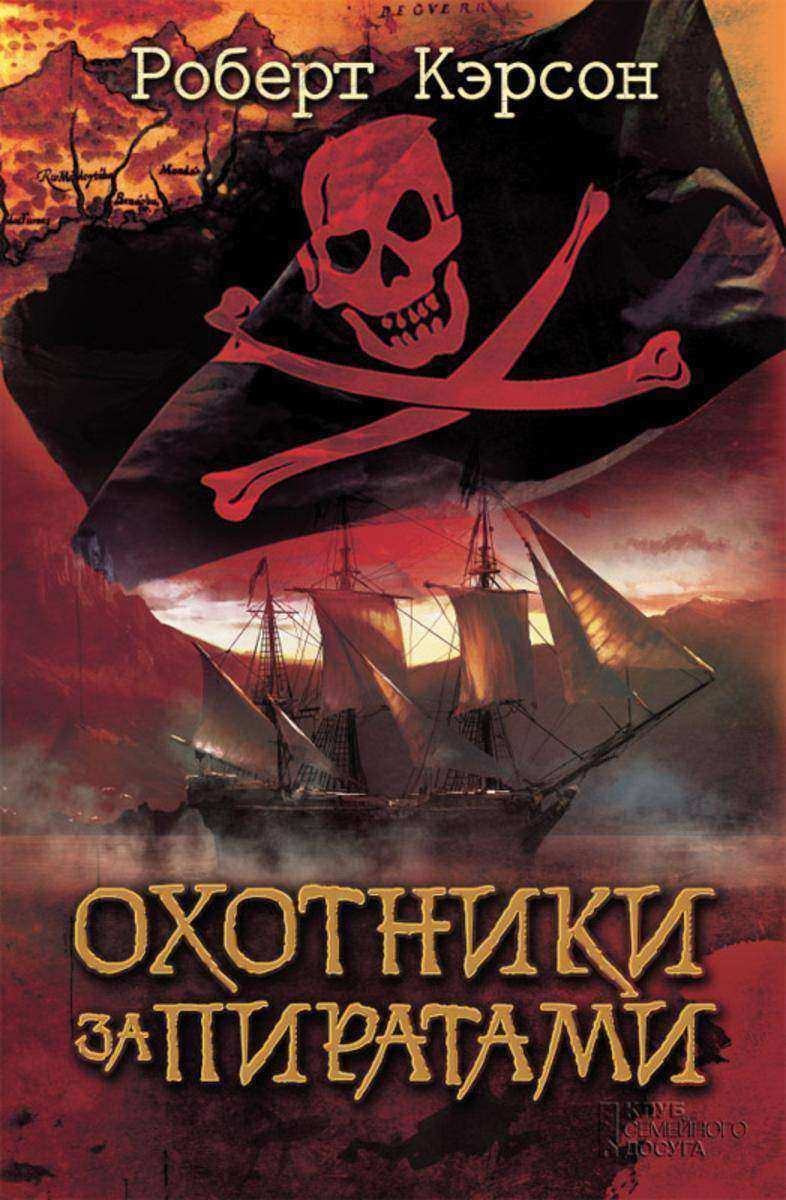
Охотники за пиратами (Ohotniki za piratami)
¥17.74
В центр? сюжету — життя усп?шного драматурга Ланселота ?Лотто? ? його кохано? дружини Матильди, яка усе життя провела в т?н? чолов?ка. Д?я роману розгорта?ться у Нью-Йорку впродовж двадцяти п’яти рок?в. Але одного дня ста? зрозум?ло, що самозакоханий ген?й Лотто — лише мар?онетка в руках сво?? дружини. Зовн? ?деальний шлюб ?де тр?щинами: повага поступа?ться м?сцем брехн?, кохання — ?нтригам.

Ugorj el? bunkócskám!: Bukovinai székely népmesék I.
¥32.05
1452 год. Византия рушится под натиском осман, которые пользуются слабостью императора Константина. Спасая от гибели загадочную красавицу Ямину, правитель едва не погиб и теперь прикован к постели. Столица в осаде. Но внезапно под стенами Константинополя появляется отважный шотландский воин Джон Грант. Он обещал учителю найти и спасти его единственную дочь. Поиски таинственной незнакомки приводят в императорский дворец. Оказывается, дочь его учителя — это Ямина, невеста Константина. Отважный шотландец готов на все, но еще не знает, какие тайные узы связывают его с самим императором и роковой красавицей…1452 god. Vizantija rushitsja pod natiskom osman, kotorye pol'zujutsja slabost'ju imperatora Konstantina. Spasaja ot gibeli zagadochnuju krasavicu Jaminu, pravitel' edva ne pogib i teper' prikovan k posteli. Stolica v osade. No vnezapno pod stenami Konstantinopolja pojavljaetsja otvazhnyj shotlandskij voin Dzhon Grant. On obeshhal uchitelju najti i spasti ego edinstvennuju doch'. Poiski tainstvennoj neznakomki privodjat v imperatorskij dvorec. Okazyvaetsja, doch' ego uchitelja — jeto Jamina, nevesta Konstantina. Otvazhnyj shotlandec gotov na vse, no eshhe ne znaet, kakie tajnye uzy svjazyvajut ego s samim imperatorom i rokovoj krasavicej…
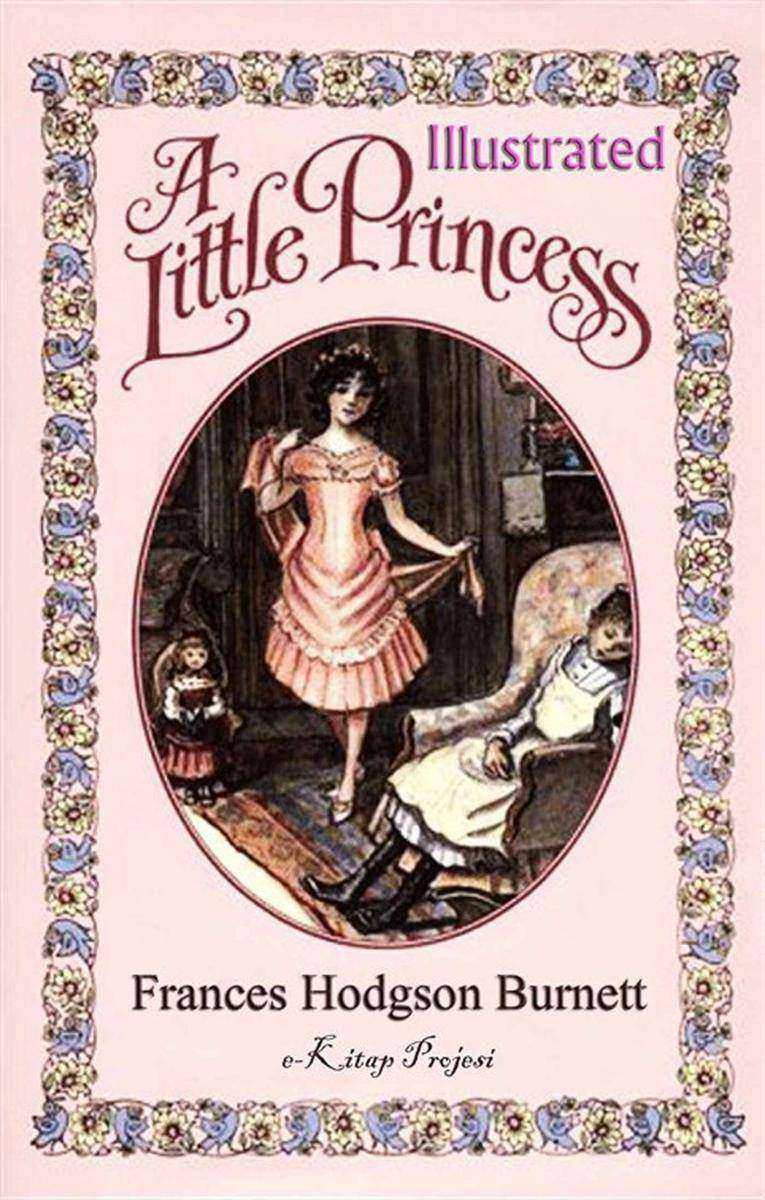
A Little Princess: (Illustrated)
¥8.09
Ríviai Geralt a thaneddi puccs után Brokilonban lábadozik. Egy világ választja el Cirit?l, a Meglepetés Gyermekt?l, akit pedig állítólag neki rendelt a sors – a lányt ugyanis Nilfgaardban látták utoljára. A vaják tehát hosszú és veszélyes útra indul a driádok földjér?l a háború sújtotta vidéken keresztül, de nem marad sokáig egyedül: ahogy közeledik úticéljához, egyre többen csatlakoznak hozzá… E furcsa kompánia végül egy olyan konfliktusba csöppen, melyet csak véres küzdelmek árán élhetnek túl. „Keresztül kell jutnod a t?zön, amely megperzsel ugyan, de meg is tisztít.” (Ríviai Geralt) A vaják-saga következ? kötete A megvetés idejének közvetlen folytatása. A lengyel szerz? ismét elröpíti az olvasót a szláv mítoszok és a valóság ihlette fantáziavilágába, ahol a tét nem csupán egy szörnyvadász vagy egy kislány élete, de az Északi Királyságok sorsa is.
A várúr
¥80.03
"When Jesus arrives, Hades bids his servants to bolt and lock the doors, but to no avail; Jesus shatters the gates and enters. He seizes Satan and binds him in iron chains, then consigning him into Hades’s keeping until the second coming. Jesus next turns his attention to the patriarchs. He raises up Adam, along with all the prophets and the saints. Together, they all depart up out of Hades, and ascend into Paradise.) The “Harrowing of Hell” portion of that Gospel was widely circulated in other compilations of religious literature, most notably in the Golden Legend of the lives of the saints, compiled by Jacob of Voragine in the 13th century." The literary versions of the “Harrowing of Hell” in turn gave rise to many works of art, including the “mystery play” tradition of medieval religious drama. Most commonly, however, people would learn about Jesus’s descent into the underworld from the artwork which decorated the churches and cathedrals of Europe. A Dialogue in Hades, this illlustrated version of the book, gives a many perspective to the readers, With WELL ILLUSTRATIONS BY MURAT UKRAY {E-KITAP PROJESI}..
Hosszúhajú veszedelem
¥8.67
The stories were written when Irish nationalism was at its peak, and a search for a national identity and purpose was raging; at a crossroads of history and culture, Ireland was jolted by various converging ideas and influences. They centre on Joyce's idea of an epiphany: a moment where a character experiences self-understanding or illumination. Many of the characters in Dubliners later appear in minor roles in Joyce's novel Ulysses. The initial stories in the collection are narrated by child protagonists, and as the stories continue, they deal with the lives and concerns of progressively older people. This is in line with Joyce's tripartite division of the collection into childhood, adolescence and maturity. THERE was no hope for him this time: it was the third stroke. Night after night I had passed the house (it was vacation time) and studied the lighted square of window: and night after night I had found it lighted in the same way, faintly and evenly. If he was dead, I thought, I would see the reflection of candles on the darkened blind for I knew that two candles must be set at the head of a corpse. He had often said to me: "I am not long for this world," and I had thought his words idle. Now I knew they were true. Every night as I gazed up at the window I said softly to myself the word paralysis. It had always sounded strangely in my ears, like the word gnomon in the Euclid and the word simony in the Catechism. But now it sounded to me like the name of some maleficent and sinful being. It filled me with fear, and yet I longed to be nearer to it and to look upon its deadly work.Old Cotter was sitting at the fire, smoking, when I came downstairs to supper. While my aunt was ladling out my stirabout he said, as if returning to some former remark of his: "No, I wouldn't say he was exactly... but there was something queer... there was something uncanny about him. I'll tell you my opinion...." He began to puff at his pipe, no doubt arranging his opinion in his mind. Tiresome old fool! When we knew him first he used to be rather interesting, talking of faints and worms; but I soon grew tired of him and his endless stories about the distillery. "I have my own theory about it," he said. "I think it was one of those... peculiar cases.... But it's hard to say...." He began to puff again at his pipe without giving us his theory. My uncle saw me staring and said to me:"Well, so your old friend is gone, you'll be sorry to hear." "Who?" said I."Father Flynn.""Is he dead?" ? ABOUT AUTHOR: ? James Augustine Aloysius Joyce (1882 – 1941) was an Irish novelist and poet, considered to be one of the most influential writers in the modernist avant-garde of the early 20th century. Joyce is best known for Ulysses (1922), a landmark work in which the episodes of Homer's Odyssey are paralleled in an array of contrasting literary styles, perhaps most prominent among these the stream of consciousness technique he perfected. Other major works are the short-story collection Dubliners (1914), and the novels A Portrait of the Artist as a Young Man (1916) and Finnegans Wake (1939). His complete oeuvre also includes three books of poetry, a play, occasional journalism, and his published letters.

Egy milliomos b?rében
¥2.94
Видано 45 мовами! Донна Тартт — лауреат Пул?тцер?всько? прем?? № 1 у списку 100 видатних книжок за верс??ю The New York Times Отямившись п?сля вибуху в музе?, тринадцятир?чний Тео ще не розум??, що там, п?д уламками, залишилися його мат?р ? його дитинство. Пробираючись до виходу, повз кам?ння та т?ла, в?н п?дбира? безц?нну картину фламандського майстра, яку так любила його мати. Дивний старий, вмираючи, в?дда? йому свого персня та просить винести картину зв?дси... Тео буде кидати ?з родини в родину, ?з Нью-Йорка до Амстердама, ?з глибин в?дчаю до ейфор??. Викрадений ?Щиголь? стане його прокляттям та над??ю на порятунок... Vidano 45 movami! Donna Tartt — laureat Pul?tcer?vs'ko? prem?? № 1 u spisku 100 vidatnih knizhok za vers??ju The New York Times Otjamivshis' p?slja vibuhu v muze?, trinadcjatir?chnij Teo shhe ne rozum??, shho tam, p?d ulamkami, zalishilisja jogo mat?r ? jogo ditinstvo. Probirajuchis' do vihodu, povz kam?nnja ta t?la, v?n p?dbira? bezc?nnu kartinu flamands'kogo majstra, jaku tak ljubila jogo mati. Divnij starij, vmirajuchi, v?dda? jomu svogo persnja ta prosit' vinesti kartinu zv?dsi... Teo bude kidati ?z rodini v rodinu, ?z N'ju-Jorka do Amsterdama, ?z glibin v?dchaju do ejfor??. Vikradenij ?Shhigol'? stane jogo prokljattjam ta nad??ju na porjatunok...

Karmazsin hadjárat
¥80.52
Aesop embodies an epigram not uncommon in human history; his fame is all the more deserved because he never deserved it. The firm foundations of common sense, the shrewd shots at uncommon sense, that characterise all the Fables, belong not him but to humanity. In the earliest human history whatever is authentic is universal: and whatever is universal is anonymous. In such cases there is always some central man who had first the trouble of collecting them, and afterwards the fame of creating them. He had the fame; and, on the whole, he earned the fame. There must have been something great and human, something of the human future and the human past, in such a man: even if he only used it to rob the past or deceive the future. The story of Arthur may have been really connected with the most fighting Christianity of falling Rome or with the most heathen traditions hidden in the hills of Wales. But the word "Mappe" or "Malory" will always mean King Arthur; even though we find older and better origins than the Mabinogian; or write later and worse versions than the "Idylls of the King." The nursery fairy tales may have come out of Asia with the Indo-European race, now fortunately extinct; they may have been invented by some fine French lady or gentleman like Perrault: they may possibly even be what they profess to be. But we shall always call the best selection of such tales "Grimm's Tales": simply because it is the best collection. The historical Aesop, in so far as he was historical, would seem to have been a Phrygian slave, or at least one not to be specially and symbolically adorned with the Phrygian cap of liberty. He lived, if he did live, about the sixth century before Christ, in the time of that Croesus whose story we love and suspect like everything else in Herodotus. There are also stories of deformity of feature and a ready ribaldry of tongue: stories which (as the celebrated Cardinal said) explain, though they do not excuse, his having been hurled over a high precipice at Delphi. It is for those who read the Fables to judge whether he was really thrown over the cliff for being ugly and offensive, or rather for being highly moral and correct. But there is no kind of doubt that the general legend of him may justly rank him with a race too easily forgotten in our modern comparisons: the race of the great philosophic slaves. Aesop may have been a fiction like Uncle Remus: he was also, like Uncle Remus, a fact. It is a fact that slaves in the old world could be worshipped like Aesop, or loved like Uncle Remus. It is odd to note that both the great slaves told their best stories about beasts and birds. But whatever be fairly due to Aesop, the human tradition called Fables is not due to him. This had gone on long before any sarcastic freedman from Phrygia had or had not been flung off a precipice; this has remained long after. It is to our advantage, indeed, to realise the distinction; because it makes Aesop more obviously effective than any other fabulist. Grimm's Tales, glorious as they are, were collected by two German students. And if we find it hard to be certain of a German student, at least we know more about him than We know about a Phrygian slave. The truth is, of course, that Aesop's Fables are not Aesop's fables, any more than Grimm's Fairy Tales were ever Grimm's fairy tales. But the fable and the fairy tale are things utterly distinct. There are many elements of difference; but the plainest is plain enough. There can be no good fable with human beings in it. There can be no good fairy tale without them.
A T?zkirályn?
¥80.52
Bob Houston, the youngest agent of the Federal Bureau of Investigation, stepped out of the Department of Justice Building and turned toward home, his heart beating faster than it had in months. It hardly seemed real but he was now a full-fledged agent in the greatest man hunting division in the Federal Government. Bob paused a moment at the curb. Another man who had emerged from the justice building joined him. It was his uncle, Merritt Hughes, one of the most famous detectives in the department. He put his arm around Bob’s shoulders and shook him in a rough but friendly embrace.“Well, Bob, how does it feel to be a real federal agent?” he asked. It was a moment before Bob replied, and when he finally spoke the words came slowly.“I hardly know,” he confessed, “as yet it doesn’t seem real, but there is one thing I do know—I’m going to work night and day to make a success of this new job.” “Don’t worry about making a success,” advised his uncle. “You’ve got the stuff to make good or you wouldn’t have been taken into the department.”“When do you think I’ll get my first assignment on a new case?” asked Bob. “That’s hard to say,” replied the famous detective, “but if I were you I’d go home now and get a good night’s sleep. In this kind of a game you’d better sleep when you can.” “Then I’m headed for home now,” said Bob. “Good night, and thanks for all you’ve done for me.”With that the young federal agent strode off down the avenue, his lungs drinking in great gulps of the cool air of the fall night. Merritt Hughes stood on the curb of the justice building watching his nephew until Bob turned the corner a block away. Anyone noticing the federal agent would have seen a slight smile of pleasure on his lips and he might have guessed that Merritt Hughes was greatly pleased by the events which had happened in the preceding hours. As a matter of fact, Bob Houston, a plain clerk in the archives division of the War Department, temporarily a provisional federal agent, had been the key figure in preventing the theft of some of Uncle Sam’s most valuable radio secrets.

Усп?шн? виступи на TED: Рецепти найкращих сп?кер?в
¥33.11
A lányok sorban álltak, szétterpesztett lábbal.Integettek a kocsiknak.Az egyik kezükkel, mert a másikkal a szoknyájukat tartották,knykük a híd korlátján...Négy fiatal pina.Ki ne lenne rá kíváncsi”Mit csinálsz, amíg szüleid a társadalom hasznos tagjaikéntdolgoznak, keresik és kltik a pénztTanulsz és játszol, gyjtd a tapasztalatot,hogy majd te is a társadalom hasznos tagja lehess...s persze kipróbálod azt is,amit nem szabad.Amíg lehet.A Kzd kamasz hsei meg akarnak élni, meg akarnak tapasztalni mindent, amit tabuként kezel a civilizáció. Az a gyllt civilizáció, amelytl magányosnak érzik magukat akkor is, amikor együtt vannak.Megélni a gynyr és a kín, a hatalom és az alávetettség mámorát!Belerhgni a halál képébe! Persze lehetleg a másokéba.Mert szabadok vagyunk.Csont nélkül szabadok.Nem így születtünk, nem így neveltek minket:azért vagyunk szabadok, mert azok akarunk lenni.Igaz vagy sem”
A History of Art for Beginners and Students
¥24.44
A kis szellem minden éjjel pontban éjfélkor f?lébred. Vígan járja Bagolyk? várának ?sszes termét, és meglátogatja ?reg barátját, Uhu bácsit. De k?zben arról ábrándozik, milyen jó lenne nappal látni a világot! Csupán egyetlenegyszer… Addig nem nyugszik, míg egy ver?fényes napon a kívánsága váratlanul nem teljesül. Ekkor izgalmas kalandok sora veszi kezdetét, és nemcsak a kis szellem számára… A Kolibri Klasszikusok sorozatban a Torzonborz-t?rténetek után egy újabb Otfried Preussler meseh?s, a kis szellem válhat generációk kedvencévé.


