


 购物车
购物车 个人中心
个人中心
Vészmadarak
¥57.47
"BLEAK HOUSE" is a novel by Charles Dickens, published in 20 monthly instalments between March 1852 and September 1853. It is held to be one of Dickens's finest novels, containing one of the most vast, complex and engaging arrays of minor characters and sub-plots in his entire canon. The story is told partly by the novel's heroine, Esther Summerson, and partly by a mostly omniscient narrator. Memorable characters include the menacing lawyer Tulkinghorn, the friendly but depressive John Jarndyce, and the childish and disingenuous Harold Skimpole, as well as the likeable but imprudent Richard Carstone. At the novel's core is long-running litigation in England's Court of Chancery, Jarndyce v Jarndyce, which has far-reaching consequences for all involved. This case revolves around a testator who apparently made several wills. The litigation, which already has taken many years and consumed between 60,000 and 70,000 in court costs, is emblematic of the failure of Chancery. Though Chancery lawyers and judges criticised Dickens's portrait of Chancery as exaggerated and unmerited, his novel helped to spur an ongoing movement that culminated in the enactment of legal reform in the 1870s. In fact, Dickens was writing just as Chancery was reforming itself, with the Six Clerks and Masters mentioned in Chapter One abolished in 1842 and 1852 respectively: the need for further reform was being widely debated. These facts raise an issue as to when Bleak House is actually set. Technically it must be before 1842, and at least some of his readers at the time would have been aware of this. However, there is some question as to whether this timeframe is consistent with the themes of the novel. The English legal historian Sir William Holdsworth set the action in 1827. Characters in Bleak House: As usual, Dickens drew upon many real people and places but imaginatively transformed them in his novel. Hortense is based on the Swiss maid and murderess Maria Manning. The "telescopic philanthropist" Mrs Jellyby, who pursues distant projects at the expense of her duty to her own family, is a criticism of women activists like Caroline Chisholm. The "childlike" but ultimately amoral character Harold Skimpole is commonly regarded as a portrait of Leigh Hunt. "Dickens wrote in a letter of 25 September 1853, 'I suppose he is the most exact portrait that was ever painted in words! ... It is an absolute reproduction of a real man'; and a contemporary critic commented, 'I recognized Skimpole instantaneously; ... and so did every person whom I talked with about it who had ever had Leigh Hunt's acquaintance.'"[2] G. K. Chesterton suggested that Dickens "may never once have had the unfriendly thought, 'Suppose Hunt behaved like a rascal!'; he may have only had the fanciful thought, 'Suppose a rascal behaved like Hunt!'". Mr Jarndyce's friend Mr Boythorn is based on the writer Walter Savage Landor. The novel also includes one of the first detectives in English fiction, Inspector Bucket. This character is probably based on Inspector Charles Frederick Field of the then recently formed Detective Department at Scotland Yard. Dickens wrote several journalistic pieces about the Inspector and the work of the detectives in Household Words, his weekly periodical in which he also published articles attacking the Chancery system. The Jarndyce and Jarndyce case itself has reminded many readers of the thirty-year Chancery case over Charlotte Smith's father-in-law's will. Major characters: Esther Summerson – the heroine of the story, and one of its two narrators (Dickens's only female narrator), raised as an orphan because the identity of her parents is unknown. At first, it seems probable that her guardian, John Jarndyce, is her father because he provides for her. This, however, he disavows shortly after she comes to live under his roof.
Around the World in Eighty Days: Illustrated
¥8.09
“Ah there, girls! How are you?”—“GOD SPEED YOU” “Oh, Nathalie, I do believe there’s Grace Tyson in her new motor-car,” exclaimed Helen Dame, suddenly laying her hand on her companion’s arm as the two girls were about to cross Main Street, the wide, tree-lined thoroughfare of the old-fashioned town of Westport, Long Island.Nathalie Page halted, and, swinging about, peered intently at the brown-uniformed figure of a young girl seated at the steering-wheel of an automobile, which was speeding quickly towards them. Yes, it was Grace, who, in her sprightliest manner, her face aglow from the invigorating breezes of an April afternoon, called out, “Ah there, girls! How are you? Oh, my lucky star must have guided me, for I have something thrilling to tell you!” As she spoke the girl guided the car to the curb, and the next moment, with an airy spring, had landed on the ground at their side.With a sudden movement the uniformed figure clicked her heels together and bent stiffly forward as her arm swung up, while her forefinger grazed her forehead in a military salute. “I salute you, comrades,” she said with grave formality, “at your service as a member of the Motor Corps of America. “Yes, girls,” she shrilled joyously, forgetting her assumed r?le in her eagerness to tell her news, “I’m on the job, for I’m to see active service for the United States government. I’ve just returned from an infantry drill of the Motor Corps at Central Park, New York. “No, I’ll be honest,” she added laughingly, in answer to the look of amazed inquiry on the faces of her companions, “and ’fess’ that I didn’t have the pleasure of drilling in public, for I’m a raw recruit as yet. We recruits go through our manual of arms at one of the New York armories, drilled by a regular army sergeant. Oh, I’ve been in training some time, for you know I took out my chauffeur’s and mechanician’s State licenses last winter. LENA HALSEY:Author of “Blue Robin, the Girl Pioneer”and “America’s Daughter”
Madarak a dobozban
¥57.14
"A Daughter of the Snows" is Jack London's first novel. The novel features a strong female heroine, Frona Welse. Frona was born into a wealthy family and educated at Stanford but she takes to the Yukon trail after upsetting her father and his wealthy community of friends with her out-spoken ways and her innocent friendship with the town's prostitute. "All ready, Miss Welse, though I'm sorry we can't spare one of the steamer's boats." Frona Welse arose with alacrity and came to the first officer's side. "We're so busy," he explained, "and gold-rushers are such perishable freight, at least—" "I understand," she interrupted, "and I, too, am behaving as though I were perishable. And I am sorry for the trouble I am giving you, but—but—" She turned quickly and pointed to the shore. "Do you see that big log-house Between the clump of pines and the river I was born there." "Guess I'd be in a hurry myself," he muttered, sympathetically, as he piloted her along the crowded deck.Everybody was in everybody else's way; nor was there one who failed to proclaim it at the top of his lungs. A thousand gold-seekers were clamoring for the immediate landing of their outfits. Each hatchway gaped wide open, and from the lower depths the shrieking donkey-engines were hurrying the misassorted outfits skyward. On either side of the steamer, rows of scows received the flying cargo, and on each of these scows a sweating mob of men charged the descending slings and heaved bales and boxes about in frantic search. Men waved shipping receipts and shouted over the steamer-rails to them. Sometimes two and three identified the same article, and war arose. The "two-circle" and the "circle-and-dot" brands caused endless jangling, while every whipsaw discovered a dozen claimants. "The purser insists that he is going mad," the first officer said, as he helped Frona Welse down the gangway to the landing stage, "and the freight clerks have turned the cargo over to the passengers and quit work. But we're not so unlucky as the Star of Bethlehem," he reassured her, pointing to a steamship at anchor a quarter of a mile away. "Half of her passengers have pack-horses for Skaguay and White Pass, and the other half are bound over the Chilcoot. So they've mutinied and everything's at a standstill." "Hey, you!" he cried, beckoning to a Whitehall which hovered discreetly on the outer rim of the floating confusion. A tiny launch, pulling heroically at a huge tow-barge, attempted to pass between; but the boatman shot nervily across her bow, and just as he was clear, unfortunately, caught a crab. This slewed the boat around and brought it to a stop. "Watch out!" the first officer shouted. ABOUT AUTHOR: John Griffith "Jack" London (born John Griffith Chaney, January 12, 1876 – November 22, 1916) was an American author, journalist, and social activist, Authors of; "The Pearls of Parlay" and "The Heathen", and of the San Francisco Bay area in The Sea Wolf. And also; as his dystopian novel The Iron Heel, his non-fiction exposé The People of the Abyss, and The War of the Classes.
Antigoné
¥8.67
FIRE MOUNTAIN IS "A THRILLING SEA STORY BY "NORMAN SPRINGER", AUTHOR OF "THE BLOOD SHIP" Years. Bright, aslant eyes, and a suave and ever-ready smile that broke immediately Martin met his gaze. "You will be so good as to inform the honorable that Dr. Ichi is here?" he asked in precise and stilted voice. Ever the same—the noiseless entry, the quietly spoken request for the lawyer. Martin repressed a flash of irritation; the little Japanese, with his uncanny soft-footedness and stereotyped address, got upon his nerves. However, his orders were explicit; Mr. Smatt would see Dr. Ichi without delay or preliminary, whenever Dr. Ichi favored the office with a visit. It was already the third visit that day, but orders were orders. So, Martin inclined his head toward the door of Smatt's private office. The Japanese crossed the room. He bowed to Martin, as stately a bow as if Martin were also an "honorable," instead of a poor devil of a law clerk; then, noiselessly as he had entered the outer office, Dr. Ichi disappeared within Smatt's sanctum. Martin turned to his window again. But his bright day dream was fled, and he could not conjure it back again. The view was without charm. His thoughts, despite himself, persisted in centering upon the dapper little figure now closeted with his employer. The dandified Jap aroused Martin's interest. What manner of client was this Dr. Ichi? Martin had not seen a single scrap of paper, nor had Smatt dropped a single hint, concerning the case. It was mysterious! Martin was not an overly curious chap, but he was human. It was another of Smatt's secret cases, thought Martin. Another token of those hidden activities of the old vulture, which he sensed, but did not know about. For, though Martin attended to the routine work, though his duties were responsible—Smatt specialized and was prominent in maritime law—still Martin knew he did not enjoy his employer's complete confidence. Much of Smatt's time was taken up with cases Martin knew nothing about, with clients who appeared to shun the daylight of the courts. The Nippon Trading Company, for instance! Martin knew Smatt was interested in a company of that name—a strange company, that apparently conducted business without using the mails. And there was business between Ichi and Smatt—money, or Smatt would have nothing to do with it. The mystery aroused Martin's dormant curiosity. But all his speculation was pointless. Martin bethought himself of the marine affidavit lying uncompleted upon his desk. He turned from the window with the intention of applying himself to that task—and he discovered the office to have a second visitor. Another unusual figure who possessed the penchant for surreptitious entry. He observed the fellow in the very act of closing the office door.

Bojgás az világba
¥8.67
Dracula is an 1897 Gothic horror novel by Irish author Bram Stoker. Famous for introducing the character of the vampire Count Dracula, the novel tells the story of Dracula's attempt to move from Transylvania to England, and the battle between Dracula and a small group of men and women led by Professor Abraham Van Helsing. Dracula has been assigned to many literary genres including vampire literature, horror fiction, the gothic novel and invasion literature. The novel touches on themes such as the role of women in Victorian culture, sexual conventions, immigration, colonialism, and post-colonialism. Although Stoker did not invent the vampire, he defined its modern form, and the novel has spawned numerous theatrical, film and television interpretations. ? ?Characters: ?? Jonathan Harker: A solicitor sent to do business with Count Dracula; Mina's fiancé and prisoner in Dracula's castle.?? Count Dracula: A Transylvanian noble who bought a house in London and asked Jonathan Harker to come to his castle to do business with him.?? Wilhelmina "Mina" Harker (née Murray): A schoolteacher and Jonathan Harker's fiancée.?? Lucy Westenra: A 19-year-old aristocrat; Mina's best friend; Arthur's fiancée and Dracula's first victim.?? Arthur Holmwood: Lucy's suitor and later fiancé.?? Jack Seward: A doctor; one of Lucy's suitors and a former student of Dr Abraham Van Helsing.?? Abraham Van Helsing: A Dutch professor; Jack Seward's teacher and vampire hunter.?? Quincey Morris: An American cowboy and explorer; and one of Lucy's suitors.?? Renfield: A lawyer whom Dracula turned mad.?? Brides of Dracula: Three siren-like vampire women who serve Dracula. Although they are popularly known as "The Brides of Dracula", the novel never calls them this. ? About Author: ? Abraham "Bram" Stoker (1847 – 1912) was an Irish novelist and short story writer, best known today for his 1897 Gothic novel Dracula. During his lifetime, he was better known as personal assistant of actor Henry Irving and business manager of the Lyceum Theatre in London, which Irving owned.

Heidi: Illustrated Edition
¥9.24
The thing that went under the name of automobile wheezed into the ranchyard and rattled to a halt. With creaks and groans in every joint the car discharged its six very dusty, very weary occupants. At the same time, the screen door of the ranch house banged shut and a flying figure descended on the new arrivals. “Oh, Gale, but I’m glad to see you,” the girl from the ranch house declared hugging the foremost one of the visitors. Gale Howard returned the hug with equal warmth. The two were cousins, and Gale and her friends, The Adventure Girls, had traveled West to spend the summer on the K Bar O Ranch, owned by Gale’s uncle. “But don’t tell me you traveled all the way West in that!” Virginia Wilson murmured aghast, when the introductions and first greetings were over. “We wouldn’t have lived to tell the tale,” declared Carol Carter. “I never knew a car that had so many bumps in it.” “We came West to Phoenix on the train,” Gale explained. “It was there we bought the car and drove up here.” “You wouldn’t think we bought it second hand, would you?” Janet Gordon murmured. “No,” Phyllis Elton agreed with a twinkle in her eyes. “It looks as though we made it ourselves.” The last two of the new arrivals, Madge Reynolds and Valerie Wallace, who had been busy unstrapping luggage and tumbling bags onto the ground, turned now to the ranch girl. “What shall we do with our stuff?” Madge asked. “I suppose you will want to change from your traveling suits,” Virginia suggested, “so just bring along what you want now. Leave the rest here. Tom can bring it in later.” Tom was her elder brother and as the girls walked toward the ranch house he crossed the yard from the corral. Behind him came Gale’s uncle. Virginia called her mother and more greetings and introductions followed. “But how did you manage to leave home without a chaperon?” Virginia asked from her position on the bed in the room shared by Gale and Valerie. “It was all we could do to get away without one,” a laughing voice in the adjoining room declared, and Janet appeared on the threshold. “Finally our parents decided that Gale and Valerie, being the only sane and level-headed ones among us, could be trusted to see that we behaved properly,” Carol added, hanging over Janet’s shoulder. “That shows how much they really know Gale and Valerie,” added Janet mischievously. “If they had any sense at all, they would have appointed me guardian angel of the troupe.” “Then we would never have gotten this far,” Valerie declared, struggling to pull on a brown riding boot. “Yes, Virginia,” Gale laughed, “when we did let Janet drive for a little while, she ran us into a ditch, went the wrong way on a one way street in a little town below here, talked back to a policeman and nearly landed us all in jail.” “Yes, we had to let Gale drive thereafter for self preservation,” Carol murmured.
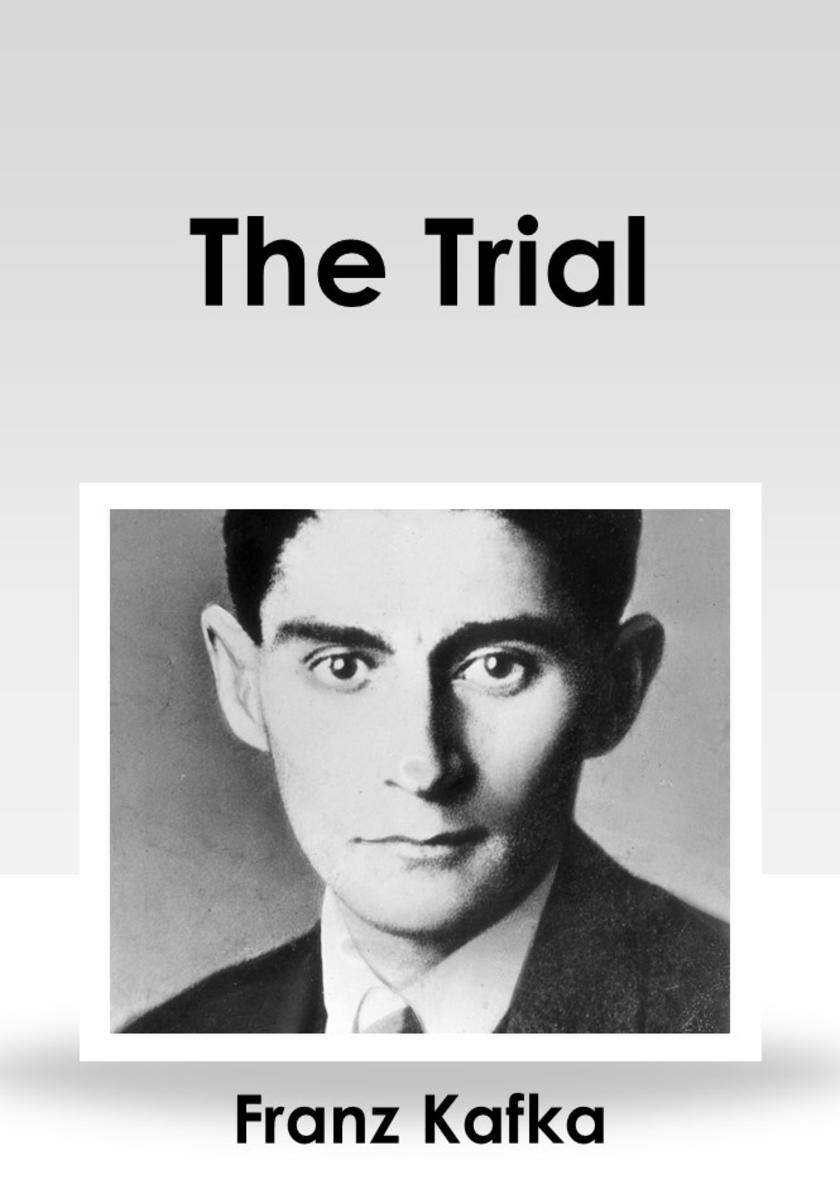
The Trial
¥8.67
Great Expectations is Charles Dickens's thirteenth novel. It is his second novel, after David Copperfield, to be fully narrated in the first person. Great Expectations is abildungsroman, or a coming-of-age novel, and it is a classic work of Victorian literature. It depicts the growth and personal development of an orphan named Pip. The novel was first published in serial form in Dickens' weekly periodical All the Year Round, from 1 December 1860 to August 1861. In October 1861, Chapman and Hall published the novel in three volumes. Great Expectations was to be twice as long, but constraints imposed by the management of All the Year Round limited the novel's length. Collected and dense, with a conciseness unusual for Dickens, the novel represents Dickens' peak and maturity as an author. According to G. K. Chesterton, Dickens penned Great Expectations in "the afternoon of [his] life and fame." It was the penultimate novel Dickens completed, preceding Our Mutual Friend. It is set among the marshes of Kent and in London in the early to mid-1800s. From the outset, the reader is "treated" by the terrifying encounter between Pip, the protagonist, and the escaped convict, Abel Magwitch. Great Expectations is a graphic book, full of extreme imagery, poverty, prison ships, "the hulks," barriers and chains, and fights to the death. It therefore combines intrigue and unexpected twists of autobiographical detail in different tones. Regardless of its narrative technique, the novel reflects the events of the time, Dickens' concerns, and the relationship between society and man. The novel has received mixed reviews from critics: Thomas Carlyle speaks of "All that Pip's nonsense," while George Bernard Shaw praised the novel as "All of one piece and Consistently truthfull." Dickens felt Great Expectations was his best work, calling it "a very fine idea," and was very sensitive to compliments from his friends: "Bulwer, who has been, as I think you know, extraordinarily taken by the book." ABOUT AUTHOR: Charles John Huffam Dickens (1812 – 1870) was an English writer and social critic. He created some of the world's most memorable fictional characters and is generally regarded as the greatest novelist of the Victorian period. During his life, his works enjoyed unprecedented fame, and by the twentieth century his literary genius was broadly acknowledged by critics and scholars. His novels and short stories continue to be widely popular. Born in Portsmouth, England, Dickens was forced to leave school to work in a factory when his father was thrown into debtors' prison. Although he had little formal education, his early impoverishment drove him to succeed. Over his career he edited a weekly journal for 20 years, wrote 15 novels, 5 novellas and hundreds of short stories and non-fiction articles, lectured and performed extensively, was an indefatigable letter writer, and campaigned vigorously for children's rights, education, and other social reforms. Dickens sprang to fame with the 1836 serial publication of The Pickwick Papers. Within a few years he had become an international literary celebrity, famous for his humour, satire, and keen observation of character and society. His novels, most published in monthly or weekly instalments, pioneered the serial publication of narrative fiction, which became the dominant Victorian mode for novel publication. The instalment format allowed Dickens to evaluate his audience's reaction, and he often modified his plot and character development based on such feedback. For example, when his wife's chiropodistexpressed distress at the way Miss Mowcher in David Copperfield seemed to reflect her disabilities, Dickens went on to improve the character with positive features. Fagin inOliver Twist apparently mirrors the famous fence Ikey Solomon; His caricature of Leigh Hunt in the figure of Mr Skimpole in Bleak House was likewise toned down on advice from some of his friends, as they read episodes. In the same novel, both Lawrence Boythorne and Mooney the beadle are drawn from real life – Boythorne from Walter Savage Landorand Mooney from 'Looney', a beadle at Salisbury Square. His plots were carefully constructed, and Dickens often wove in elements from topical events into his narratives. Masses of the illiterate poor chipped in ha'pennies to have each new monthly episode read to them, opening up and inspiring a new class of readers.
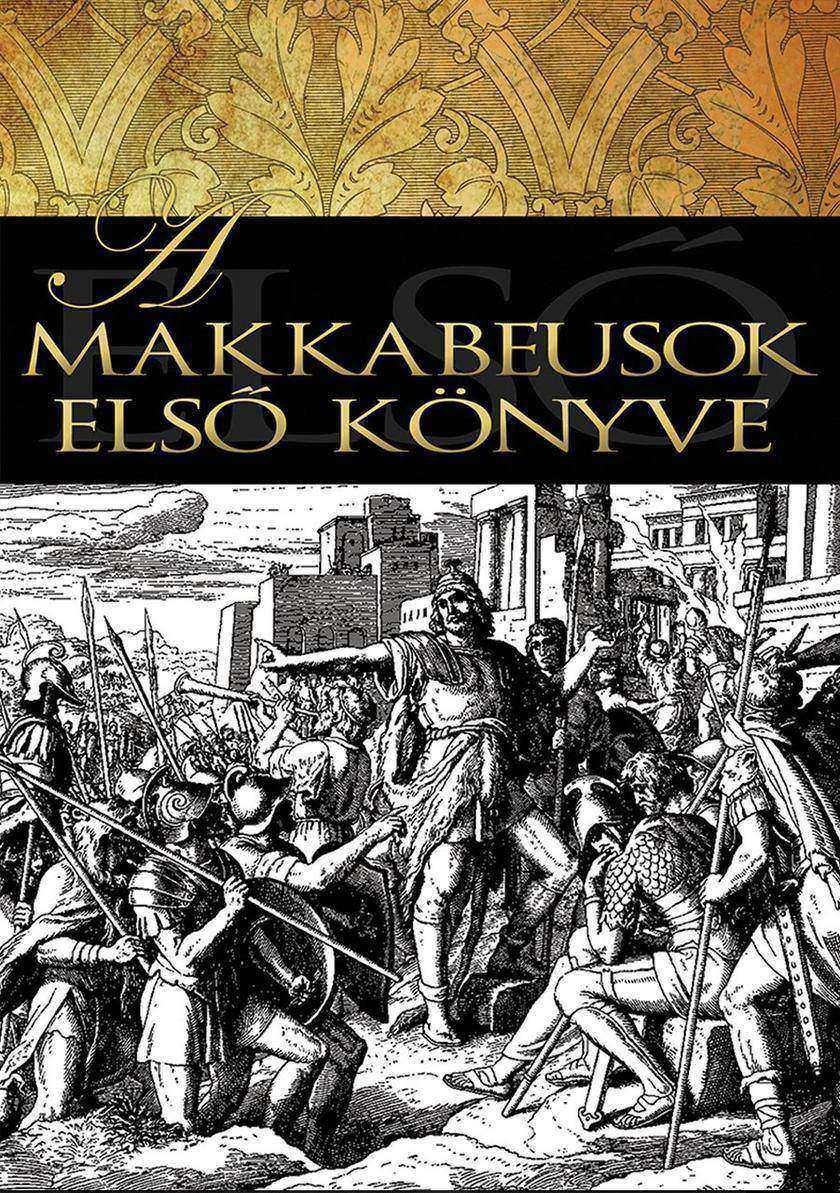
A makkabeusok els? k?nyve
¥25.91
The Discovery of the Future is a philosophical lecture by H. G. Wells that argues for the knowability of the future. It was originally delivered to the Royal Institution on January 24, 1902. Before appearing in book form. Wells begins by distinguishing between “two divergent types of mind,” one that judges and attaches importance principally to what has happened in the past and one that judges and attaches importance principally to what will happen in the future. To the former he attributes the adjectives “legal or submissive,” “passive,” and “oriental,” and to the latter the adjectives “legislative, creative, organizing, or masterful,” and “active,” calling it “a more modern and much less abundant type of mind.” ? ? ? ? ? ? ? ? ? ? ? ? ? ? ? ? ? ? ? ? ? ? ? ? ? ? ?*** It will lead into my subject most conveniently to contrast and separate two divergent types of mind, types which are to be distinguished chiefly by their attitude toward time, and more particularly by the relative importance they attach and the relative amount of thought they give to the future. The first of these two types of mind, and it is, I think, the predominant type, the type of the majority of living people, is that which seems scarcely to think of the future at all, which regards it as a sort of blank non-existence upon which the advancing present will presently write events. The second type, which is, I think, a more modern and much less abundant type of mind, thinks constantly and by preference of things to come, and of present things mainly in relation to the results that must arise from them. The former type of mind, when one gets it in its purity, is retrospective in habit, and it interprets the things of the present, and gives value to this and denies it to that, entirely with relation to the past. The latter type of mind is constructive in habit, it interprets the things of the present and gives value to this or that, entirely in relation to things designed or foreseen. While from that former point of view our life is simply to reap the consequences of the past, from this our life is to prepare the future. The former type one might speak of as the legal or submissive type of mind, because the business, the practice, and the training of a lawyer dispose him toward it; he of all men must constantly refer to the law made, the right established, the precedent set, and consistently ignore or condemn the thing that is only seeking to establish itself. The latter type of mind I might for contrast call the legislative, creative, organizing, or masterful type, because it is perpetually attacking and altering the established order of things, perpetually falling away from respect for what the past has given us. It sees the world as one great workshop, and the present is no more than material for the future, for the thing that is yet destined to be. It is in the active mood of thought, while the former is in the passive; it is the mind of youth, it is the mind more manifest among the western nations, while the former is the mind of age, the mind of the oriental. Things have been, says the legal mind, and so we are here. The creative mind says we are here because things have yet to be. Now I do not wish to suggest that the great mass of people belong to either of these two types. Indeed, I speak of them as two distinct and distinguishable types mainly for convenience and in order to accentuate their distinction. There are probably very few people who brood constantly upon the past without any thought of the future at all, and there are probably scarcely any who live and think consistently in relation to the future. The great mass of people occupy an intermediate position between these extremes, they pass daily and hourly from the passive mood to the active, they see this thing in relation to its associations and that thing in relation to its consequences, and they do not even suspect that they are using two distinct methods in their minds.

Evolution of Love
¥18.74
In these times of ours, though concerning the exact year there is no need to be precise, a boat of dirty and disreputable appearance, with two figures in it, floated on the Thames, between Southwark bridge which is of iron, and London Bridge which is of stone, as an autumn evening was closing in. The figures in this boat were those of a strong man with ragged grizzled hair and a sun-browned face, and a dark girl of nineteen or twenty, sufficiently like him to be recognizable as his daughter. The girl rowed, pulling a pair of sculls very easily; the man, with the rudder-lines slack in his hands, and his hands loose in his waistband, kept an eager look out. He had no net, hook, or line, and he could not be a fisherman; his boat had no cushion for a sitter, no paint, no inscription, no appliance beyond a rusty boathook and a coil of rope, and he could not be a waterman; his boat was too crazy and too small to take in cargo for delivery, and he could not be a lighterman or river-carrier; there was no clue to what he looked for, but he looked for something, with a most intent and searching gaze. The tide, which had turned an hour before, was running down, and his eyes watched every little race and eddy in its broad sweep, as the boat made slight head-way against it, or drove stern foremost before it, according as he directed his daughter by a movement of his head. She watched his face as earnestly as he watched the river. But, in the intensity of her look there was a touch of dread or horror. Allied to the bottom of the river rather than the surface, by reason of the slime and ooze with which it was covered, and its sodden state, this boat and the two figures in it obviously were doing something that they often did, and were seeking what they often sought. Half savage as the man showed, with no covering on his matted head, with his brown arms bare to between the elbow and the shoulder, with the loose knot of a looser kerchief lying low on his bare breast in a wilderness of beard and whisker, with such dress as he wore seeming to be made out of the mud that begrimed his boat, still there was a business-like usage in his steady gaze. So with every lithe action of the girl, with every turn of her wrist, perhaps most of all with her look of dread or horror; they were things of usage. 'Keep her out, Lizzie. Tide runs strong here. Keep her well afore the sweep of it.' Trusting to the girl's skill and making no use of the rudder, he eyed the coming tide with an absorbed attention. So the girl eyed him. But, it happened now, that a slant of light from the setting sun glanced into the bottom of the boat, and, touching a rotten stain there which bore some resemblance to the outline of a muffled human form, coloured it as though with diluted blood. This caught the girl's eye, and she shivered. 'What ails you?' said the man, immediately aware of it, though so intent on the advancing waters; 'I see nothing afloat.' The red light was gone, the shudder was gone, and his gaze, which had come back to the boat for a moment, travelled away again. Wheresoever the strong tide met with an impediment, his gaze paused for an instant. At every mooring-chain and rope, at every stationery boat or barge that split the current into a broad-arrowhead, at the offsets from the piers of Southwark Bridge, at the paddles of the river steamboats as they beat the filthy water, at the floating logs of timber lashed together lying off certain wharves, his shining eyes darted a hungry look. After a darkening hour or so, suddenly the rudder-lines tightened in his hold, and he steered hard towards the Surrey shore. Always watching his face, the girl instantly answered to the action in her sculling; presently the boat swung round, quivered as from a sudden jerk, and the upper half of the man was stretched out over the stern.
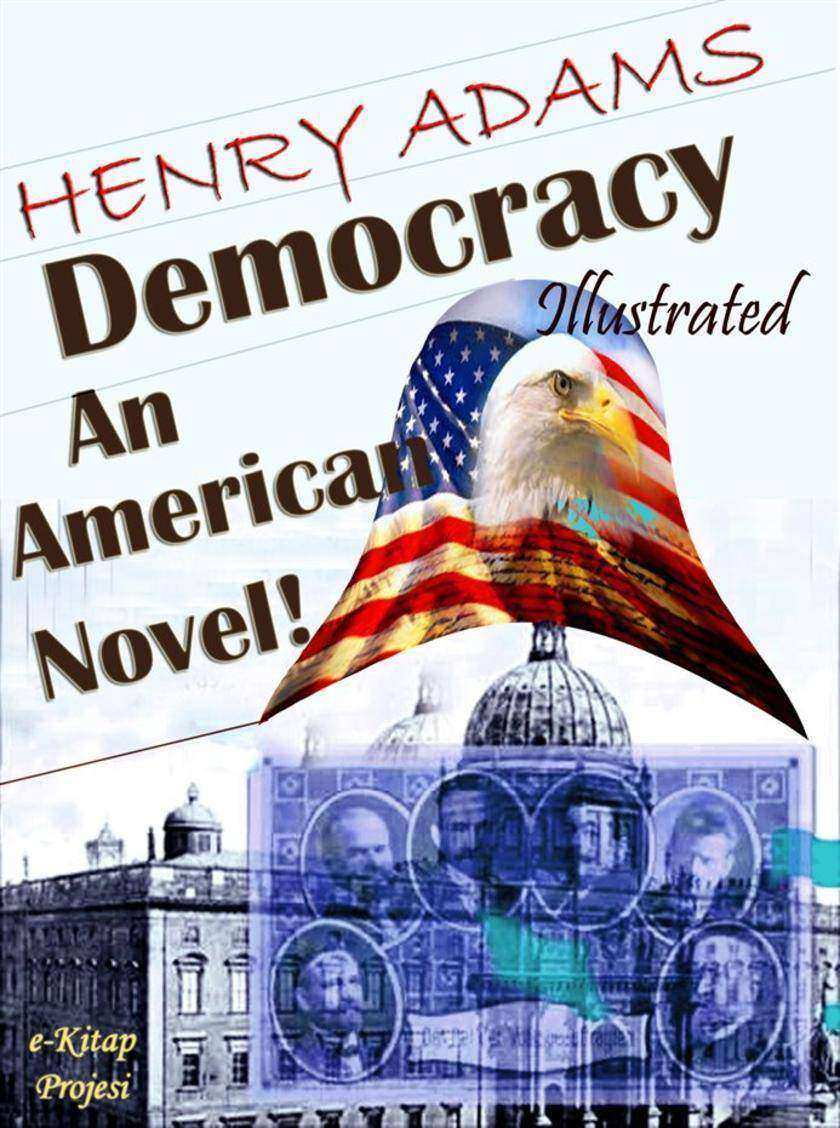
Democracy: An American Novel!
¥28.04
A very little boy stood upon a heap of gravel for the honor of Rum Alley. He was throwing stones at howling urchins from Devil's Row who were circling madly about the heap and pelting at him. His infantile countenance was livid with fury. His small body was writhing in the delivery of great, crimson oaths. "Run, Jimmie, run! Dey'll get yehs," screamed a retreating Rum Alley child. "Naw," responded Jimmie with a valiant roar, "dese micks can't make me run." Howls of renewed wrath went up from Devil's Row throats. Tattered gamins on the right made a furious assault on the gravel heap. On their small, convulsed faces there shone the grins of true assassins. As they charged, they threw stones and cursed in shrill chorus. The little champion of Rum Alley stumbled precipitately down the other side. His coat had been torn to shreds in a scuffle, and his hat was gone. He had bruises on twenty parts of his body, and blood was dripping from a cut in his head. His wan features wore a look of a tiny, insane demon. On the ground, children from Devil's Row closed in on their antagonist. He crooked his left arm defensively about his head and fought with cursing fury. The little boys ran to and fro, dodging, hurling stones and swearing in barbaric trebles. From a window of an apartment house that upreared its form from amid squat, ignorant stables, there leaned a curious woman. Some laborers, unloading a scow at a dock at the river, paused for a moment and regarded the fight. The engineer of a passive tugboat hung lazily to a railing and watched. Over on the Island, a worm of yellow convicts came from the shadow of a building and crawled slowly along the river's bank. A stone had smashed into Jimmie's mouth. Blood was bubbling over his chin and down upon his ragged shirt. Tears made furrows on his dirt-stained cheeks. His thin legs had begun to tremble and turn weak, causing his small body to reel. His roaring curses of the first part of the fight had changed to a blasphemous chatter.

A cigánybáró
¥8.67
Emma, by Jane Austen, is a novel about youthful hubris and the perils of misconstrued romance. The novel was first published in December 1815. As in her other novels, Austen explores the concerns and difficulties of genteel women living in Georgian-Regency England; she also creates a lively comedy of manners among her characters. Emma Woodhouse, handsome, clever, and rich, with a comfortable home and happy disposition, seemed to unite some of the best blessings of existence; and had lived nearly twenty-one years in the world with very little to distress or vex her. She was the youngest of the two daughters of a most affectionate, indulgent father; and had, in consequence of her sister's marriage, been mistress of his house from a very early period. Her mother had died too long ago for her to have more than an indistinct remembrance of her caresses; and her place had been supplied by an excellent woman as governess, who had fallen little short of a mother in affection. Sixteen years had Miss Taylor been in Mr. Woodhouse's family, less as a governess than a friend, very fond of both daughters, but particularly of Emma. Between them it was more the intimacy of sisters. Even before Miss Taylor had ceased to hold the nominal office of governess, the mildness of her temper had hardly allowed her to impose any restraint; and the shadow of authority being now long passed away, they had been living together as friend and friend very mutually attached, and Emma doing just what she liked; highly esteeming Miss Taylor's judgment, but directed chiefly by her own. The real evils, indeed, of Emma's situation were the power of having rather too much her own way, and a disposition to think a little too well of herself; these were the disadvantages which threatened alloy to her many enjoyments. The danger, however, was at present so unperceived, that they did not by any means rank as misfortunes with her.
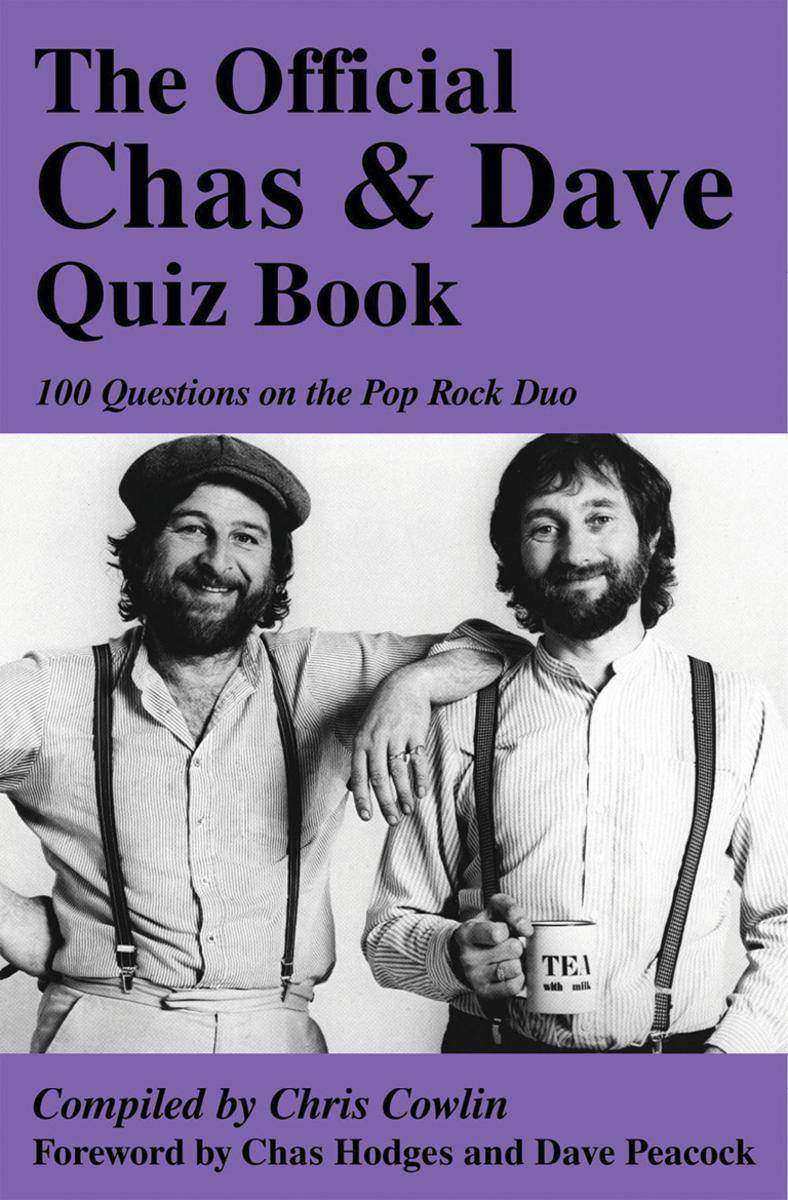
Official Chas & Dave Quiz Book
¥24.43
Do you enjoy the music of Cockney rock duo Chas & Dave? Maybe you know the lyrics to all their songs and can name their albums? Then what better way to pay tribute to the 'Rockney' singers than with this quiz book?The 100 questions in The Official Chas & Dave Quiz Book are designed to test your memory of the events that have shaped the lives and music of two of the most popular musical entertainers to emerge from the '70s and '80s. Chas & Dave have a string of hits to their credit all injected with their own particular brand of humour. This book covers the early years, career highlights and all those unforgettable best-selling songs bringing the Chas & Dave story right up to the present day. Packed with so much information, you are certain to find out something you never knew about the popular entertainers. This book will appeal to Chas & Dave fans of all ages and anyone who has ever sung along to one of their songs.

Sci-fi Film & Television Quiz Book
¥24.43
Are you a big fan of science fiction? Have you seen all the iconic sci-fi films and followed the many TV series? Do you know the names of all the famous characters from The Incredible Hulk to Catwoman? If you think you are an expert on science fiction why not test yourself with this new quiz book? Which husband and wife team created Thunderbirds and Space 1999? What is the name of Erin Gray's character in Buck Rogers in the 25th Century? Which 2010 film won Academy Awards in four categories for best visual effects, sound editing, sound mixing and cinematography? The answers to all these questions and more can be found in The Sci-Fi Film & Television Quiz Book. Science fiction remains one of the most popular and enduring genres in film and TV and has produced several classic titles and memorable characters. With 100 challenging questions on some of the all time great films and TV series past and present, this is a must-have book for sci-fi fans of all ages.
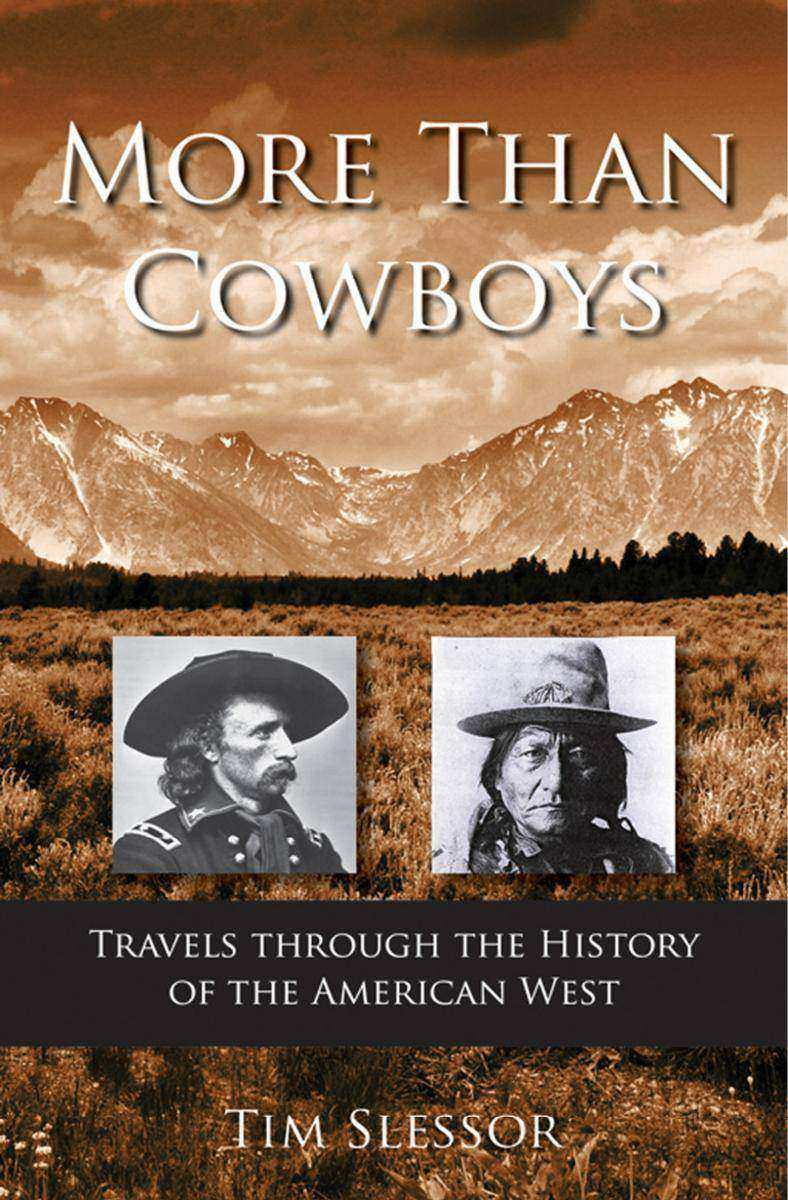
More Than Cowboys
¥98.00
So many books about the American West leave out the more intriguing details:When, in 1803, the young USA doubled its size with the purchase from France of an unexplored vastness called La Louisiane, it was a British bank which lent the Americans most of the $15 million that they didn't have. So the financial papers for the biggest real-estate deal in history are, to this day, held in a London vault. Not many people know that... If his ranching uncle-by-marriage had had his way, the teenaged Winston Churchill - a disappointing scholar - might have been sent west to Wyoming to train as a cowboy. Who knows but, in time, he himself might have become a rancher. How then would history have turned out? Another ranching Englishman played a key role in recruiting a small army of Texas gunmen to "e;invade"e; northern Wyoming and kill more than 40 small settlers, men who had too easily been accused of being rustlers. The plan went badly wrong. But the Englishman had slipped away - gone home on holiday... It seems unlikely that Butch Cassidy was killed in a Bolivian shoot-out. It seems that he returned, under a false name, to live out his days in the West. In 1935, he even submitted a autobiographical script to Hollywood - only to have it rejected as being "e;too preposterous to be believable"e;. He died two years later - penniless. "e;Royal tourist visits the Colonies"e; was the local headline. In her VC-10, the Queen had flown into the small town of Sheridan in Wyoming. First, she took an extended walkabout along Main Street and then she holidayed for several days on a friend's ranch in the shadow of the Big Horn Mountain ... Tim Slessor, a one-time BBC producer, has filmed "e;out West"e; for nearly 50 years. In this book, he picks out a selection of fascinating stories that range from the mountain men and their fur trade to the pioneers of the overland trail, from Custer and the disaster at the Little Big Horn to the last stand of the Sioux at Wounded Knee, from the early cow-towns and the railroads to the cattle barons and the emigrant sod-busters.
Sterling
¥83.29
Meet Robert Cameron. 'Cam' trained as a covert military operator for the British Army. A hardened ex-Special Forces veteran of Sierra Leone and other major actions including UK counter-terrorism operations. Now, with the military behind him, it seems Cam is living a quiet life in the English Lake District but between suffering flash-backs to his secret past that he would rather forget, he is planning. But planning for what? He may no longer be part of the covert world, but Cam still has his specialist skills and training - he is also armed with an archive of undealt with terrorist activists in the UK and their personal details and whereabouts... He is ready to start his crusade. However, as he discovers - a plan never survives first contact.
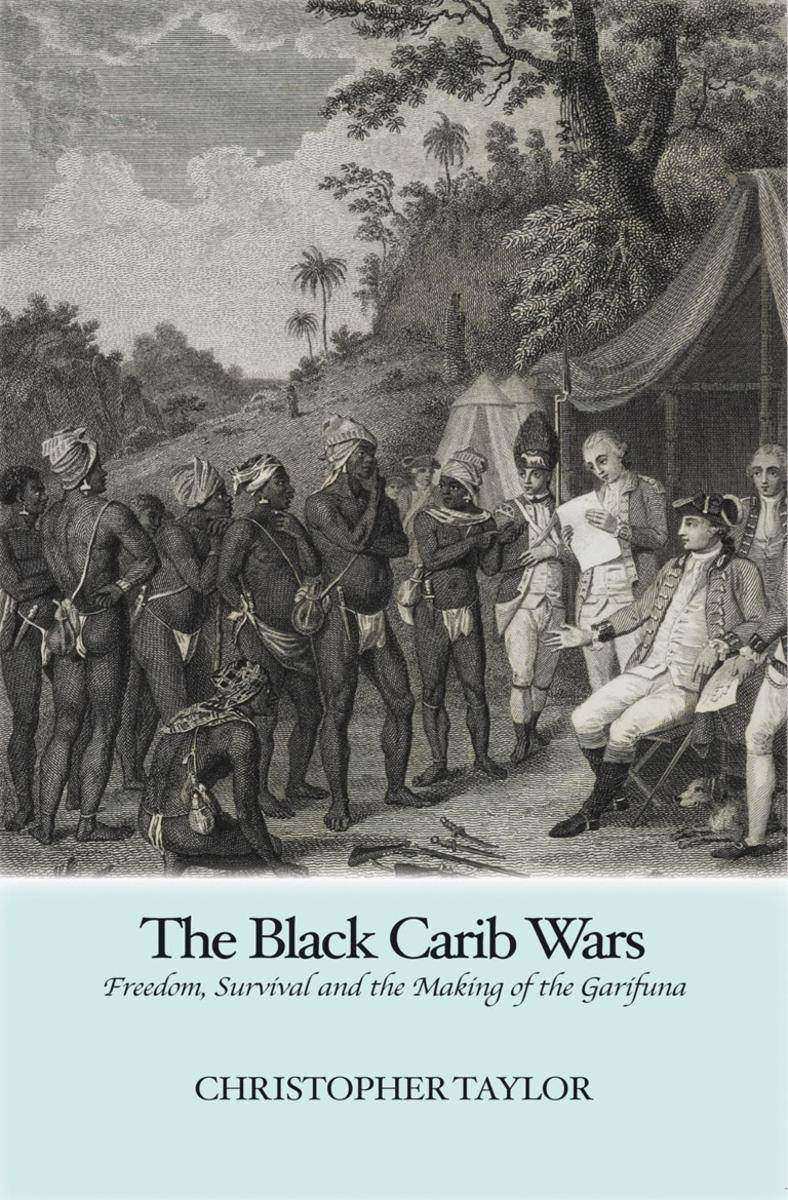
Black Carib Wars
¥98.00
The Garifuna people today live all along the Caribbean littoral of Central America, from Belize, through Guatemala and Honduras down to Nicaragua, and also in some of the biggest cities of the United States. For more than two hundred years they have preserved their unique culture and language--the direct descendant of that spoken in the islands at the time of Columbus. All of them, however, trace their origin back to the island of St. Vincent--YouroumaA n in their own language--where shipwrecked and runaway slaves joined together with the local Carib Indians to form a distinct society, known to the European colonists as the Black Caribs. Relations with the French veered between conflict and cooperation but when a deal struck in Paris in 1763 ceded the island to Britain, the stage was set for the Black Caribs final, desperate struggle to preserve their freedom. What followed was a series of bloody wars punctuated by periods of wary coexistence in which a small but determined people stood up to the might of the British Empire. The product of extensive original research in St. Vincent, the United Kingdom and France, The Black Carib Wars combines a compelling narrative with new details of the Black Caribs' fight to stay free. It draws in characters such as Daniel Defoe, the first man to describe an eruption of St. Vincent's volcano, and Captain Bligh, who belatedly brought Tahitian breadfruit to the island after his mission was interrupted by the mutiny on The Bounty. It looks at who the Black Caribs were, why they fought so tenaciously and how leaders such as Tourouya, Bigot and Chatoyer managed to marshal a fiercely individualistic society against the external threat. In the wake of the revolutions in France and Haiti, the Black Caribs fought their last battle, ending in agonising defeat and decimation in British captivity. The Black Carib Wars recounts how the survivors were shipped off to the faraway shores of Central America and what became of those who escaped deportation from St. Vincent.

Official Birmingham City Quiz Book
¥73.48
Are you a loyal Blues supporter? Never missed a match and think you know all there is to know about your favourite team? If so, have a go at tackling the 1,000 brain teasing questions in this quiz book, each one cleverly thought out to test your memory of the people and places that have shaped the history of Birmingham City Football Club. With sections on all aspects of the game including players, managers, scores, transfer fees, opponents, competitions, wins, draws and losses, you just won't be able to put this book down. Whether you want to impress your family with some little known facts or challenge your mates, The Official Birmingham City Quiz Book is a must have for football fans of all ages and is certain to provide hours of fun. This fitting tribute to the Blues is both educational and entertaining. So dip inside the cover and check up on all those important details about the team you didn't realise you had forgotten.
Motor Racing Quiz Book
¥73.48
So you're a fan of motor racing, but just how wide is your knowledge and how far back does it go? You'll be tested to the limit with this Motor Racing Quiz Book and will soon be chugging into the pits to have your brain recharged when you reach the latter section designed specifically for the experts among you. However, you can console yourself that the wealth of information contained in this book will leave you a much wiser person. From the early days of Juan Manuel Fangio and Jackie Stewart to more recent personalities such as David Coulthard and Michael Schumacher, every decade is covered in this book, with questions on every conceivable Grand Prix, as well as teams, circuits, car manufacturers, pole positions, nationalities, final placings, world champions, drivers' numbers, sponsors, constructors' victories, engines and much more. Who was nicknamed 'Il Leone'? What does a black flag signify? Where is the Gilles Villeneuve circuit? Don't know? Well, buy this book and find out everything you've ever wanted to know about motor racing, and at the same time celebrate the wonderful personalities and memorable events that have moulded the sport of motor racing.

Rap and Hip Hop Quiz Book
¥24.43
Are you a fan of rap and hip hop? Are you familiar with artists such as Snoop Dog, Ice T and Lil' Kim? Can you name all the trailblazing rappers and singers and their hits? If so, you will enjoy trying to answer the 100 quick questions in The Rap & Hip Hop Quiz Book. For which album did Dizzee Rascal win the 2003 Mercury Prize? What was the name of the rapper who was shot in Las Vegas in September 1996 and later died from his wounds? Which artist had a hit with the album 'Fear of a Black Planet' in 1990? The answers to all these questions and more can be found in this exciting new quiz book. With sections on rappers, hit singles, stage names and best-selling albums as well as more general questions, this book will find out how much you really know about the artists behind the best of rap and hip hop. This book is certain to appeal to anyone with an interest in this form of music culture.

Country Music Quiz Book
¥24.43
Do you enjoy country music? Are you familiar with the names of all the best-loved country stars, past and present? Can you recall when your favourite country artists started their singing careers and sing along to their greatest hits? If you answered yes to any of these questions, this quiz book is certain to appeal to you. Which group reached the number 8 position in Billboard's Hot Country Songs in 1979 with 'Outside Lookin' In'? Who are Henry John Deutschendorf Jr and Eilleen Regina Edwards better known as? Who won an honorary award at the 2011 Academy of Country Music Awards? The answers to these questions and more can all be found in The Country Music Quiz Book. With 100 questions about the artists and their music, this book has something for everyone and you are bound to discover some fascinating facts about the legends of country. This is a must-have book for all country fans and anyone interested in finding out more about this popular genre of music.

Vampires, A Very Peculiar History
¥58.76
Dragged from the deepest, darkest depths of the 'Very Peculiar History' vaults, this book collects tales of terror, morbid myths and frightening facts that will chill you witless. Introduced by everyone's favourite bloodsucker, Count Dracula, 'Vampires: A Very Peculiar History' features the origin of vampire-like creatures and a biological and mythological look at human blood (including the best places to bite if you were a vampire!) alongside tales of the real-life vampires that may have inspired the first vampire stories. It includes advice on how to spot a vampire as well as how to become one! Even vampires of film, graphic novel and manga get a taste of the action! Don't be scared, be prepared...with 'Vampires, A Very Peculiar History'!


