


 购物车
购物车 个人中心
个人中心

The Emperor of All Maladies
¥65.94
A magnificent, beautifully written biography of cancer - from its first documented appearances thousands of years ago through the epic battles to cure, control and conquer it to a radical new understanding of its essence. In The Emperor of All Maladies, Siddhartha Mukherjee, doctor, researcher and award-winning science writer, examines cancer with a cellular biologist’s precision, a historian’s perspective, and a biographer’s passion. The result is an astonishingly lucid and eloquent chronicle of a disease humans have lived with - and perished from - for more than five thousand years. The story of cancer is a story of human ingenuity, resilience and perseverance, but also of hubris, arrogance and misperception, all leveraged against a disease that, just three decades ago, was thought to be easily vanquished in an all-out ‘war against cancer’. Mukherjee recounts centuries of discoveries, setbacks, victories and deaths, told through the eyes of predecessors and peers, training their wits against an infinitely resourceful adversary. From the Persian Queen Atossa, whose Greek slave cut off her malignant breast, to the nineteeth-century recipient of primitive radiation and chemotherapy and Mukherjee’s own leukemia patient, Carla, The Emperor of All Maladies is about the people who have soldiered through toxic, bruising, and draining regimes to survive and to increase the store of human knowledge. Riveting and magesterial, The Emperor of All Maladies provides a fascinating glimpse into the future of cancer treatments and a brilliant new perspective on the way doctors, scientists, philosophers and lay people have observed and understood the human body for millennia.

Big Bang
¥80.25
The bestselling author of Fermat’s Last Theorem and The Code Book tells the story of the brilliant minds that deciphered the mysteries of the Big Bang. A fascinating exploration of the ultimate question: how was our universe created? Albert Einstein once said: ‘The most incomprehensible thing about the universe is that it is comprehensible.’ Simon Singh believes geniuses like Einstein are not the only people able to grasp the physics that govern the universe. We all can. As well as explaining what the Big Bang theory actually is and why cosmologists believe it is an accurate de*ion of the origins of the universe, this book is also the fascinating story of the scientists who fought against the established idea of an eternal and unchanging universe. Simon Singh, renowned for making difficult ideas much less daunting than they first seem, is the perfect guide for this journey. Everybody has heard of the Big Bang Theory. But how many of us can actually claim to understand it? With characteristic clarity and a narrative peppered with anecdotes and personal histories of those who have struggled to understand creation, Simon Singh has written the story of the most important theory ever.

The Code Book: The Secret History of Codes and Code-breaking
¥80.25
The Science of Secrecy from Ancient Egypt to Quantum Cryptography From the best-selling author of Fermat’s Last Theorem, The Code Book is a history of man’s urge to uncover the secrets of codes, from Egyptian puzzles to modern day computer encryptions. As in Fermat’s Last Theorem, Simon Singh brings life to an anstonishing story of puzzles, codes, languages and riddles that reveals man’s continual pursuit to disguise and uncover, and to work out the secret languages of others. Codes have influenced events throughout history, both in the stories of those who make them and those who break them. The betrayal of Mary Queen of Scots and the cracking of the enigma code that helped the Allies in World War II are major episodes in a continuing history of cryptography. In addition to stories of intrigue and warfare, Simon Singh also investigates other codes, the unravelling of genes and the rediscovery of ancient languages and most tantalisingly, the Beale ciphers, an unbroken code that could hold the key to a $20 million treasure.
Seeing Further: The Story of Science and the Royal Society
¥117.23
Edited and introduced by Bill Bryson, with contributions from Richard Dawkins, Margaret Atwood, Richard Holmes, Martin Rees, Richard Fortey, Steve Jones, James Gleick and Neal Stephenson amongst others, this beautiful, lavishly illustrated book tells the story of science and the Royal Society, from 1660 to the present. On a damp weeknight in November, 350 years ago, a dozen or so men gathered at Gresham College in London. A twenty-eight year old – and not widely famous – Christopher Wren was giving a lecture on astronomy. As his audience listened to him speak, they decided that it would be a good idea to create a Society to promote the accumulation of useful knowledge. With that, the Royal Society was born. Since its birth, the Royal Society has pioneered scientific exploration and discovery. Isaac Newton, Charles Darwin, Albert Einstein, Robert Hooke, Robert Boyle, Joseph Banks, Humphry Davy, Isambard Kingdom Brunel, John Locke, Alexander Fleming – all were fellows. Bill Bryson’s favourite fellow was Reverend Thomas Bayes, a brilliant mathematician who devised Bayes’ theorem. Its complexity meant that it had little practical use in Bayes’ own lifetime, but today his theorem is used for weather forecasting, astrophysics and stock market analysis. A milestone in mathematical history, it only exists because the Royal Society decided to preserve it – just in case. The Royal Society continues to do today what it set out to do all those years ago. Its members have split the atom, discovered the double helix, the electron, the computer and the World Wide Web. Truly international in its outlook, it has created modern science. ‘Seeing Further’ celebrates its momentous history and achievements, bringing together the very best of science writing. Filled with illustrations of treasures from the Society’s archives, this is a unique, ground-breaking and beautiful volume, and a suitable reflection of the immense achievements of science.

Bad Science
¥56.02
Ben Goldacre’s wise and witty bestseller, shortlisted for the Samuel Johnson Prize, lifts the lid on quack doctors, flaky statistics, scaremongering journalists and evil pharmaceutical corporations.
Forces of Nature
¥66.22
Sunday Times Bestseller A breathtaking and beautiful exploration of our planet, this groundbreaking book accompanies the BBC One TV series, providing the deepest answers to the simplest questions. ‘What is motion’ ‘Why is every snowflake different’ ‘Why is life symmetrical’ To answer these and many other questions, Professor Brian Cox uncovers some of the most extraordinary natural events on Earth and in the Universe and beyond. From the immensity of the Universe and the roundness of Earth to the form of every single snowflake, the forces of nature shape everything we see. Pushed to extremes, the results are astonishing. In seeking to understand the everyday world, the colours, structure, behaviour and history of our home, we develop the knowledge and techniques necessary to step beyond the everyday and approach the Universe beyond. Forces of Nature takes you to the great plains of the Serengeti, the volcanoes of Indonesia and the precipitous cliffs in Nepal, to the humpback whales of the Caribbean and the northern lights of the Arctic. Brian will answer questions on Earth that will illuminate our understanding of the Universe. Think you know our planet Think again.

BMW 5 & 6 Series E12 - E24 - E28 -E34 Restoration Tips and Techniques
¥24.44
A wealth of restoration tips and techniques covering E12, E24, E28, E34, 5 and 6 Series BMWs built between 1972 and 1995. Covers all models from 518 to M6. Advice is given on acquiring a good 5 & 6 Series model, plus tips on restoring, engines, bodywork, trim, electrics, suspension & much more.

BMW 5 & 6 Series E12 - E24 - E28 -E34 Restoration Tips and Techniques
¥245.17
A wealth of restoration tips and techniques covering E12, E24, E28, E34, 5 and 6 Series BMWs built between 1972 and 1995. Covers all models from 518 to M6. Advice is given on acquiring a good 5 & 6 Series model, plus tips on restoring, engines, bodywork, trim, electrics, suspension & much more.
BMW 3 Series - E36 Restoration Tips & Techniques
¥245.17
A practical restoration manual on the E36, the 3 Series BMWs built between 1990 & 1999. Covers all models from the 316 compact to the M3. Advice is given on acquiring a good pre-owned example plus restoring & modifying engines, bodywork, trim, electrics, suspension & mechanical parts. Detailed information on Alpina & M3 cars. A total of 148 fully illustrated colour and black & white

Mercedes Benz & Dodge Sprinter CDI 2000-2006 Owners Workshop Manual
¥245.17
Easy to follow step by step instructions & advice which enables the owner to carry out many jobs himself for the Mercedes-Benz Sprinter Van & Camper Diesel. Models covered: 208 CDI, 308 CDI, 211 CDI, 311 CDI, 411 CDI, 213 CDI, 313 CDI, 413 CDI, 216 CDI, 316 CDI, 416 CDI with the 2.2 & 2.7 litre CDI Diesel (types 611 DELA & 612 DELA) From 2000 to 2006 with the commom rail injection system. A total of 232 fully illustrated pages.
The Alfa Romeo Spider Owners Work Manual
¥245.17
This is a do it ourself workshop manual, it was written for the owner who wishes to maintain his vehicle & carry out the bulk of his own servicing & repairs. Step by step instructions are given of most dismantling, overhauling & assembling operations. Covers Giulia 1300TI, GT Junior 1967-1972, Giulia 1600TI, Super 1962-1972, Giulia 1600 Sprint GT, GTV 1963-1968, Giulia 1600 Spider, Duetto 1962-1968, Giulia 1.6 Super 1972-1975, GT Junior 1.6 1972-1975, GT Junior 1600 1975-1976, 1750 GT Veloce 1968-1972, 1750 Spider Veloce 1968-1972, 2000 GT Veloce 1971-1975, 2000 Spider Veloce 1971-1978. A total of 168 fully illustrated pages. SB.

VW Transporter T4 Workshop Manual Diesel 2000-2004
¥245.17
Covers all T4 diesel vehicles from 2000 to the end of 2004, including Vans 800, 1,000, and 1,200, Caravelle CL and GL, Bus (long and short wheelbase). Engines covered: Diesel 1.9L, 2.4L & 2.5L TDI, with a manual gearbox only. 164 large pages including 11 pages of wiring & over 200 illustrations.

VW Transporter T4 Workshop Manual Diesel 2000-2004
¥245.17
Covers all T4 diesel vehicles from 2000 to the end of 2004, including Vans 800, 1,000, and 1,200, Caravelle CL and GL, Bus (long and short wheelbase). Engines covered: Diesel 1.9L, 2.4L & 2.5L TDI, with a manual gearbox only. 164 large pages including 11 pages of wiring & over 200 illustrations.
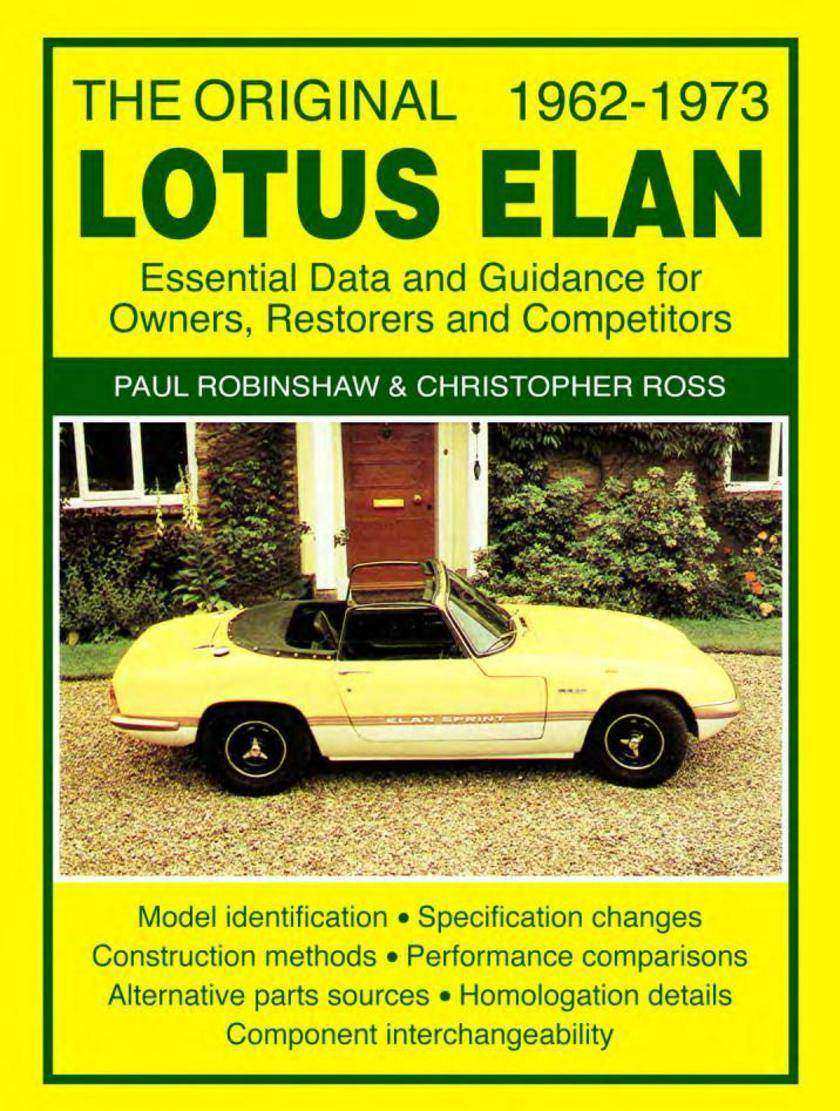
The Original Lotus Elan
¥245.17
This book contains a variety of information, both of a practical nature and otherwise, including the identification of alternative equivalent parts sources, which is applicable to all Lotus Elan 1500/1600 models as well as S2, S3, S4 and Sprint derivatives, produced between the years 1962 and 1973.

VW Transporter T4 (Petrol and Diesel - 1990-1995) Workshop Manual
¥245.17
Covers models from 1990 to 1995. Covering: short & long wheelbase, Van, Caravelle, Bus, 2.0 & 2.5-litre petrol and 1.9 & 2.4-litre diesel engines, clutch, suspension, fuel, ignition, steering, braking, electrics, bodywork, plus a fault-finding section. Covers manual only.
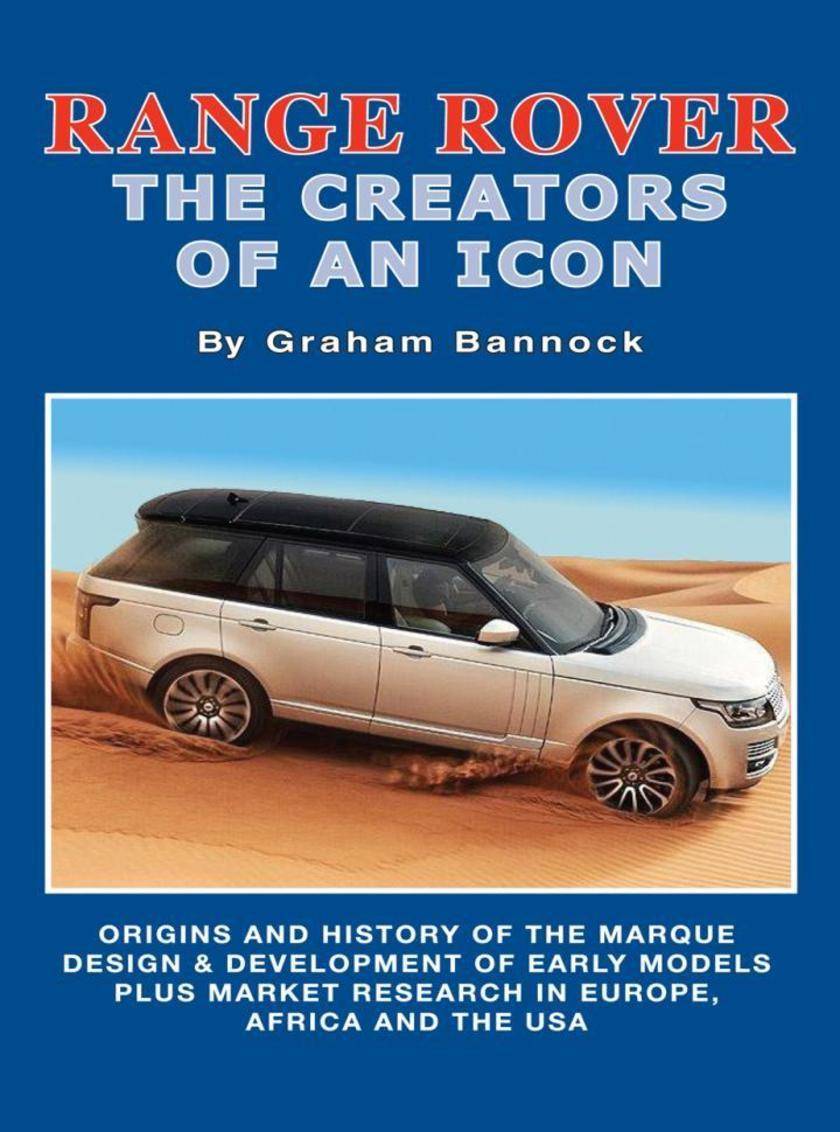
Range Rover The Creators of an Icon
¥245.17
Origins and history of the Range Rover marque, design and development of early models plus market research in Europe, Africa and the USA. A personal memoir by, author, Graham Bannock, of his time with the Rover Company in the late 1950s and the 1960s, which was the time the Range Rover was under development. Contents: Introduction; The Pearl in the Oyster: Origins of the Range Rover; Earlier History; How it was: Solihull in the 1960s; Across Africa: I The Sudan; Across Africa: II Ethiopia: Travels in North America, Europe and Africa; Renaissance - Appendix I: Rover's Finances by Graham Bannock and Alan Doran; Appendix II: Rover Gas Turbines by Graham Bannock and James Taylor; Appendix III - Internal memoranda; Bibliography.

Ruled by Race
¥263.50
From the Civil War to Reconstruction, the Redeemer period, Jim Crow, and the modern civil rights era to the present, Ruled by Race describes the ways that race has been at the center of much of the state's formation and image since its founding. Grif Stockley uses the work of published and unpublished historians and exhaustive primary source materials along with stories from authors as diverse as Maya Angelou and E. Lynn Harris to bring to life the voices of those who have both studied and lived the racial experience in Arkansas.
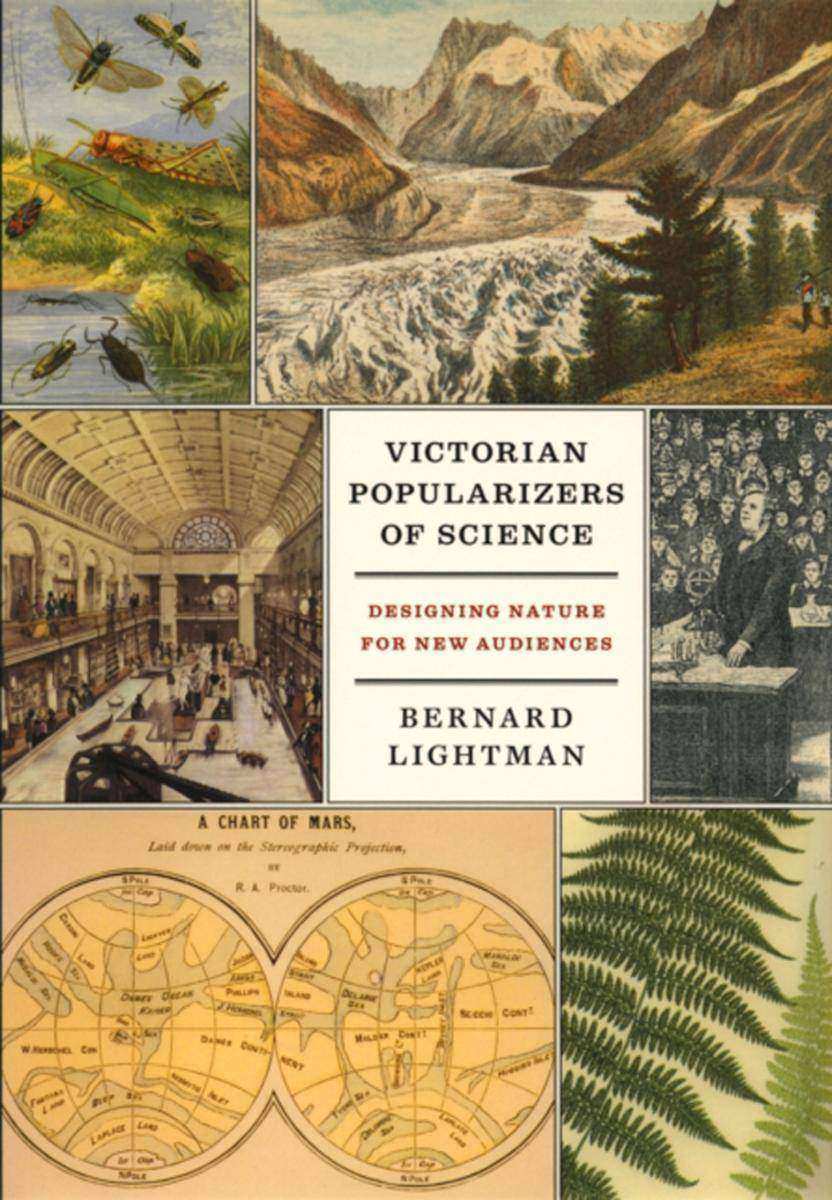
Victorian Popularizers of Science
¥353.16
The ideas of Charles Darwin and his fellow Victorian scientists have had an abiding effect on the modern world. But at the time The Origin of Species was published in 1859, the British public looked not to practicing scientists but to a growing group of professional writers and journalists to interpret the larger meaning of scientific theories in terms they could understand and in ways they could appreciate. Victorian Popularizers of Science focuses on this important group of men and women who wrote about science for a general audience in the second half of the nineteenth century.Bernard Lightman examines more than thirty of the most prolific, influential, and interesting popularizers of the day, investigating the dramatic lecturing techniques, vivid illustrations, and accessible literary styles they used to communicate with their audience. By focusing on a forgotten coterie of science writers, their publishers, and their public, Lightman offers new insights into the role of women in scientific inquiry, the market for scientific knowledge, tensions between religion and science, and the complexities of scientific authority in nineteenth-century Britain.
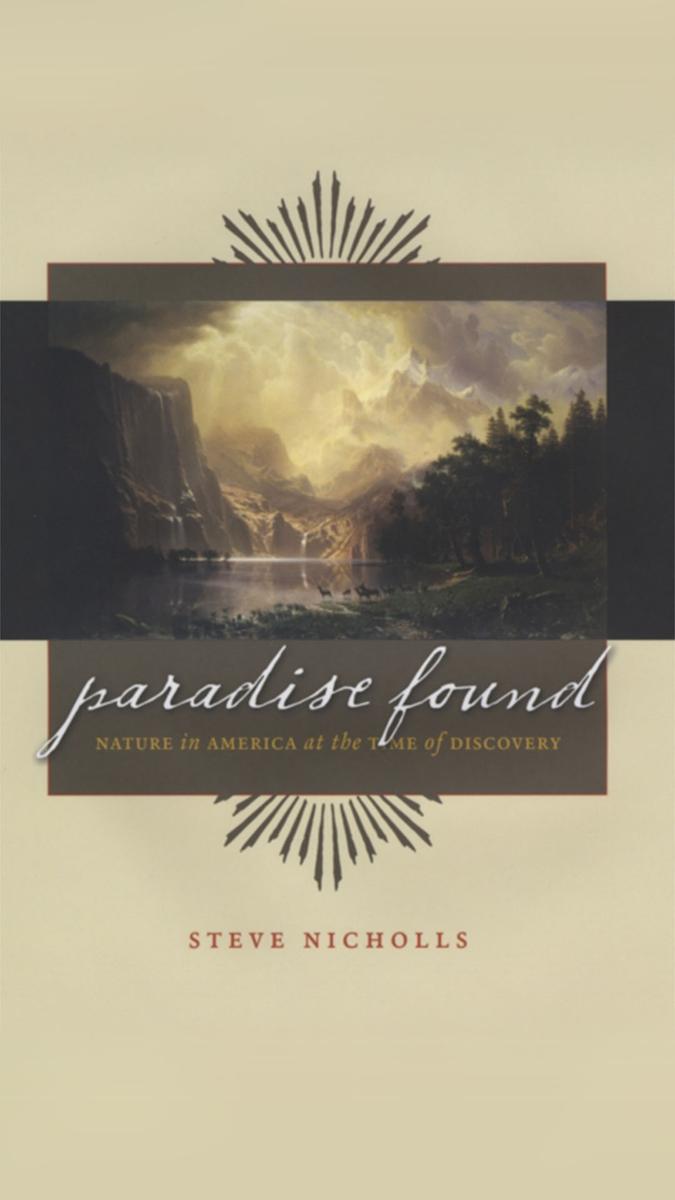
Paradise Found
¥147.15
The first Europeans to set foot on North America stood in awe of the natural abundance before them. The skies were filled with birds, seas and rivers teemed with fish, and the forests and grasslands were a hunter's dream, with populations of game too abundant and diverse to even fathom. It's no wonder these first settlers thought they had discovered a paradise of sorts. Fortunately for us, they left a legacy of copious records documenting what they saw, and these observations make it possible to craft a far more detailed evocation of North America before its settlement than any other place on the planet.Here Steve Nicholls brings this spectacular environment back to vivid life, demonstrating with both historical narrative and scientific inquiry just what an amazing place North America was and how it looked when the explorers first found it. The story of the continent's colonization forms a backdrop to its natural history, which Nicholls explores in chapters on the North Atlantic, the East Coast, the Subtropical Caribbean, the West Coast, Baja California, and the Great Plains. Seamlessly blending firsthand accounts from centuries past with the findings of scientists today, Nicholls also introduces us to a myriad cast of characters who have chronicled the changing landscape, from pre-Revolutionary era settlers to researchers whom he has met in the field.A director and writer of Emmy Award-winning wildlife documentaries for the Smithsonian Channel, Animal Planet, National Geographic, and PBS, Nicholls deploys a cinematic flair for capturing nature at its most mesmerizing throughout. But Paradise Found is much more than a celebration of what once was: it is also a reminder of how much we have lost along the way and an urgent call to action so future generations are more responsible stewards of the world around them. The result is popular science of the highest order: a book as remarkable as the landscape it recreates and as inspired as the men and women who discovered it.

Worthy of the Cause for Which They Fight
¥263.30
Worthy of the Cause for Which They Fight chronicles the experiences of a well-educated and articulate Confederate officer from Arkansas who witnessed the full evolution of the Civil War in the Trans-Mississippi Department and western theater. Daniel Harris Reynolds, a community leader with a thriving law practice in Chicot County, entered service in 1861 as a captain in command of Company A of the First Arkansas Mounted Rifles. Reynolds saw action at Wilson's Creek and Pea Ridge before the regiment was dismounted and transferred to the Army of Tennessee, the primary Confederate force in the western theater. As Reynolds fought through the battles of Chickamauga, Atlanta, Nashville, and Bentonville, he consistently kept a diary in which he described the harsh realities of battle, the shifting fortunes of war, and the personal and political conflicts that characterized and sometimes divided the soldiers. The result is a significant testimonial offering valuable insights into the nature of command from the company to brigade levels, expressed by a committed Southerner coming to grips with the realities of defeat and the ultimate demoralization of surrender.
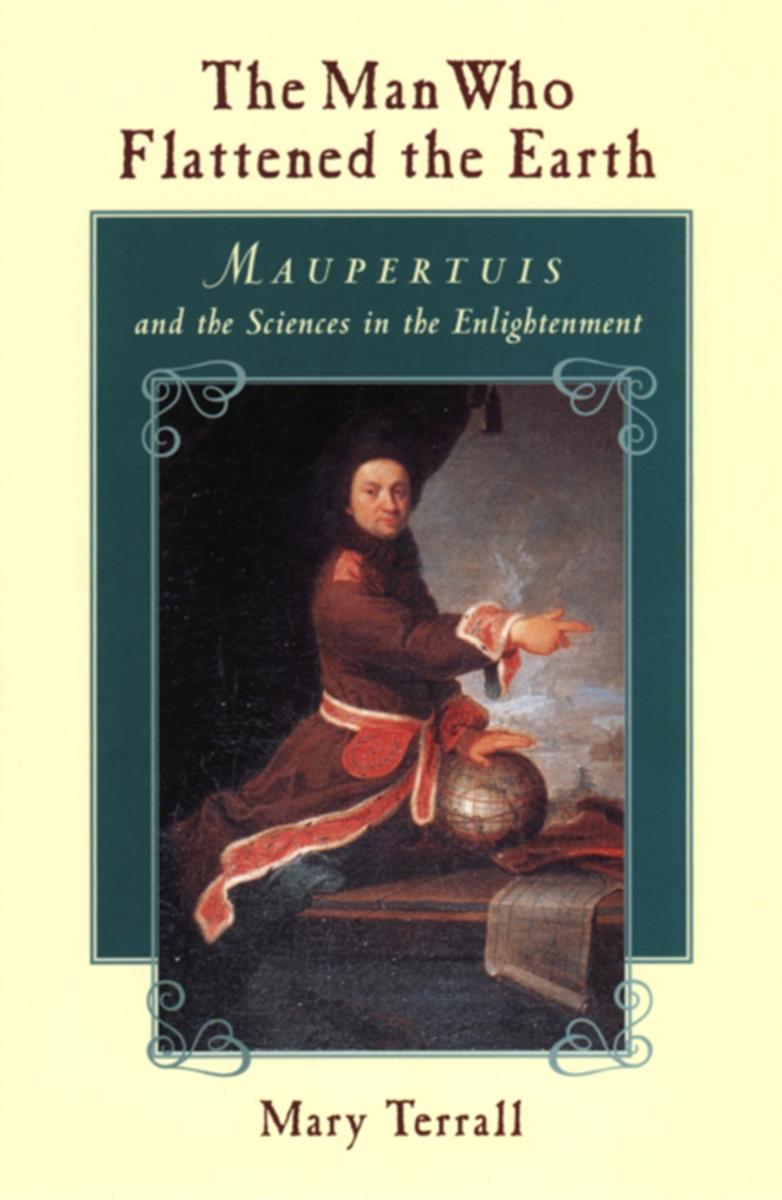
Man Who Flattened the Earth
¥311.96
Self-styled adventurer, literary wit, philosopher, and statesman of science, Pierre-Louis Moreau de Maupertuis (1698-1759) stood at the center of Enlightenment science and culture. Offering an elegant and accessible portrait of this remarkable man, Mary Terrall uses the story of Maupertuis's life, self-fashioning, and scientific works to explore what it meant to do science and to be a man of science in eighteenth-century Europe.Beginning his scientific career as a mathematician in Paris, Maupertuis entered the public eye with a much-discussed expedition to Lapland, which confirmed Newton's calculation that the earth was flattened at the poles. He also made significant, and often intentionally controversial, contributions to physics, life science, navigation, astronomy, and metaphysics. Called to Berlin by Frederick the Great, Maupertuis moved to Prussia to preside over the Academy of Sciences there. Equally at home in salons, cafs, scientific academies, and royal courts, Maupertuis used his social connections and his printed works to enhance a carefully constructed reputation as both a man of letters and a man of science. His social and institutional affiliations, in turn, affected how Maupertuis formulated his ideas, how he presented them to his contemporaries, and the reactions they provoked.Terrall not only illuminates the life and work of a colorful and important Enlightenment figure, but also uses his story to delve into many wider issues, including the development of scientific institutions, the impact of print culture on science, and the interactions of science and government. Smart and highly readable, Maupertuis will appeal to anyone interested in eighteenth-century science and culture.”Terrall's work is scholarship in the best sense. Her explanations of arcane 18th-century French physics, mathematics, astronomy, and biology are among the most lucid available in any language.”-Virginia Dawson, American Historical ReviewWinner of the 2003 Pfizer Award from the History of Science Society


