


 购物车
购物车 个人中心
个人中心
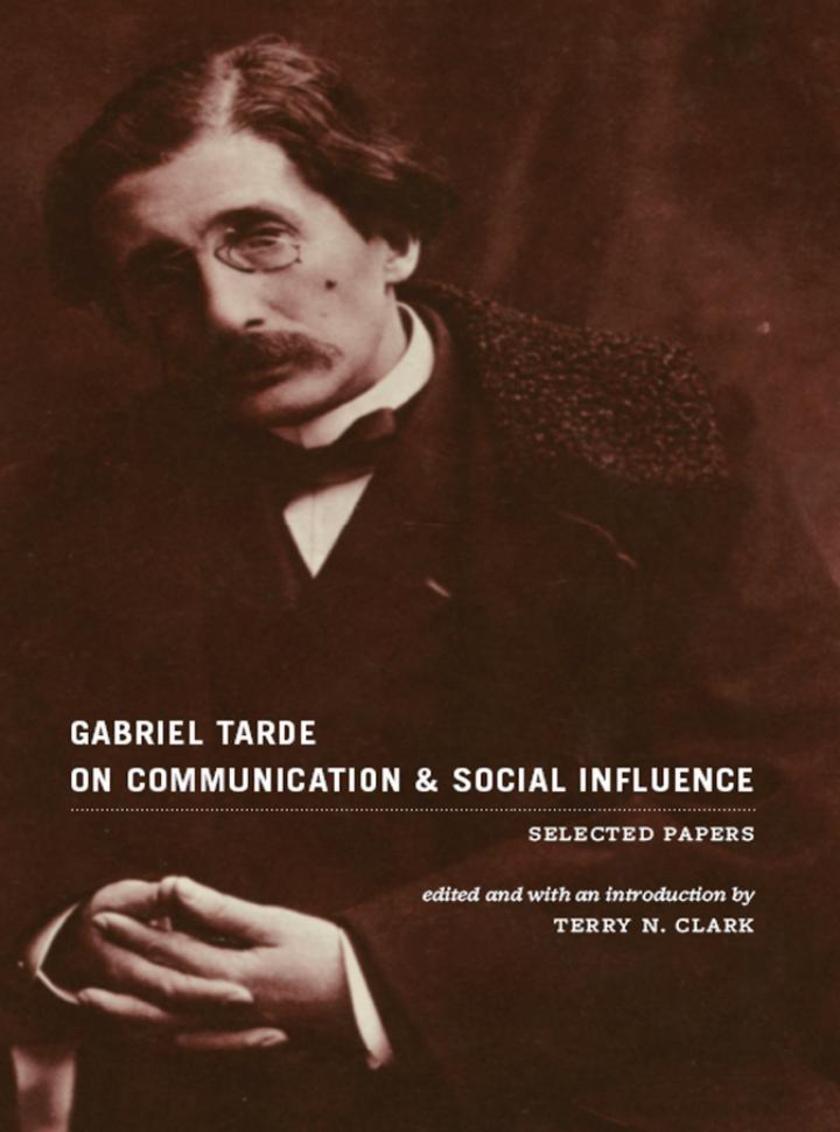
Gabriel Tarde On Communication and Social Influence
¥282.53
Gabriel Tarde ranks as one of the most outstanding sociologists of nineteenth-century France, though not as well known by English readers as his peers Comte and Durkheim. This book makes available Tarde's most important work and demonstrates his continuing relevance to a new generation of students and thinkers.Tarde's landmark research and empirical analysis drew upon collective behavior, mass communications, and civic opinion as elements to be explained within the context of broader social patterns. Unlike the mass society theorists that followed in his wake, Tarde integrated his discussions of societal change at the macrosocietal and individual levels, anticipating later twentieth-century thinkers who fused the studies of mass communications and public opinion research.Terry N. Clark's introduction, considered the premier guide to Tarde's opus, accompanies this important work, reprinted here for the first time in forty years.
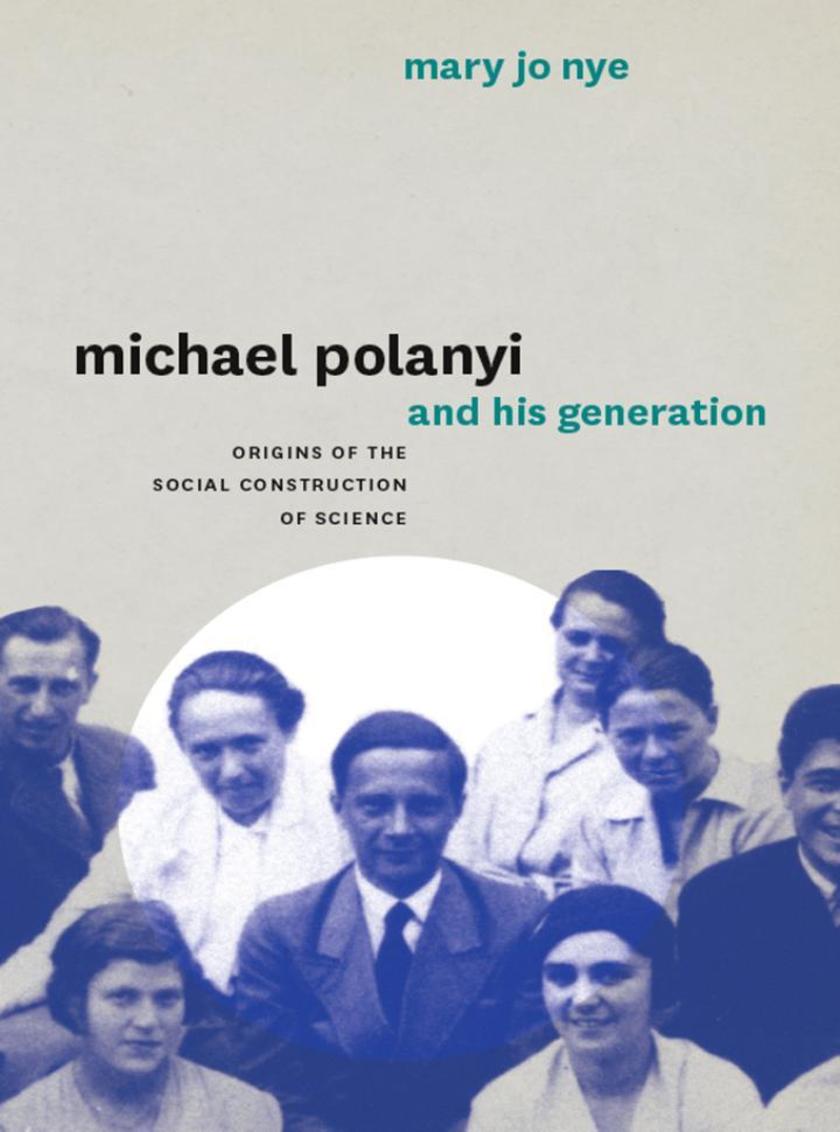
Michael Polanyi and His Generation
¥247.21
In Michael Polanyi and His Generation, Mary Jo Nye investigates the role that Michael Polanyi and several of his contemporaries played in the emergence of the social turn in the philosophy of science. This turn involved seeing science as a socially based enterprise that does not rely on empiricism and reason alone but on social communities, behavioral norms, and personal commitments. Nye argues that the roots of the social turn are to be found in the scientific culture and political events of Europe in the 1930s, when scientific intellectuals struggled to defend the universal status of scientific knowledge and to justify public support for science in an era of economic catastrophe, Stalinism and Fascism, and increased demands for applications of science to industry and social welfare.?At the center of this struggle was Polanyi, who Nye contends was one of the first advocates of this new conception of science. Nye reconstructs Polanyi's scientific and political milieus in Budapest, Berlin, and Manchester from the 1910s to the 1950s and explains how he and other natural scientists and social scientists of his generation-including J. D. Bernal, Ludwik Fleck, Karl Mannheim, and Robert K. Merton-and the next, such as Thomas Kuhn, forged a politically charged philosophy of science, one that newly emphasized the social construction of science.

On the Nature of Limbs
¥229.55
The most prominent naturalist in Britain before Charles Darwin, Richard Owen made empirical discoveries and offered theoretical innovations that were crucial to the proof of evolution. Among his many lasting contributions to science was the first clear definition of the term homology-"e;the same organ in different animals under every variety of form and function."e; He also graphically demonstrated that all vertebrate species were built on the same skeletal plan and devised the vertebrate archetype as a representation of the simplest common form of all vertebrates.Just as Darwin's ideas continue to propel the modern study of adaptation, so too will Owen's contributions fuel the new interest in homology, organic form, and evolutionary developmental biology. His theory of the archetype and his views on species origins were first offered to the general public in On the Nature of Limbs, published in 1849. It reemerges here in a facsimile edition with introductory essays by prominent historians, philosophers, and practitioners from the modern evo-devo community.
How Life Began
¥229.55
The origin of life is a hotly debated topic. The Christian Bible states that God created the heavens and the Earth, all in about seven days roughly six thousand years ago. This episode in Genesis departs markedly from scientific theories developed over the last two centuries which hold that life appeared on Earth about 3.5 billion years ago in the form of bacteria, followed by unicellular organisms half a millennia later. It is this version of genesis that Alexandre Meinesz explores in this engaging tale of life's origins and evolution.?How Life Began elucidates three origins, or geneses, of life-bacteria, nucleated cells, and multicellular organisms-and shows how evolution has sculpted life to its current biodiversity through four main events-mutation, recombination, natural selection, and geologic cataclysm.?As an ecologist who specializes in algae, the first organisms to colonize Earth, Meinesz brings a refreshingly novel voice to the history of biodiversity and emphasizes here the role of unions in organizing life. For example, the ingestion of some bacteria by other bacteria led to mitochondria that characterize animal and plant cells, and the chloroplasts of plant cells.?As Meinesz charmingly recounts, life's grandeur is a result of an evolutionary tendency toward sociality and solidarity. He suggests that it is our cohesion and collaboration that allows us to solve the environmental problems arising in the decades and centuries to come. Rooted in the science of evolution but enlivened with many illustrations from other disciplines and the arts, How Life Began?intertwines the rise of bacteria and multicellular life with Vermeer's portrait of Antoni van Leeuwenhoek, the story of Genesis and Noah, Meinesz's son's early experiences with Legos, and his own encounters with other scientists. All of this brings a very human and humanistic tone to Meinesz's charismatic narrative of the three origins of life.?

Scars of Project 459
¥243.09
The Scars of Project 459 tells the environmental story of the Lake of the Ozarks, built by the Union Electric Company in 1931. At 55,000 acres, the lake was the biggest manmade lake in the United States at the time of its completion, and it remains the biggest in the Midwest, with 1,100 miles of shoreline in four different Missouri counties. Though created to generate hydroelectric power, not for development, the "e;Magic Dragon,"e; as it is popularly known because of its serpentine shape, has become a major recreational area. Located in some of the most spectacular Ozark scenery, the giant lake today attracts three million visitors annually and has more than 70,000 homes along its shoreline. Traci Angel shows how the popularity of the Lake of the Ozarks has resulted in major present-day problems, including poor water quality, loss of habitat, and increasing concerns about aging waste-management systems for the homes surrounding the lake. Many in the area, especially business owners whose incomes depend on tourism, resist acknowledging these problems. The Scars of Project 459 aims to make public the challenges facing this important resource and ensure that its future is not to be loved to death.
Natural Questions
¥229.55
Lucius Annaeus Seneca (4 BCE-65 CE) was a Roman Stoic philosopher, dramatist, statesman, and adviser to the emperor Nero, all during the Silver Age of Latin literature. The Complete Works of Lucius Annaeus Seneca is a fresh and compelling series of new English-language translations of his works in eight accessible volumes. Edited by world-renowned classicists Elizabeth Asmis, Shadi Bartsch, and Martha C. Nussbaum, this engaging collection restores Seneca-whose works have been highly praised by modern authors from Desiderius Erasmus to Ralph Waldo Emerson-to his rightful place among the classical writers most widely studied in the humanities.Written near the end of Seneca's life, Natural Questions is a work in which Seneca expounds and comments on the natural sciences of his day-rivers and earthquakes, wind and snow, meteors and comets-offering us a valuable look at the ancient scientific mind at work. The modern reader will find fascinating insights into ancient philosophical and scientific approaches to the physical world and also vivid evocations of the grandeur, beauty, and terror of nature.
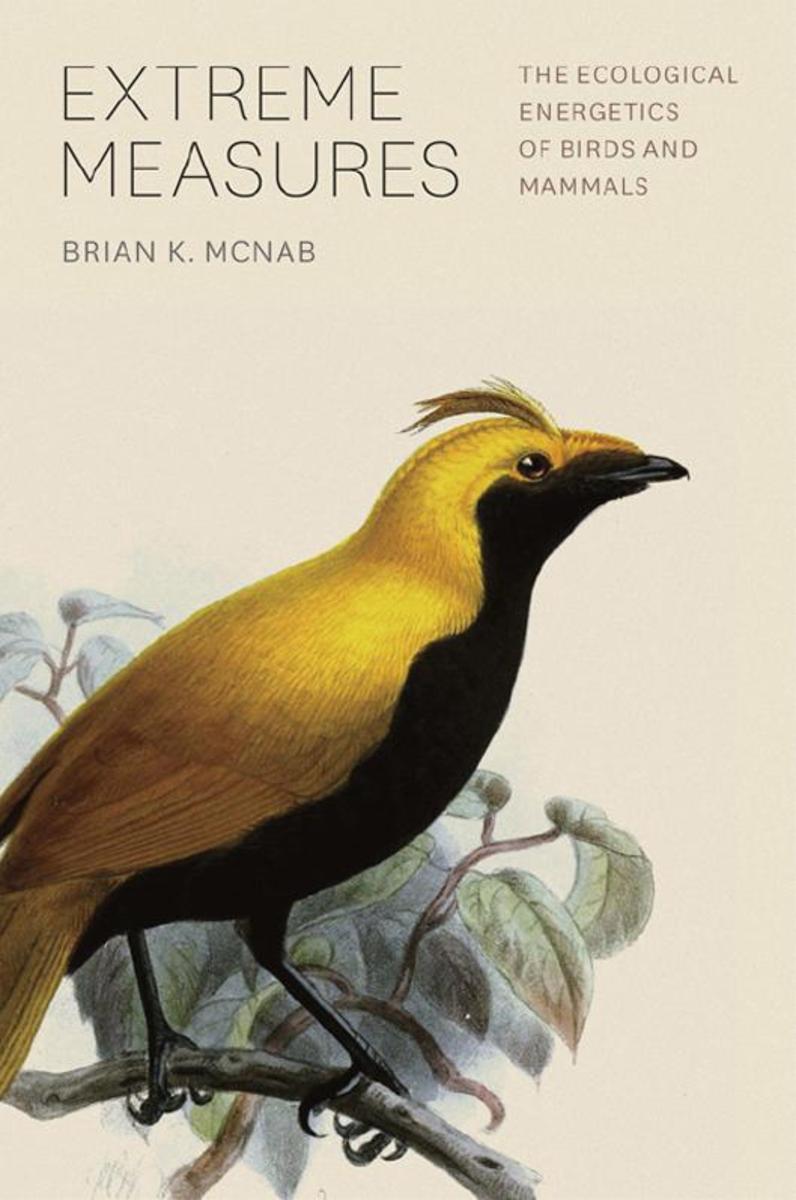
Extreme Measures
¥353.16
Along with reproduction, balancing energy expenditure with the limits of resource acquisition is essential for both a species and a population to survive. But energy is a limited resource, as we know well, so birds and mammals-the most energy-intensive fauna on the planet-must reduce energy expenditures to maintain this balance, some taking small steps, and others extreme measures.Here Brian K. McNab draws on his over sixty years in the field to provide a comprehensive account of the energetics of birds and mammals, one fully integrated with their natural history. McNab begins with an overview of thermal rates-much of our own energy is spent maintaining our 98.6?F temperature-and explains how the basal rate of metabolism drives energy use, especially in extreme environments. He then explores those variables that interact with the basal rate of metabolism, like body size and scale and environments, highlighting their influence on behavior, distribution, and even reproductive output. Successive chapters take up energy and population dynamics and evolution. A critical central theme that runs through the book is how the energetic needs of birds and mammals come up against rapid environmental change and how this is hastening the pace of extinction.

On Sunspots
¥394.36
Galileo's telescopic discoveries, and especially his observation of sunspots, caused great debate in an age when the heavens were thought to be perfect and unchanging. Christoph Scheiner, a Jesuit mathematician, argued that sunspots were planets or moons crossing in front of the Sun. Galileo, on the other hand, countered that the spots were on or near the surface of the Sun itself, and he supported his position with a series of meticulous observations and mathematical demonstrations that eventually convinced even his rival.?On Sunspots collects the correspondence that constituted the public debate, including the first English translation of Scheiner's two tracts as well as Galileo's three letters, which have previously appeared only in abridged form. In addition, Albert Van Helden and Eileen Reeves have supplemented the correspondence with lengthy introductions, extensive notes, and a bibliography. The result will become the standard work on the subject, essential for students and historians of astronomy, the telescope, and early modern Catholicism.
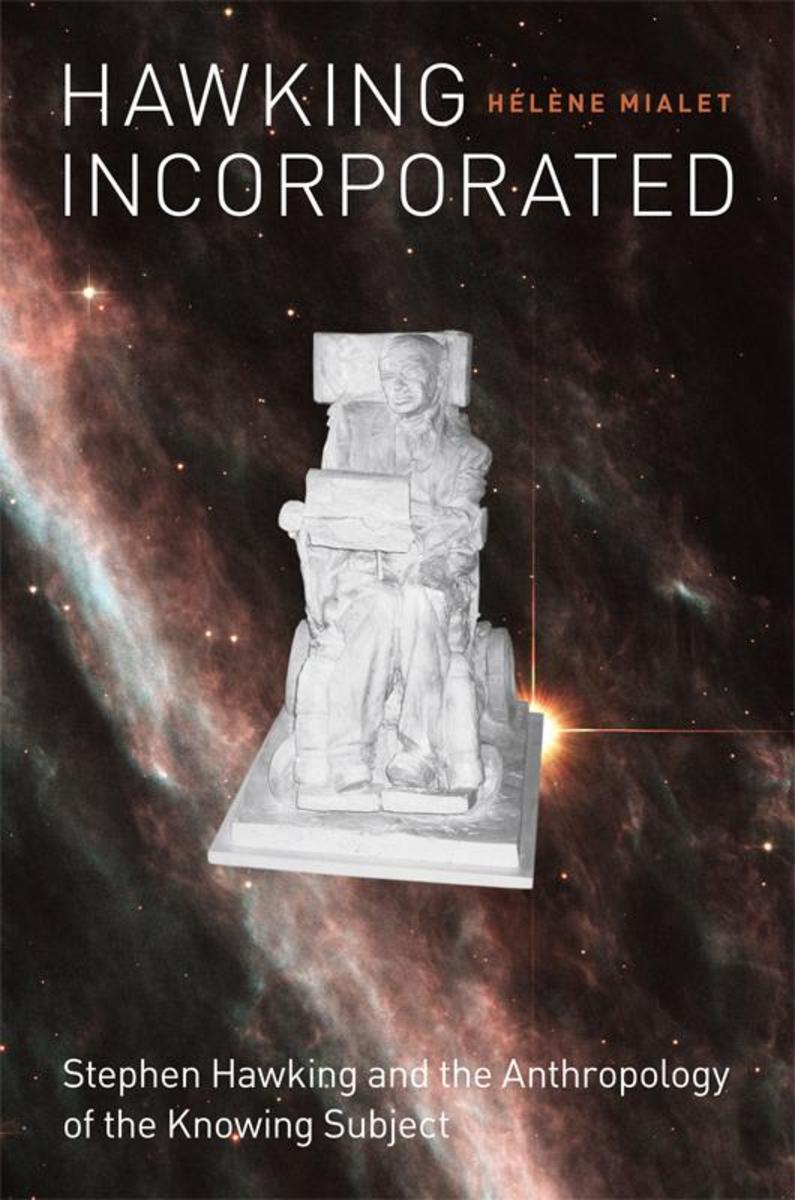
Hawking Incorporated
¥270.76
These days, the idea of the cyborg is less the stuff of science fiction and more a reality, as we are all, in one way or another, constantly connected, extended, wired, and dispersed in and through technology. One wonders where the individual, the person, the human, and the body are-or, alternatively, where they stop. These are the kinds of questions Hlne Mialet explores in this fascinating volume, as she focuses on a man who is permanently attached to assemblages of machines, devices, and collectivities of people: Stephen Hawking.Drawing on an extensive and in-depth series of interviews with Hawking, his assistants and colleagues, physicists, engineers, writers, journalists, archivists, and artists, Mialet reconstructs the human, material, and machine-based networks that enable Hawking to live and work. She reveals how Hawking-who is often portrayed as the most singular, individual, rational, and bodiless of all-is in fact not only incorporated, materialized, and distributed in a complex nexus of machines and human beings like everyone else, but even more so. Each chapter focuses on a de*ion of the functioning and coordination of different elements or media that create his presence, agency, identity, and competencies. Attentive to Hawking's daily activities, including his lecturing and scientific writing, Mialet's ethnographic analysis powerfully reassesses the notion of scientific genius and its associations with human singularity. This book will fascinate anyone interested in Stephen Hawking or an extraordinary life in science.
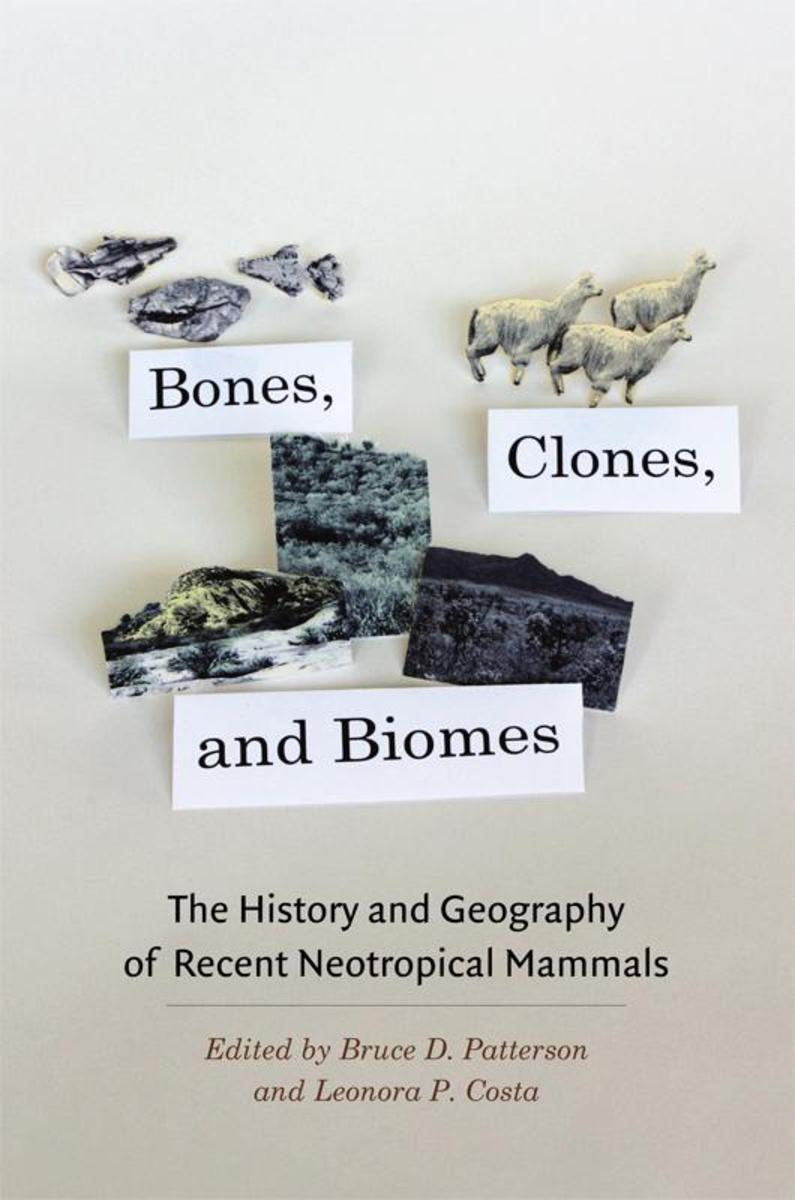
Bones, Clones, and Biomes
¥618.03
As explorers and scientists have known for decades, the Neotropics harbor a fantastic array of our planet's mammalian diversity, from capybaras and capuchins to maned wolves and mouse opossums to sloths and sakis. This biological bounty can be attributed partly to the striking diversity of Neotropical landscapes and climates and partly to a series of continental connections that permitted intermittent faunal exchanges with Africa, Antarctica, Australia, and North America. Thus, to comprehend the development of modern Neotropical mammal faunas requires not only mastery of the Neotropics' substantial diversity, but also knowledge of mammalian lineages and landscapes dating back to the Mesozoic.Bones, Clones, and Biomes offers just that-an exploration of the development and relationships of the modern mammal fauna through a series of studies that encompass the last 100 million years and both Central and South America. This work serves as a complement to more taxonomically driven works, providing for readers the long geologic and biogeographic contexts that undergird the abundance and diversity of Neotropical mammals. Rather than documenting diversity or distribution, this collection traverses the patterns that the distributions and relationships across mammal species convey, bringing together for the first time geology, paleobiology, systematics, mammalogy, and biogeography. Of critical importance is the book's utility for current conservation and management programs, part of a rapidly rising conservation paleobiology initiative.
Animal Personalities
¥394.36
Ask anyone who has owned a pet and they'll assure you that, yes, animals have personalities. And science is beginning to agree. Researchers have demonstrated that both domesticated and nondomesticated animals-from invertebrates to monkeys and apes-behave in consistently different ways, meeting the criteria for what many define as personality. But why the differences, and how are personalities shaped by genes and environmentHow did they evolveThe essays in Animal Personalities reveal that there is much to learn from our furred and feathered friends.?The study of animal personality is one of the fastest-growing areas of research in behavioral and evolutionary biology. Here Claudio Carere and Dario Maestripieri, along with a host of scholars from fields as diverse as ecology, genetics, endocrinology, neuroscience, and psychology, provide a comprehensive overview of the current research on animal personality. Grouped into thematic sections, chapters approach the topic with empirical and theoretical material and show that to fully understand why personality exists, we must consider the evolutionary processes that give rise to personality, the ecological correlates of personality differences, and the physiological mechanisms underlying personality variation.

Instructions for American Servicemen in Iraq during World War II
¥82.40
"e;American success or failure in Iraq may well depend on whether the Iraqis like American soldiers or not."e;?The U.S. military could certainly have used that bit of wisdom in 2003, as violence began to eclipse the Iraq War's early successes. Ironically, had the Army only looked in its own archives, they would have found it-that piece of advice is from a manual the U.S. War Department handed out to American servicemen posted in Iraq back in 1943.The advice in Instructions for American Servicemen in Iraq during World War II,presented here in a new facsimile edition, retains a surprising, even haunting, relevance in light of today's muddled efforts to win Iraqi hearts and minds. Designed to help American soldiers understand and cope with what was at the time an utterly unfamiliar culture-the manual explains how to pronounce the word Iraq, for instance-this brief, accessible handbookmixes do-and-don't-style tips ("e;Always respect the Moslem women."e; "e;Talk Arabic if you can to the people. No matter how badly you do it, they will like it."e;) with general observations on Iraqi history and society. The book's overall message still rings true-dramatically so-more than sixty years later: treat an Iraqi and his family with honor and respect, and you will have a strong ally; treat him with disrespect and you will create an unyielding enemy.With a foreword by Lieutenant Colonel John A. Nagl reflecting on the manual's continuing applicability-and lamenting that it was unknown at the start of the invasion-this new edition of Instructions for American Servicemen in Iraq will be essential reading for anyone who cares about the future of Iraq and the fate of the American soldiers serving there.

Rereading the Fossil Record
¥288.41
Rereading the Fossil Record presents the first-ever historical account of the origin, rise, and importance of paleobiology, from the mid-nineteenth century to the late 1980s.?Drawing on a wealth of archival material, David Sepkoski shows how the movement was conceived and promoted by a small but influential group of paleontologists and examines the intellectual, disciplinary, and political dynamics involved in the ascendency of paleobiology. By tracing the role of computer technology, large databases, and quantitative analytical methods in the emergence of paleobiology, this book also offers insight into the growing prominence and centrality of data-driven approaches in recent science.

Once Out of Nature
¥353.16
Once Out of Nature offers an original interpretation of Augustine's theory of time and embodiment. Andrea Nightingale draws on philosophy, sociology, literary theory, and social history to analyze Augustine's conception of temporality, eternity, and the human and transhuman condition.?In Nightingale's view, the notion of embodiment illuminates a set of problems much larger than the body itself: it captures the human experience of being an embodied soul dwelling on earth. In Augustine's writings, humans live both in and out of nature-exiled from Eden and punished by mortality, they are "e;resident aliens"e; on earth. While the human body is subject to earthly time, the human mind is governed by what Nightingale calls psychic time. For the human psyche always stretches away from the present moment-where the physical body persists-into memories and expectations. As Nightingale explains, while the body is present in the here and now, the psyche cannot experience self-presence. Thus, for Augustine, the human being dwells in two distinct time zones, in earthly time and in psychic time. The human self, then, is a moving target.?Adam, Eve, and the resurrected saints, by contrast, live outside of time and nature: these transhumans dwell in an everlasting present.?Nightingale connects Augustine's views to contemporary debates about transhumans and suggests that Augustine's thought reflects our own ambivalent relationship with our bodies and the earth. Once Out of Nature offers a compelling invitation to ponder the boundaries of the human.
Contesting Nietzsche
¥311.96
In this groundbreaking work, Christa Davis Acampora offers a profound rethinking of Friedrich Nietzsche's crucial notion of the agon. Analyzing an impressive array of primary and secondary sources and synthesizing decades of Nietzsche scholarship, she shows how the agon, or contest, organized core areas of Nietzsche's philosophy, providing a new appreciation of the subtleties of his notorious views about power. By focusing so intensely on this particular guiding interest, she offers an exciting, original vantage from which to view this iconic thinker: Contesting Nietzsche.?Though existence-viewed through the lens of Nietzsche's agon-is fraught with struggle, Acampora illuminates what Nietzsche recognized as the agon's generative benefits. It imbues the human experience with significance, meaning, and value. Analyzing Nietzsche's elaborations of agonism-his remarks on types of contests, qualities of contestants, and the conditions in which either may thrive or deteriorate-she demonstrates how much the agon shaped his philosophical projects and critical assessments of others. The agon led him from one set of concerns to the next, from aesthetics to metaphysics to ethics to psychology, via Homer, Socrates, Saint Paul, and Wagner. In showing how one obsession catalyzed so many diverse interests, Contesting Nietzsche sheds fundamentally new light on some of this philosopher's most difficult and paradoxical ideas.
Spinoza and the Politics of Renaturalization
¥353.16
There have been many Spinozas over the centuries: atheist, romantic pantheist, great thinker of the multitude, advocate of the liberated individual, and rigorous rationalist. The common thread connecting all of these clashing perspectives is Spinoza's naturalism, the idea that humanity is part of nature, not above it.?In this sophisticated new interpretation of Spinoza's iconoclastic philosophy, Hasana Sharp draws on his uncompromising naturalism to rethink human agency, ethics, and political practice. Sharp uses Spinoza to outline a practical wisdom of "e;renaturalization,"e; showing how ideas, actions, and institutions are never merely products of human intention or design, but outcomes of the complex relationships among natural forces beyond our control. This lack of a metaphysical or moral division between humanity and the rest of nature, Sharp contends, can provide the basis for an ethical and political practice free from the tendency to view ourselves as either gods or beasts.?Sharp's groundbreaking argument critically engages with important contemporary thinkers-including deep ecologists, feminists, and race and critical theorists-making Spinoza and the Politics of Renaturalization vital for a wide range of scholars.

Shaky Game
¥265.87
In this new edition, Arthur Fine looks at Einstein's philosophy of science and develops his own views on realism. A new Afterword discusses the reaction to Fine's own theory."e;What really led Einstein . . . to renounce the new quantum orderFor those interested in this question, this book is compulsory reading."e;-Harvey R. Brown, American Journal of Physics"e;Fine has successfully combined a historical account of Einstein's philosophical views on quantum mechanics and a discussion of some of the philosophical problems associated with the interpretation of quantum theory with a discussion of some of the contemporary questions concerning realism and antirealism. . . . Clear, thoughtful, [and] well-written."e;-Allan Franklin, Annals of Science"e;Attempts, from Einstein's published works and unpublished correspondence, to piece together a coherent picture of 'Einstein realism.' Especially illuminating are the letters between Einstein and fellow realist Schrdinger, as the latter was composing his famous 'Schrdinger-Cat' paper."e;-Nick Herbert, New Scientist"e;Beautifully clear. . . . Fine's analysis is penetrating, his own results original and important. . . . The book is a splendid combination of new ways to think about quantum mechanics, about realism, and about Einstein's views of both."e;-Nancy Cartwright, Isis
Heidegger, Strauss, and the Premises of Philosophy
¥229.55
In this groundbreaking work, Richard L. Velkley examines the complex philosophical relationship between Martin Heidegger and Leo Strauss. Velkley argues that both thinkers provide searching analyses of the philosophical tradition's origins in radical questioning. For Heidegger and Strauss, the recovery of the original premises of philosophy cannot be separated from rethinking the very possibility of genuine philosophizing.?Common views of the influence of Heidegger's thought on Strauss suggest that, after being inspired early on by Heidegger's dismantling of the philosophical tradition, Strauss took a wholly separate path, spurning modernity and pursuing instead a renewal of Socratic political philosophy. Velkley rejects this reading and maintains that Strauss's engagement with the challenges posed by Heidegger-as well as by modern philosophy in general-formed a crucial and enduring framework for his lifelong philosophical project. More than an intellectual biography or a mere charting of influence, Heidegger, Strauss, and the Premises of Philosophy is a profound consideration of these two philosophers' reflections on the roots, meaning, and fate of Western rationalism.
Machiavelli's Virtue
¥147.15
Uniting thirty years of authoritative scholarship by a master of textual detail, Machiavelli's Virtue is a comprehensive statement on the founder of modern politics. Harvey Mansfield reveals the role of sects in Machiavelli's politics, his advice on how to rule indirectly, and the ultimately partisan character of his project, and shows him to be the founder of such modern and diverse institutions as the impersonal state and the energetic executive. Accessible and elegant, this groundbreaking interpretation explains the puzzles and reveals the ambition of Machiavelli's thought."e;The book brings together essays that have mapped [Mansfield's] paths of reflection over the past thirty years. . . . The ground, one would think, is ancient and familiar, but Mansfield manages to draw out some understandings, or recognitions, jarringly new."e;-Hadley Arkes, New Criterion"e;Mansfield's book more than rewards the close reading it demands."e;-Colin Walters, Washington Times"e;[A] masterly new book on the Renaissance courtier, statesman and political philosopher. . . . Mansfield seeks to rescue Machiavelli from liberalism's anodyne rehabilitation."e;-Roger Kimball, The Wall Street Journal

Whale and the Reactor
¥188.35
"e;The questions he poses about the relationship between technical change and political power are pressing ones that can no longer be ignored, and identifying them is perhaps the most a nascent 'philosophy of technology' can expect to achieve at the present time."e;-David Dickson, New York Times Book Review"e;The Whale and the Reactor is the philosopher's equivalent of superb public history. In its pages an analytically trained mind confronts some of the most pressing political issues of our day."e;-Ruth Schwartz Cowan, Isis

Narration
¥147.15
Newly famous in the wake of the publication of her groundbreaking Autobiography of Alice B. Toklas, Gertrude Stein delivered her Narration lectures to packed audiences at the University of Chicago in 1935. Stein had not been back to her home country since departing for France in 1903, and her remarks reflect on the changes in American culture after thirty years abroad.In Stein's trademark experimental prose, Narration reveals the legendary writer's thoughts about the energy and mobility of the American people, the effect of modernism on literary form, the nature of history and its recording, and the inventiveness of the English language-in particular, its American variant. Stein also discusses her ambivalence toward her own literary fame as well as the destabilizing effect that notoriety had on her daily life. Restored to print for a new generation of readers to discover, these vital lectures will delight students and scholars of modernism and twentieth-century literature."e;Narration is a treasure waiting to be rediscovered and to be pirated by jolly marauders of sparkling texts."e;-Catharine Stimpson, NYU


