


 购物车
购物车 个人中心
个人中心
Observing by Hand
¥370.82
Today we are all familiar with the iconic pictures of the nebulae produced by the Hubble Space Telescope's digital cameras. But there was a time, before the successful application of photography to the heavens, in which scientists had to rely on handmade drawings of these mysterious phenomena.?Observing by Hand sheds entirely new light on the ways in which the production and reception of handdrawn images of the nebulae in the nineteenth century contributed to astronomical observation. Omar W. Nasim investigates hundreds of unpublished observing books and paper records from six nineteenth-century observers of the nebulae: Sir John Herschel; William Parsons, the third Earl of Rosse; William Lassell; Ebenezer Porter Mason; Ernst Wilhelm Leberecht Tempel; and George Phillips Bond. Nasim focuses on the ways in which these observers created and employed their drawings in data-driven procedures, from their choices of artistic materials and techniques to their practices and scientific observation. He examines the ways in which the act of drawing complemented the acts of seeing and knowing, as well as the ways that making pictures was connected to the production of scientific knowledge.?An impeccably researched, carefully crafted, and beautifully illustrated piece of historical work, Observing by Hand will delight historians of science, art, and the book, as well as astronomers and philosophers.
Wolves on the Hunt
¥412.02
The interactions between apex predators and their prey are some of the most awesome and meaningful in nature-displays of strength, endurance, and a deep coevolutionary history. And there is perhaps no apex predator more impressive and important in its hunting-or more infamous, more misjudged-than the wolf. Because of wolves' habitat, speed, and general success at evading humans, researchers have faced great obstacles in studying their natural hunting behaviors. The first book to focus explicitly on wolf hunting of wild prey, Wolves on the Hunt seeks to fill these gaps in our knowledge and understanding.Combining behavioral data, thousands of hours of original field observations, research in the literature, a wealth of illustrations, and-in the e-book edition and online-video segments from cinematographer Robert K. Landis, the authors create a compelling and complex picture of these hunters. The wolf is indeed an adept killer, able to take down prey much larger than itself. While adapted to hunt primarily hoofed animals, a wolf-or especially a pack of wolves-can kill individuals of just about any species. But even as wolves help drive the underlying rhythms of the ecosystems they inhabit, their evolutionary prowess comes at a cost: wolves spend one-third of their time hunting-the most time consuming of all wolf activities-and success at the hunt only comes through traveling long distances, persisting in the face of regular failure, detecting and taking advantage of deficiencies in the physical condition of individual prey, and through ceaseless trial and error, all while risking injury or death.By describing and analyzing the behaviors wolves use to hunt and kill various wild prey-including deer, moose, caribou, elk, Dall sheep, mountain goats, bison, musk oxen, arctic hares, beavers, and others-Wolves on the Hunt provides a revelatory portrait of one of nature's greatest hunters.
Idea of Hegel's "e;Science of Logic"e;
¥453.22
Although Hegel considered?Science of Logic?essential to his philosophy, it has received scant commentary compared with the other three books he published in his lifetime. Here philosopher Stanley Rosen rescues the?Science of Logic?from obscurity, arguing that its neglect is responsible for contemporary philosophy's fracture into many different and opposed schools of thought. Through deep and careful analysis, Rosen sheds new light on the precise problems that animate Hegel's overlooked book and their tremendous significance to philosophical conceptions of logic and reason.Rosen's overarching question is how, if at all, rationalism can overcome the split between monism and dualism. Monism-which claims a singular essence for all things-ultimately leads to nihilism, while dualism, which claims multiple, irreducible essences, leads to what Rosen calls "e;the endless chatter of the history of philosophy."e; The?Science of Logic, he argues, is the fundamental text to offer a new conception of rationalism that might overcome this philosophical split. Leading readers through Hegel's book from beginning to end, Rosen's argument culminates in a masterful chapter on the Idea in Hegel. By fully appreciating theScience of Logic?and situating it properly within Hegel's oeuvre, Rosen in turn provides new tools for wrangling with the conceptual puzzles that have brought so many other philosophers to disaster.
Radium and the Secret of Life
¥453.22
Before the hydrogen bomb indelibly associated radioactivity with death, many chemists, physicians, botanists, and geneticists believed that radium might hold the secret to life. Physicists and chemists early on described the wondrous new element in lifelike terms such as "e;decay"e; and "e;half-life,"e; and made frequent references to the "e;natural selection"e; and "e;evolution"e; of the elements. Meanwhile, biologists of the period used radium in experiments aimed at elucidating some of the most basic phenomena of life, including metabolism and mutation.From the creation of half-living microbes in the test tube to charting the earliest histories of genetic engineering, Radium and the Secret of Life highlights previously unknown interconnections between the history of the early radioactive sciences and the sciences of heredity. Equating the transmutation of radium with the biological transmutation of living species, biologists saw in metabolism and mutation properties that reminded them of the new element. These initially provocative metaphoric links between radium and life proved remarkably productive and ultimately led to key biological insights into the origin of life, the nature of heredity, and the structure of the gene. Radium and the Secret of Life recovers a forgotten history of the connections between radioactivity and the life sciences that existed long before the dawn of molecular biology.

Powers of Pure Reason
¥453.22
The Critique of Pure Reason-Kant's First Critique-is one of the most studied texts in intellectual history, but as Alfredo Ferrarin points out in this radically original book, most of that study has focused only on very select parts. Likewise, Kant's oeuvre as a whole has been compartmentalized, the three Critiques held in rigid isolation from one another. Working against the standard reading of Kant that such compartmentalization has produced,?The Powers of Pure Reason?explores forgotten parts of the First Critique in order to find an exciting, new, and ultimately central set of concerns by which to read all of Kant's works. ?Ferrarin blows the dust off of two egregiously overlooked sections of the First Critique-the Transcendental Dialectic and the Doctrine of Method. There he discovers what he argues is the Critique's greatest achievement: a conception of the unity of reason and an exploration of the powers it has to reach beyond itself and legislate over the world. With this in mind, Ferrarin dismantles the common vision of Kant as a philosopher writing separately on epistemology, ethics, and aesthetics and natural teleology, showing that the three Critiques are united by this underlying theme: the autonomy and teleology of reason, its power and ends. The result is a refreshing new view of Kant, and of reason itself.
Enduring Importance of Leo Strauss
¥453.22
The Enduring Importance of Leo Strauss takes on the crucial task of separating what is truly important in the work of Leo Strauss from the ephemeral politics associated with his school. Laurence Lampert focuses on exotericism: the use of artful rhetoric to simultaneously communicate a socially responsible message to the public at large and a more radical message of philosophic truth to a smaller, more intellectually inclined audience. Largely forgotten after the Enlightenment, exotericism, he shows, deeply informed Strauss both as a reader and as a philosophic writer-indeed, Lampert argues, Strauss learned from the finest practitioners of exoteric writing how to become one himself.Examining some of Strauss's most important books and essays through this exoteric lens, Lampert reevaluates not only Strauss but the philosophers-from Plato to Halevi to Nietzsche-with whom Strauss most deeply engaged. Ultimately Lampert shows that Strauss's famous distinction between ancient and modern thinkers is primarily rhetorical, one of the great examples of Strauss's exoteric craft. Celebrating Strauss's achievements while recognizing one main shortcoming-unlike Nietzsche, he failed to appreciate the ramifications of modern natural science for philosophy and its public presentation-Lampert illuminates Strauss as having even greater philosophic importance than we have thought before.?
Leo Strauss and the Problem of Political Philosophy
¥370.82
Leo Strauss and his alleged political influence regarding the Iraq War have in recent years been the subject of significant media attention, including stories in the Wall Street Journal and New York Times.Time magazine even called him "e;one of the most influential men in American politics."e; With The Truth about Leo Strauss, Michael and Catherine Zuckert challenged the many claims and speculations about this notoriously complex thinker. Now, with Leo Strauss and the Problem of Political Philosophy, they turn their attention to a searching and more comprehensive interpretation of Strauss's thought as a whole, using the many manifestations of the "e;problem of political philosophy"e; as their touchstone.?For Strauss, political philosophy presented a "e;problem"e; to which there have been a variety of solutions proposed over the course of Western history. Strauss's work, they show, revolved around recovering-and restoring-political philosophy to its original Socratic form. Since positivism and historicism represented two intellectual currents that undermined the possibility of a Socratic political philosophy, the first part of the book is devoted to Strauss's critique of these two positions. Then, the authors explore Strauss's interpretation of the history of philosophy and both ancient and modern canonical political philosophers, including Plato, Aristotle, Machiavelli, and Locke. Strauss's often-unconventional readings of these philosophers, they argue, pointed to solutions to the problem of political philosophy. Finally, the authors examine Strauss's thought in the context of the twentieth century, when his chief interlocutors were Schmitt, Husserl, Heidegger, and Nietzsche.?The most penetrating and capacious treatment of the political philosophy of this complex and often misunderstood thinker, from his early years to his last works, Leo Strauss and the Problem of Political Philosophy reveals Strauss's writings as an attempt to show that the distinctive characteristics of ancient and modern thought derive from different modes of solving the problem of political philosophy and reveal why he considered the ancient solution both philosophically and politically superior.
Autonomy After Auschwitz
¥370.82
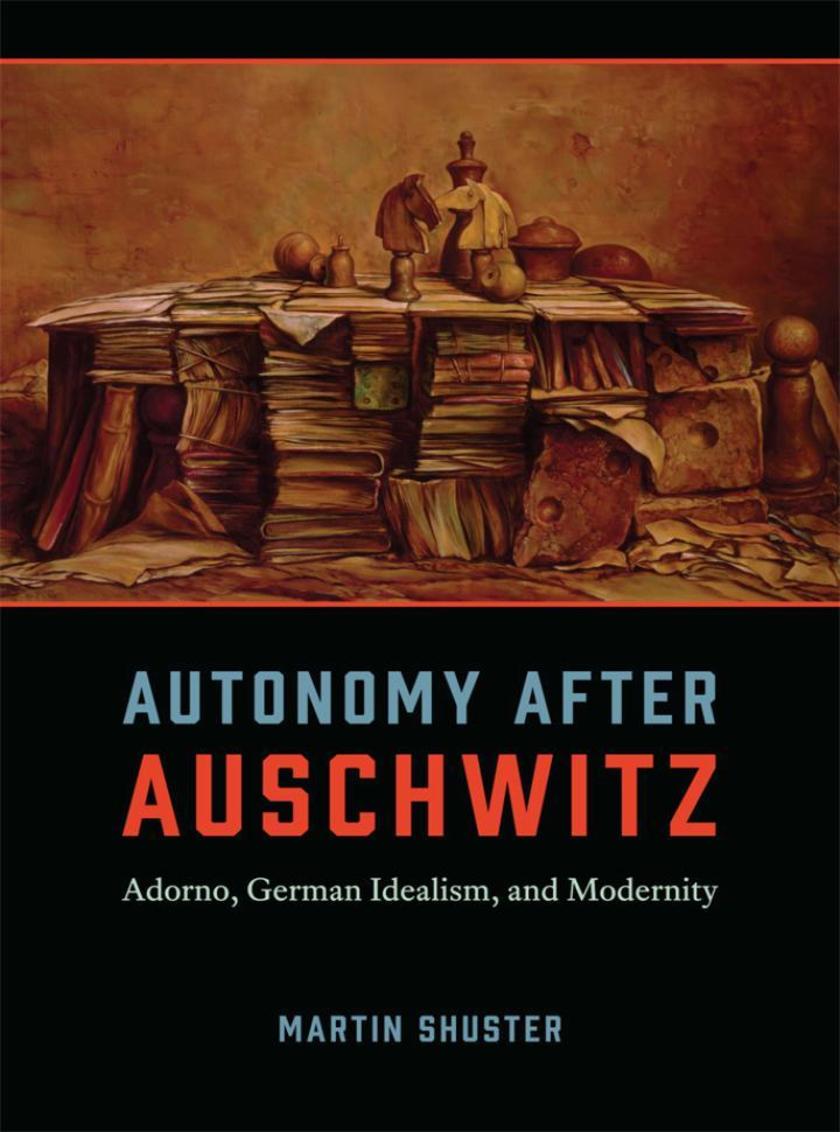
Ever since Kant and Hegel, the notion of autonomy-the idea that we are beholden to no law except one we impose upon ourselves-has been considered the truest philosophical expression of human freedom. But could our commitment to autonomy, as Theodor Adorno asked, be related to the extreme evils that we have witnessed in modernityIn Autonomy after Auschwitz, Martin Shuster explores this difficult question with astonishing theoretical acumen, examining the precise ways autonomy can lead us down a path of evil and how it might be prevented from doing so.Shuster uncovers dangers in the notion of autonomy as it was originally conceived by Kant. Putting Adorno into dialogue with a range of European philosophers, notably Kant, Hegel, Horkheimer, and Habermas-as well as with a variety of contemporary Anglo-American thinkers such as Richard Rorty, Stanley Cavell, John McDowell, and Robert Pippin-he illuminates Adorno's important revisions to this fraught concept and how his different understanding of autonomous agency, fully articulated, might open up new and positive social and political possibilities. Altogether, Autonomy after Auschwitz is a meditation on modern evil and human agency, one that demonstrates the tremendous ethical stakes at the heart of philosophy.?
Tristan's Shadow
¥370.82
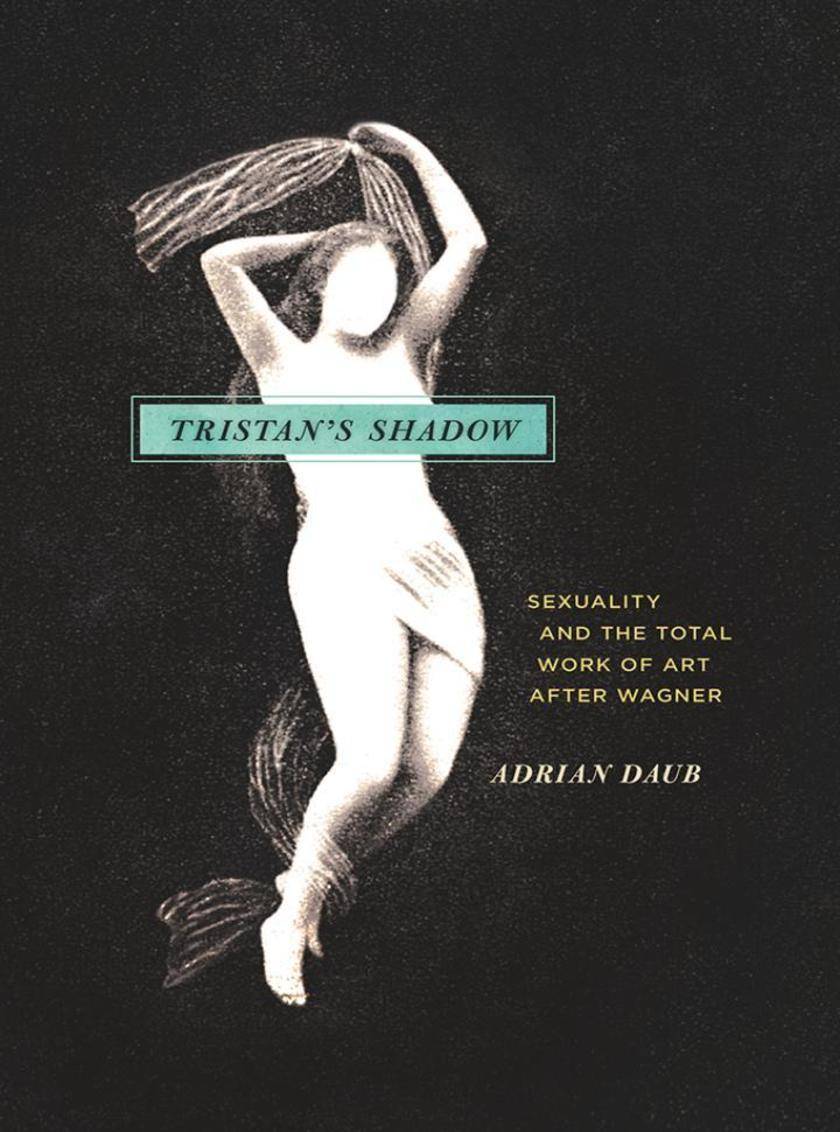
Das Rheingold, Die Walkre, and Siegfried. Parsifal. Tristan und Isolde. Both revered and reviled, Richard Wagner conceived some of the nineteenth century's most influential operas-and created some of the most indelible characters ever to grace the stage. But over the course of his polarizing career, Wagner also composed volumes of essays and pamphlets, some on topics seemingly quite distant from the opera house. His influential concept of Gesamtkunstwerk-the "e;total work of art"e;-famously and controversially offered a way to unify the different media of an opera into a coherent whole. Less well known, however, are Wagner's strange theories on sexuality-like his ideas about erotic acoustics and the metaphysics of sexual difference. Drawing on the discourses of psychoanalysis, evolutionary biology, and other emerging fields of study that informed Wagner's thinking, Adrian Daub traces the dual influence of Gesamtkunstwerk and eroticism from their classic expressions in Tristan und Isolde into the work of the generation of composers that followed, including Zemlinsky, d'Albert, Schreker, and Strauss. For decades after Wagner's death, Daub writes, these composers continued to grapple with his ideas and with his overwhelming legacy, trying in vain to write their way out from Tristan's shadow.
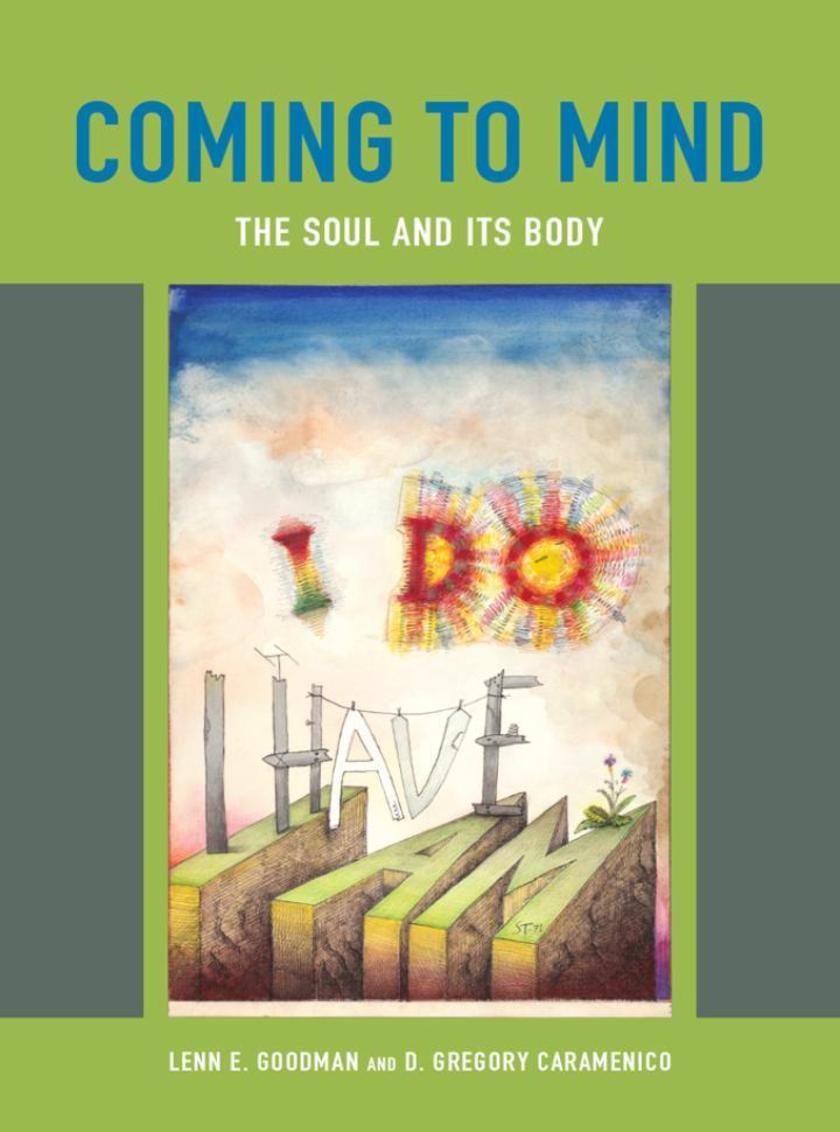
Coming to Mind
¥370.82
How should we speak of bodies and soulsIn Coming to Mind, Lenn E. Goodman and D. Gregory Caramenico pick their way through the minefields of materialist reductionism to present the soul not as the brain's rival but as its partner. What acts, they argue, is what is real. The soul is not an ethereal wisp but a lively subject, emergent from the body but inadequately described in its terms.Rooted in some of the richest philosophical and intellectual traditions of Western and Eastern philosophy, psychology, literature, and the arts and the latest findings of cognitive psychology and brain science-Coming to Mind is a subtle manifesto of a new humanism and an outstanding contribution to our understanding of the human person. Drawing on new and classical understandings of perception, consciousness, memory, agency, and creativity, Goodman and Caramenico frame a convincing argument for a dynamic and integrated self capable of language, thought, discovery, caring, and love.
Studies on the Abuse and Decline of Reason
¥529.74
Studies on the Abuse and Decline of Reason is a series of fascinating essays on the study of social phenomena. How to best and most accurately study social interactions has long been debated intensely, and there are two main approaches: the positivists, who ignore intent and belief and draw on methods based in the sciences; and the nonpositivists, who argue that opinions and ideas drive action and are central to understanding social behavior. F. A. Hayek's opposition to the positivists and their claims to scientific rigor and certainty in the study of human behavior is a running theme of this important book.Hayek argues that the vast number of elements whose interactions create social structures and institutions make it unlikely that social science can predict precise outcomes. Instead, he contends, we should strive to simply understand the principles by which phenomena are produced. For Hayek this modesty of aspirations went hand in hand with his concern over widespread enthusiasm for economic planning. As a result, these essays are relevant to ongoing debates within the social sciences and to discussion about the role government can and should play in the economy.

Visible Empire
¥529.74
Between 1777 and 1816, botanical expeditions crisscrossed the vast Spanish empire in an ambitious project to survey the flora of much of the Americas, the Caribbean, and the Philippines. While these voyages produced written texts and compiled collections of specimens, they dedicated an overwhelming proportion of their resources and energy to the creation of visual materials. European and American naturalists and artists collaborated to manufacture a staggering total of more than 12,000 botanical illustrations. Yet these images have remained largely overlooked-until now.In this lavishly illustrated volume, Daniela Bleichmar gives this archive its due, finding in these botanical images a window into the worlds of Enlightenment science, visual culture, and empire. Through innovative interdisciplinary scholarship that bridges the histories of science, visual culture, and the Hispanic world, Bleichmar uses these images to trace two related histories: the little-known history of scientific expeditions in the Hispanic Enlightenment and the history of visual evidence in both science and administration in the early modern Spanish empire. As Bleichmar shows, in the Spanish empire visual epistemology operated not only in scientific contexts but also as part of an imperial apparatus that had a long-established tradition of deploying visual evidence for administrative purposes.
Hardship and Happiness
¥453.22
Lucius Annaeus Seneca (4 BCE-65 CE) was a Roman Stoic philosopher, dramatist, statesman, and advisor to the emperor Nero, all during the Silver Age of Latin literature. The Complete Works of Lucius Annaeus Seneca is a fresh and compelling series of new English-language translations of his works in eight accessible volumes. Edited by Elizabeth Asmis, Shadi Bartsch, and Martha C. Nussbaum, this engaging collection helps restore Seneca-whose works have been highly praised by modern authors from Desiderius Erasmus to Ralph Waldo Emerson-to his rightful place among the classical writers most widely studied in the humanities.Hardship and Happiness?collects a range of essays intended to instruct, from consolations-works that offer comfort to someone who has suffered a personal loss-to pieces on how to achieve happiness or tranquility in the face of a difficult world. Expertly translated, the essays will be read and used by undergraduate philosophy students and experienced scholars alike.
Regimens of the Mind
¥488.54
In Regimens of the Mind, Sorana Corneanu proposes a new approach to the epistemological and methodological doctrines of the leading experimental philosophers of seventeenth-century England, an approach that considers their often overlooked moral, psychological, and theological elements. Corneanu focuses on the views about the pursuit of knowledge in the writings of Robert Boyle and John Locke, as well as in those of several of their influences, including Francis Bacon and the early Royal Society virtuosi. She argues that their experimental programs of inquiry fulfill the role of regimens for curing, ordering, and educating the mind toward an ethical purpose, an idea she tracks back to the ancient tradition of cultura animi. Corneanu traces this idea through its early modern revival and illustrates how it organizes the experimental philosophers' reflections on the discipline of judgment, the study of nature, and the study of Scripture. It is through this lens, the author suggests, that the core features of the early modern English experimental philosophy-including its defense of experience, its epistemic modesty, its communal nature, and its pursuit of "e;objectivity"e;-are best understood.

Population Fluctuations in Rodents
¥488.54
How did rodent outbreaks in Germany help to end World War IWhat caused the destructive outbreak of rodents in Oregon and California in the late 1950s, the large population outbreak of lemmings in Scandinavia in 2010, and the great abundance of field mice in Scotland in the spring of 2011Population fluctuations, or outbreaks, of rodents constitute one of the classic problems of animal ecology, and in Population Fluctuations in Rodents, Charles J. Krebs sifts through the last eighty years of research to draw out exactly what we know about rodent outbreaks and what should be the agenda for future research.?Krebs has synthesized the research in this area, focusing mainly on the voles and lemmings of the Northern Hemisphere-his primary area of expertise-but also referring to the literature on rats and mice. He covers the patterns of changes in reproduction and mortality and the mechanisms that cause these changes-including predation, disease, food shortage, and social behavior-and discusses how landscapes can affect population changes, methodically presenting the hypotheses related to each topic before determining whether or not the data supports them. He ends on an expansive note, by turning his gaze outward and discussing how the research on rodent populations can apply to other terrestrial mammals. Geared toward advanced undergraduate students, graduate students, and practicing ecologists interested in rodent population studies, this book will also appeal to researchers seeking to manage rodent populations and to understand outbreaks in both natural and urban settings-or, conversely, to protect endangered species.
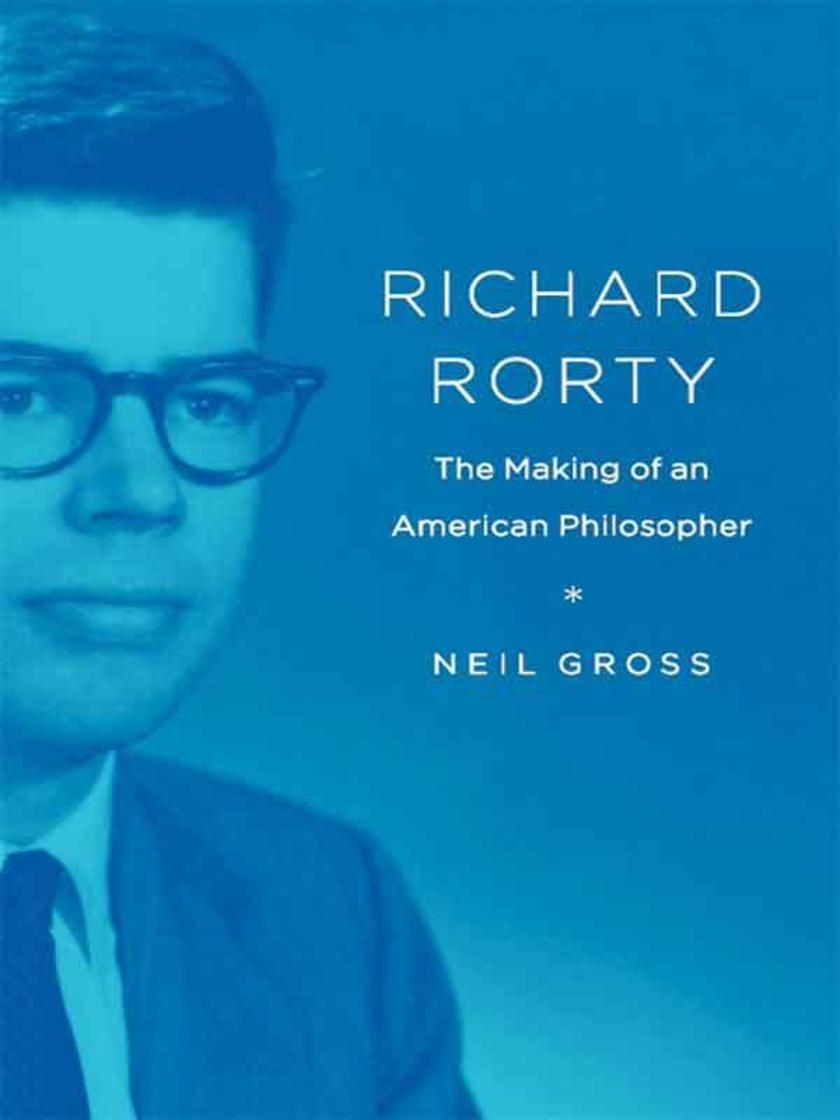
Richard Rorty
¥158.92
On his death in 2007, Richard Rorty was heralded by the New York Times as "e;one of the world's most influential contemporary thinkers."e; Controversial on the left and the right for his critiques of objectivity and political radicalism, Rorty experienced a renown denied to all but a handful of living philosophers. In this masterly biography, Neil Gross explores the path of Rorty's thought over the decades in order to trace the intellectual and professional journey that led him to that prominence.The child of a pair of leftist writers who worried that their precocious son "e;wasn't rebellious enough,"e; Rorty enrolled at the University of Chicago at the age of fifteen. There he came under the tutelage of polymath Richard McKeon, whose catholic approach to philosophical systems would profoundly influence Rorty's own thought. Doctoral work at Yale led to Rorty's landing a job at Princeton, where his colleagues were primarily analytic philosophers. With a series of publications in the 1960s, Rorty quickly established himself as a strong thinker in that tradition-but by the late 1970s Rorty had eschewed the idea of objective truth altogether, urging philosophers to take a "e;relaxed attitude"e; toward the question of logical rigor. Drawing on the pragmatism of John Dewey, he argued that philosophers should instead open themselves up to multiple methods of thought and sources of knowledge-an approach that would culminate in the publication of Philosophy and the Mirror of Nature, one of the most seminal and controversial philosophical works of our time.In clear and compelling fashion, Gross sets that surprising shift in Rorty's thought in the context of his life and social experiences, revealing the many disparate influences that contribute to the making of knowledge. As much a book about the growth of ideas as it is a biography of a philosopher, Richard Rorty will provide readers with a fresh understanding of both the man and the course of twentieth-century thought.

Undertones of War
¥117.72
"e;I took my road with no little pride of fear; one morning I feared very sharply, as I saw what looked like a rising shroud over a wooden cross in the clustering mist. Horror! But on a closer study I realized that the apparition was only a flannel gas helmet. . . . What an age since 1914!"e;In Undertones of War, one of the finest autobiographies to come out of World War I, the acclaimed poet Edmund Blunden records his devastating experiences in combat. After enlisting at the age of twenty, he took part in the disastrous battles at the Somme, Ypres, and Passchendaele, describing them as "e;murder, not only to the troops but to their singing faiths and hopes."e;All the horrors of trench warfare, all the absurdity and feeble attempts to make sense of the fighting, all the strangeness of observing war as a writer-of being simultaneously soldier and poet-pervade Blunden's memoir. In steely-eyed prose as richly allusive as any poetry, he tells of the endurance and despair found among the men of his battalion, including the harrowing acts of bravery that won him the Military Cross.Now back in print for American readers, the volume includes a selection of Blunden's war poems that unflinchingly juxtapose death in the trenches with the beauty of Flanders's fields. Undertones of War deserves a place on anyone's bookshelf between Siegfried Sassoon's poetry and Robert Graves's Goodbye to All That.
History of the Twentieth Century in 100 Maps
¥317.84
The twentieth century was a golden age of mapmaking, an era of cartographic boom. Maps proliferated and permeated almost every aspect of daily life, not only chronicling geography and history but also charting and conveying myriad political and social agendas. Here Tim Bryars and Tom Harper select one hundred maps from the millions printed, drawn, or otherwise constructed during the twentieth century and recount through them a narrative of the century's key events and developments.?As Bryars and Harper reveal, maps make ideal narrators, and the maps in this book tell the story of the 1900s-which saw two world wars, the Great Depression, the Swinging Sixties, the Cold War, feminism, leisure, and the Internet. Several of the maps have already gained recognition for their historical significance-for example, Harry Beck's iconic London Underground map-but the majority of maps on these pages have rarely, if ever, been seen in print since they first appeared. There are maps that were printed on handkerchiefs and on the endpapers of books; maps that were used in advertising or propaganda; maps that were strictly official and those that were entirely commercial; maps that were printed by the thousand, and highly specialist maps issued in editions of just a few dozen; maps that were envisaged as permanent keepsakes of major events, and maps that were relevant for a matter of hours or days.?As much a pleasure to view as it is to read, A History of the Twentieth Century in 100 Maps celebrates the visual variety of twentieth century maps and the hilarious, shocking, or poignant narratives of the individuals and institutions caught up in their production and use.
Nature of Selection
¥288.41
The Nature of Selection is a straightforward, self-contained introduction to philosophical and biological problems in evolutionary theory. It presents a powerful analysis of the evolutionary concepts of natural selection, fitness, and adaptation and clarifies controversial issues concerning altruism, group selection, and the idea that organisms are survival machines built for the good of the genes that inhabit them."e;Sober's is the answering philosophical voice, the voice of a first-rate philosopher and a knowledgeable student of contemporary evolutionary theory. His book merits broad attention among both communities. It should also inspire others to continue the conversation."e;-Philip Kitcher, Nature"e;Elliott Sober has made extraordinarily important contributions to our understanding of biological problems in evolutionary biology and causality. The Nature of Selection is a major contribution to understanding epistemological problems in evolutionary theory. I predict that it will have a long lasting place in the literature."e;-Richard C. Lewontin
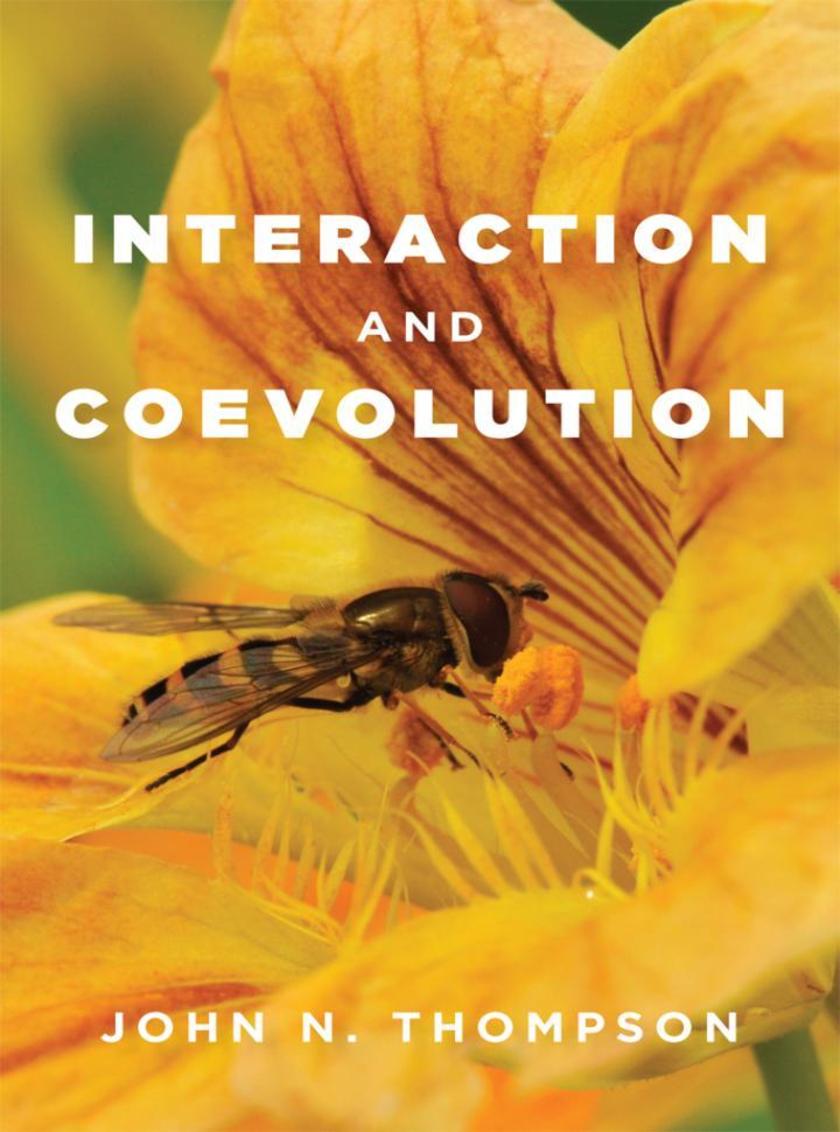
Interaction and Coevolution
¥165.81
"e;It is not only the species that change evolutionarily through interactions . . . the interactions themselves also change."e; Thus states John N. Thompson in the foreword to Interaction and Coevolution, the first title in his series of books exploring the relentless nature of evolution and the processes that shape the web of life. Originally published in 1982 more as an idea piece-an early attempt to synthesize then academically distinct but logically linked strands of ecological thought and to suggest avenues for further research-than as a data-driven monograph, Interaction and Coevolution would go on to be considered a landmark study that pointed to the beginning of a new discipline. Through chapters on antagonism, mutualism, and the effects of these interactions on populations, speciation, and community structure, Thompson seeks to explain not only how interactions differ in the selection pressures they exert on species, but also when interactions are most likely to lead to coevolution. In this era of climate change and swiftly transforming environments, the ideas Thompson puts forward in Interaction and Coevolution are more relevant than ever before.
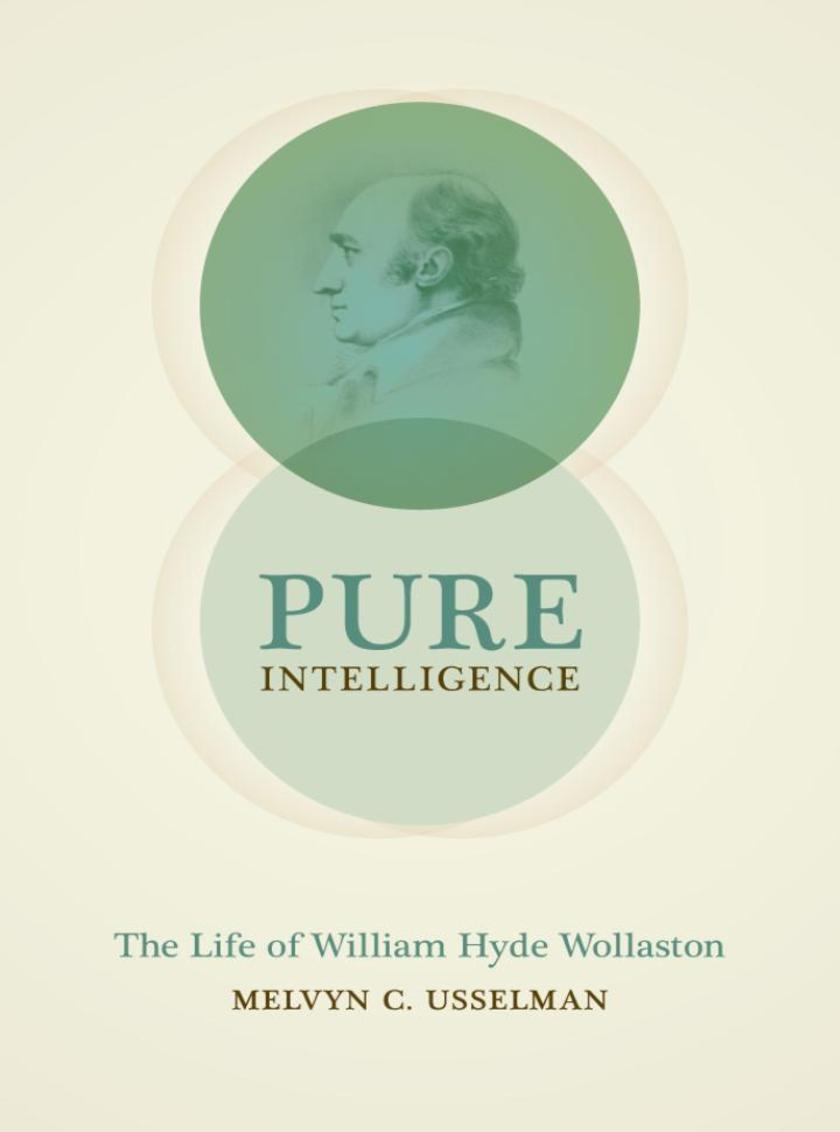
Pure Intelligence
¥288.41
William Hyde Wollaston made an astonishing number of discoveries in an astonishingly varied number of fields: platinum metallurgy, the existence of ultraviolet radiation, the chemical elements palladium and rhodium, the amino acid cystine, and the physiology of binocular vision, among others. Along with his colleagues Humphry Davy and Thomas Young, he was widely recognized during his life as one of Britain's leading scientific practitioners in the first part of the nineteenth century, and thedeaths of all three within a six-month span, between 1828 and 1829, were seen by many as the end of a glorious period of British scientific supremacy. Unlike Davy and Young, however, Wollaston was not the subject of a contemporary biography, and his many impressive achievements have fallen into obscurity as a result.Pure Intelligence is the first book-length study of Wollaston, his science, and the environment in which he thrived. Drawing on previously-unstudied laboratory records as well as historical reconstructions of chemical experiments and discoveries, and written in a highly accessible style, Pure Intelligence will help to reinstate Wollaston in the history of science, and the pantheon of its great innovators.


