


 购物车
购物车 个人中心
个人中心
World in My Mind, My Mind in the World
¥73.48
Not consciousness, but knowledge of consciousness: that is what this book communicates in a fascinating way. Consciousness is the thread that links the disappearing gorilla with the octopus suffering from a stomach ache, and the person under anaesthetic with a new born baby. How these are different, yet illustrative of consciousness, is revealed in this accessible book by one of the world's leading thinkers and neural computing engineers.Igor Aleksander addresses this enigmatic topic, by making us understand the difference between what happens to us when thinking consciously and when sort of thinking when dreaming or when not conscious at all, as when sleeping, anaesthetised or knocked out by a blow on the head.The book also tackles the larger topics of free will, choice, God, Freud (what is 'the unconscious'?), inherited traits and individuality, while exploding the myths and misinformation of many earlier mind-hijackers. He shares the journey towards building a new model of consciousness, with an invitation to understand 5 axioms or basic ideas, which we easily recognise in ourselves.
My Prime Ministers and I
¥58.76
Set at the time of the Golden Jubilee, My Prime Ministers and I is exactly what satire is supposed to be, a ruthless and hilarious lampoon of Tony Blair and England's Political class. Tired of being continuously undermined by her supposedly loyal Ministers, Queen Elizabeth abdicates, as do her immediate successors. The Ministers are delighted as they are now able to act as if they were royalty without the embarrassment of being measured against the real thing. But things do not work out quite as the politicians anticipated. The Queen now lives in Canada, from where she subtly plots against the British Government, and if that were not bad enough for the Administration in London, the populace of Great Britain had the impertinence to start voicing their opinions on the direction events were taking - a development not necessarily to the taste of the ruling elite, who viewed such manifestations of democratic opinion to be nothing short of seditious... giving the lower orders the vote was one thing but actually listening to them was out of the question, and, unfortunately, that is the sort of logic which can start a revolution. Dividing her time between Canada and Virginia, Elizabeth II orchestrates the situation much as a conductor would a Mozart symphony. The London politicians may have possessed the power, but what chance would they stand against a woman through whose veins ran a thousand years of skulduggery?
Philosopher and Appeasement
¥107.81
This book is volume one of a two-part series. Taken together, the two volumes of A Philosopher at War examine the political thought of the philosopher and archaeologist, R.G. Collingwood, against the background of the First and Second World Wars. Collingwood served in Admiralty Intelligence during the First World War and although he was not physically robust enough to play an active role in the Second World War, he was swift to condemn the policies of appeasement which he thought largely responsible for bringing it about. The author uses a blend of political philosophy, history and discussion of political policy to uncover what Collingwood says about the First World War, the Peace Treaty which followed it, and the crises which led to the Second World War in 1939, together with the response he mustered to it before his death in 1943. The aim is to reveal the kind of liberalism he valued and explain why he valued it. By 1940 Collingwood came to see that a liberalism separated from Christianity would be unable to meet the combined evils of Fascism and Nazism. How Collingwood arrived at this position, and how viable he finally considered it, is the story told in these volumes.
Meanings of Michael Oakeshott's Conservatism
¥147.05
This collection of recent scholarship on the thought of Michael Oakeshott includes essays by both distinguished and established authors as well as a fresh crop of younger talent. Together, they address the meanings of Oakeshott's conservatism through the lenses of his ideas on religion, history, and tradition, and explore his relationships to philosophers ranging from Hume to Ryle, Cavell, and others. The collection assigns no single or final meaning to Oakeshott's conservatism, but finds in him a number of possibilities for thinking fruitfully about what conservatism might mean, when it is no longer considered as a doctrine, but as a habit or a turn of mind.
Fairy Tales of the Brothers Grimm
¥58.76
The well-known Brothers Grimm are famous for writing the world's greatest fairy tales. This excellent collection has been specially formatted for today's e-readers, and with easy navigation to your favourite tales is an excellent addition to any bookshelf.
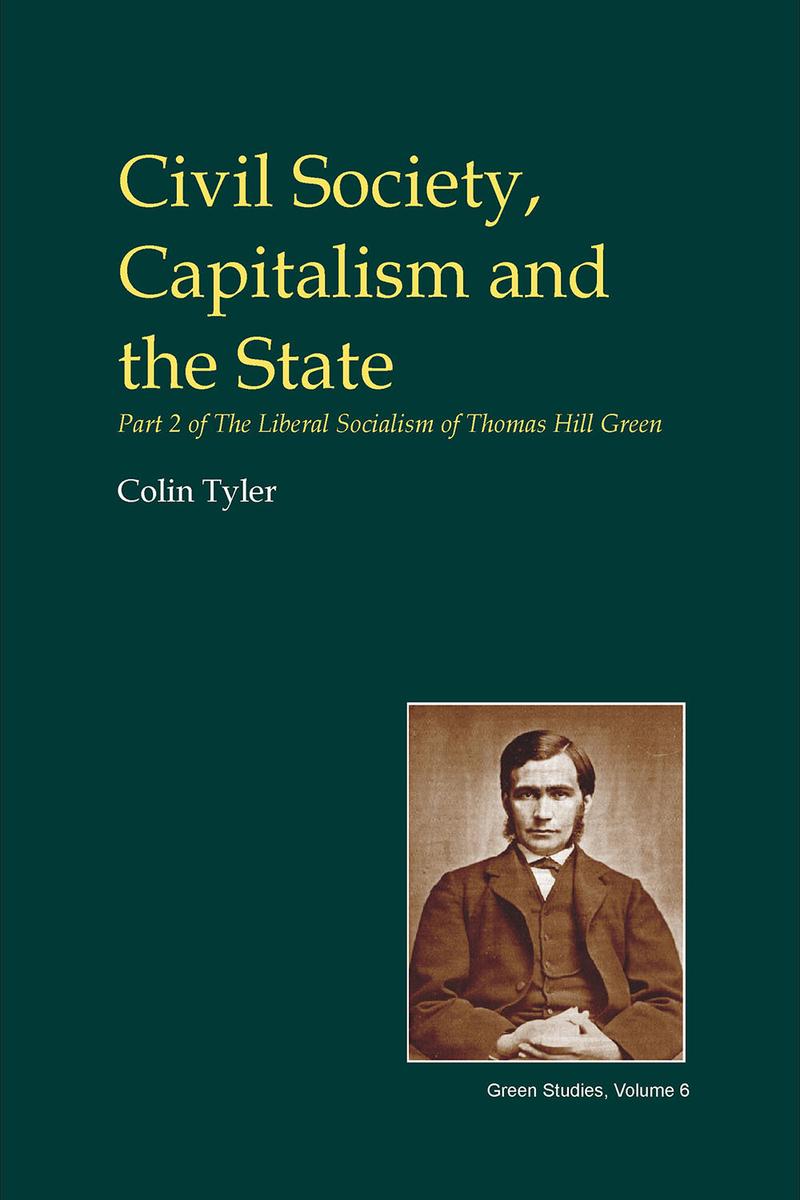
Civil Society, Capitalism and the State
¥220.63
Civil Society, Capitalism and the State presents a critical reconstruction of the social and political facets of Thomas Hill Green's liberal socialism. It explores the complex relationships Green sees between human nature, personal freedom, the common good, rights and the state. It explores Green's analysis of free exchange, his critique of capitalism and his defence of trade union activity and the cooperative movement. It establishes that Green gives only grudging support to welfarism, which he saw as a conservative mechanism in effect if not conscious design. It is shown that he believes state provision of welfare to be justified only to the extent that peasants and the proletariat lack a culture and institutions which enable them to assert themselves against abusive landlords and capitalists. Ultimately, it is shown that Green's guiding ideal is the creation of a eudaimonically-enriching kingdom of ends, which favours the creation of a dynamic and free society driven by mass participation through decentralised social and political institutions. This book builds on Colin Tyler's The Metaphysics of Self-realisation and Freedom (2010), although it can also be read as a freestanding work.

Here For Our Children's Children?
¥63.67
This study reviews the many different bases for wanting to preserve the environment. By seeing how protagonists approach the same situation from different assumptions, some of the origins of environmental conflict may be established, and ways of resolving conflict can be identified.There are two major issues in environmental ethics: The first asks whether the problems can be solved within current approaches, or require instead lifestyle changes for the whole of western civilisation.The second issue concerns why the environment should be valued. This review identifies a series in increasingly stronger valuations that can be identified as:1. Hedonistic - we protect the environment because we like it.2. Utilitarian - the environment is valuable to us3. Consequentialist - we want to preserve things for other people - now or future.4. Intrinsic - The environment has virtue in its own right5. Extrinsic - we value the environment because it is of consequence to some thing else - theistic (a God).Thirdly, these insights are used to explore potential ways of resolving environmental conflicts, notably by the recovery of democratic decision making at the right scale: local, national or even global.

Barchester Towers
¥29.33
Barchester Towers, Trollope's most popular novel, is the second of the six Chronicles of Barsetshire. The Chronicles follow the intrigues of ambition and love in the cathedral town of Barchester. Trollope was of course interested in the Church, that pillar of Victorian society - in its susceptibility to corruption, hypocrisy, and blinkered conservatism - but the Barsetshire novels are no more `ecclesiastical' than his Palliser novels are `political'. It is the behaviour of the individuals within a power structure that interests him. In this novel Trollope continues the story of Mr Harding and his daughter Eleanor, adding to his cast of characters that oily symbol of progress Mr Slope, the hen-pecked Dr Proudie, and the amiable and breezy Stanhope family. The central questions of this moral comedy - Who will be warden? Who will be dean? Who will marry Eleanor? - are skilfully handled with that subtlety of ironic observation that has won Trollope such a wide and appreciative readership.

Sarkozy Phenomenon
¥63.67
After his victory at the Presidential elections in May 2007, Nicolas Sarkozy quickly became both deeply controversial and intriguing. It was clear from the start that his rule was to be the most autocratic since Charles de Gaulle's; Prime Minister, government and parliament found themselves eclipsed by the ever-present, hyperactive President who sought to take many decisions on his own and to implement changes in numerous different domains, but with no obvious overall plan. His sweeping reform programme was inspired by a perceived need for rupture with the past, and bringing former Socialists into government seemed to confirm his insistence on the validity of some left-leaning points of reference as well as those on the right. To many, Sarkozy was both dangerous and unfathomable, like Napoleon. In this short book the author argues that the Sarkozy phenomenon is best explained by principal reference to the notion of Bonapartism, which of course has a long history in French politics. Bonapartism is an exceptional form of political rule which results from an unstable situation and where an authoritarian leader steps in and appeals to the electorate in populist fashion with promises of modernization and progress. But Sarkozy's authoritarian, populist rule is also influenced by the extreme right as well as by more conventional centre-right politics in which Sarkozy worked for many years. Yet Sarkozy is less out of step with trends in other liberal democratic states than it might seem; in other highly industrialized countries also a long-term decline of interest in politics has combined with the emergence of highly personalized, media-driven political leadership. The book is written in a clear, accessible way which assumes little prior acquaintance with French politics or history. Those with little knowledge of French politics will find it rewarding, as will as readers with greater familiarity with the field.
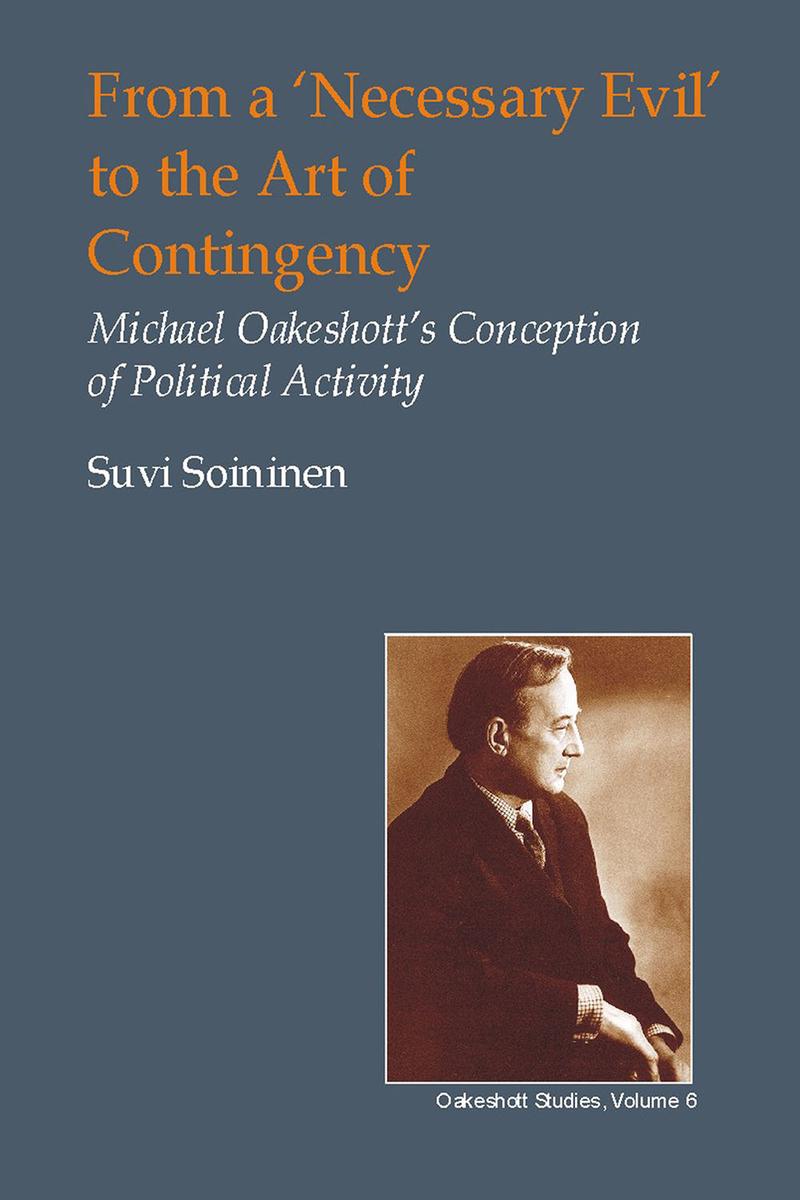
From a 'Necessary Evil' to the Art of Contingency
¥220.63
This book presents a comprehensive study of Oakeshott's conception of political activity. The author first examines Oakeshott in the contexts of liberal, conservative and Idealist thought, and then presents a detailed interpretation of the change in his conception of politics in the context of British postwar political thought. It is argued that Oakeshott's conception of political activity shifted from a near contempt of politics towards the applauding of politics as a deliberative and reflective activity. The development is disclosed by examining the change in his key concepts, such as authority and tradition. Accordingly, some rather unexpected aspects of Oakeshott's thought, such as his close relationship to the linguistic turn, appear. The author argues that although Oakeshott cannot exactly be classified as belonging to that group of political philosophers for whom politics represents a superior human activity, his later work presents an important and original view of politics as an art of contingency.

State of the Nations 2008
¥132.34
The State of the Nations 2008: Into the third term of devolution in the United Kingdom is the sixth publication of a major research programme into devolution in the United Kingdom, published on behalf of the Constitution Unit at University College London. The focus of this volume is on the devolved elections of May 2007, analyzing the outcome in terms of both the immediate aftermath and longer-term implications. In particular, it will consider influences on policy-making, finance, the UK Parliament and the resolution of intergovernmental disputes. This book replaces the previously-announced volume The State of the Nations 2007

Bangers
¥19.52
A teenage lad's fascination with old cars. An even greater fascination with teenage girls. A sad lack of sufficient funds to pursue either interest with much credibility. A conundrum which has challenged car-obsessed male youth the world over since the fateful day in 1885 when Gottleib Daimler's spindly-wheeled creation puttered out of its shed for the first time. Bangers relates how one impoverished would-be Lothario tackled these issues during the late 60s and early 70s. Successes were rare, disasters were commonplace but the adventures on the journey were entertaining and fulfilling - most of the time. An affectionate look back at a less constrained, less self-concious era, Bangers tells the story of a young man fumbling his way towards adulthood through tales of the many old cars that found their way into his life. Each of these crumbling wrecks moved him a fraction further down the path of enlightenment in his attempts to comprehend basic mechanics and female temperament - not that he ever got much beyond scratching the surface of either concept. In fact, 50 odd years and 70 odd cars later, he remains as bemused by it all as he ever was. However, two constants have remained with him throughout. One is the knowledge that he was always far from being alone in his obsession with old motors as a quick glance at the magazine shelves in any newsagent will confirm. The other is that someone, somewhere really ought to try and explain all this to the opposite sex.
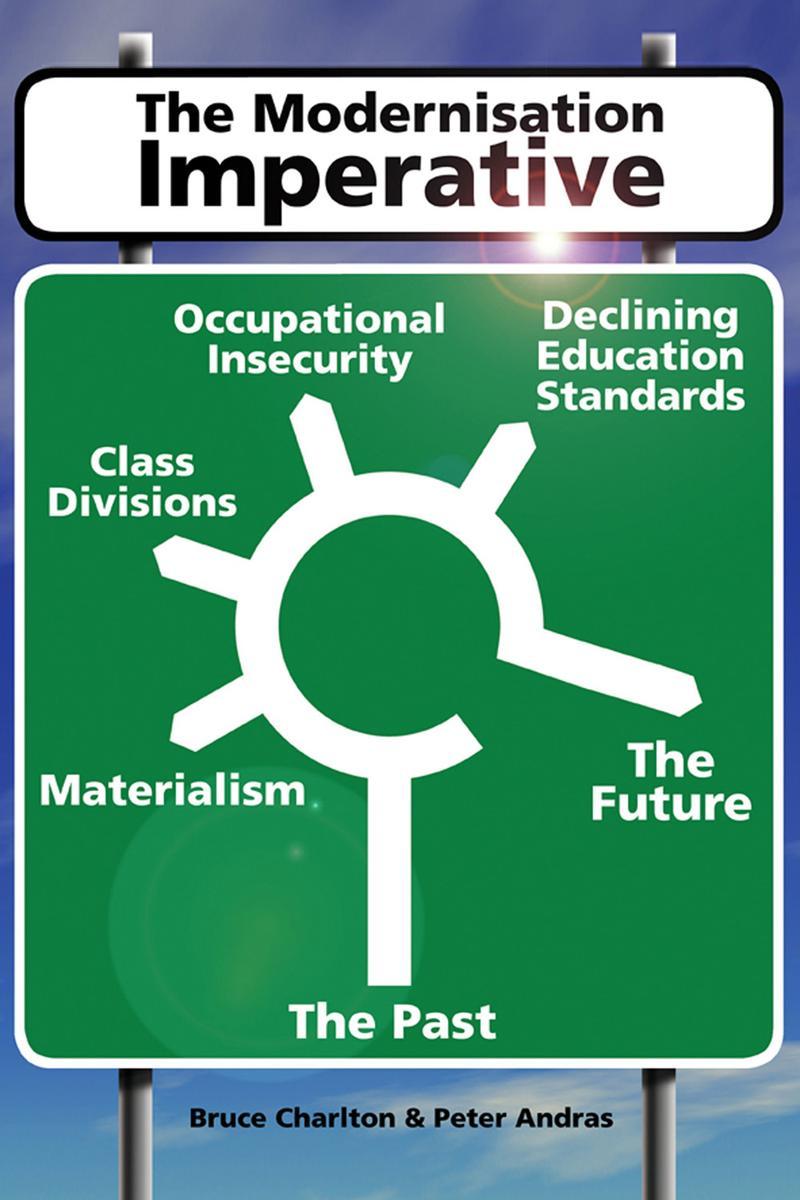
Modernization Imperative
¥63.67
This book argues that contemporary society in Western democracies is generally misunderstood to be a pyramidal hierarchy dominated either by government or the economy. Neither view is correct.We live in a fundamentally pluralistic society divided into numerous 'modular' social systems each performing different functions; these include politics, public administration, the armed forces, law, economics, religion, education, health and the mass media. Because each is specialized, none of these systems are dominant and there is no overall hierarchy of power. Modernizing societies are therefore structured more like a mosaic than a pyramid.Modernization is the tendency for growth in the adaptive complexity and efficiency of the social systems. Growth in complexity is shaped by selection processes which maintain the functionality of social systems. The best examples are the market economy, science and democratic politics.The process of modernization is both inevitable and, on the whole, desirable: this constitutes the modernization imperative. Therefore, the proper question should not be whether society should modernize, but how.
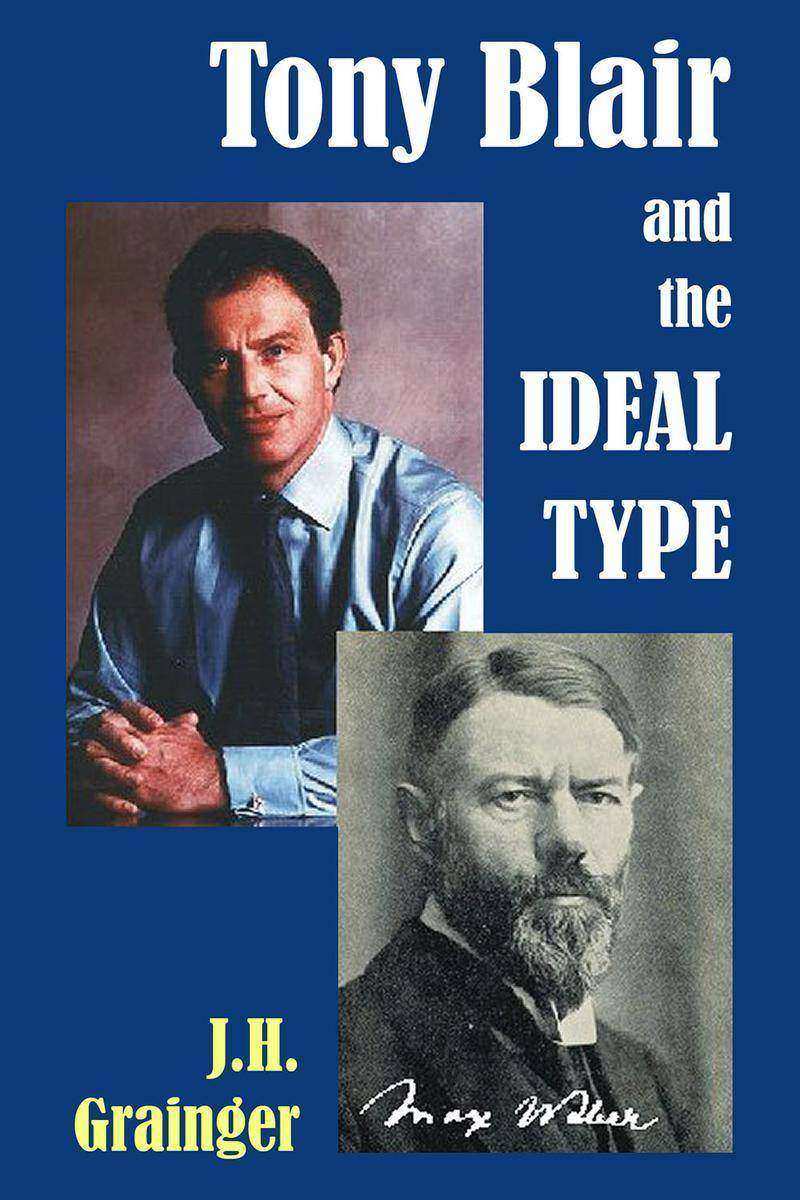
Tony Blair and the Ideal Type
¥63.67
The 'ideal type' is Max Weber's hypothetical leading democratic politician, whom the author finds realized in Tony Blair. He is a politician emerging from no obvious mould, treading no well-beaten path to high office, and having few affinities of tone, character or style with his predecessors. He is the Outsider or Intruder, not belonging to the 'given' of British politics and dedicated to its transformation. Here is a timely critique of Blair's political persona as he presents himself to the British people to be entrusted with a third term as Prime Minister.

Michael Oakeshott on Hobbes
¥220.63
Michael Oakeshott is widely recognised to be one of the most original political philosophers of the twentieth century. He also developed a very influential interpretation of the ideas of the great seventeenth century philosopher Thomas Hobbes. While many commentators have noted the importance of Hobbes for understanding Oakeshott's thought itself, this is the first book to provide a systematic interpretation of Oakeshott's philosophy by paying close attention to all facets of Oakeshott's reading of Hobbes.On the surface, Oakeshott, the philosophical idealist and critic of rationalism in politics, would seem to have little in common with Hobbes, who is often regarded as a classic materialist and rationalist philosopher. This work shows, however, that despite appearances, there are many basic affinities between the two thinkers and that Oakeshott brought to the surface aspects of Hobbes's thought that had previously been overlooked by Hobbes scholars.The development of Oakeshott's own theory is shown to mirror changes in his reading of Hobbes and many of the distinctive features of Oakeshott's thought including the modal and sceptical conception of human knowledge, the 'morality of individuality', the theory of civil association, and the critique of rationalism all find a fascinating focal point in his writings on Hobbes. Some attention is also paid to Oakeshott's religious ideas, indicating what they share with Hobbes's philosophy of religion. The book situates Oakeshott's reading in relation to some other important twentieth century interpretations of Hobbes and examines its significance for broader debates in political theory and the history of ideas.
Demarchy Manifesto
¥73.48
Demarchy exploits the possibilities of modern communications to give new role to public discussion. It takes the initiative in formulating policy on each specific problem out of the hands of political parties and into the hands of those most strongly affected by that particular problem. John Burnheim explains why this needs to be done and how it can be done by voluntary initiative without constitutional change.

Cultural Challenge
¥166.67
A collection of the three volumes by Yannis Andricopoulos on ancient Greek wisdom applied to modern culture and society, including:- Volume 1: In Bed with Madness- Volume 2: The Greek Inheritance- Volume 3: The Future of the PastIn Bed with MadnessGlobalism endowed us with McDonald's, 'the world's local bank', English football teams without English players and an irrepressible desire for more as enough is never good enough - the blanket is always too short. Our personal world as much as our social and political realities seem to have blithely surrendered to the madness of a civilization which views anything from corporate greed and global warming to military adventures and religious fundamentalism as normal as a door banging in the wind. The destructive capabilities of our age have run too far ahead of our wisdom. However, the process is not irreversible if our thinking can postpone its retirement. In Bed with Madness is 'a well-argued, powerful and profound indictment of contemporary culture', stylishly written - a reviewer said he would have bought it just for its humour!The Greek InheritanceThe culture of ancient Greece, a culture of joy, was replaced by the Judaeo-Christian culture of faith and then by the capitalist culture of profit. Yet it is the only culture worth fighting for if we want a world run by humans rather than theocracies, nanotechnologies or private equity funds. Yannis Andricopoulos views the Greek culture as the front line of the battle against individualism, materialism, authoritarianism and religious extremism. In a world turned into the corporations' playground, this is also the battle for human values, civic virtues and an ethical society. The Greek Inheritance traces the conflict between Greek values and those of the repressive, religious or capitalist order throughout the millennia. The book is challenging and well-written with a light, humorous touch.The Future of the PastUniversalism in its old forms has, just like door-to-door milkmen, gone for good. But the search for some universally accepted ethical standards cannot be abandoned - values are not colourless as the wind and odourless as thoughts. Looking into our world from the classical Greek point of view, Yannis Andricopoulos wonders whether we cannot place Justice again at the heart of our morality, look forward to the happiness of the individual rather than the upgrading of his or her consumer fantasies, and endeavour to create, not more wealth, but a just and honourable world. The Future of the Past is written in 'a lively, challenging style guaranteeing to stimulate debate on the most pressing issues of our time'.

Spinoza
¥294.20
Spinoza is among the most pivotal thinkers in the history of philosophy. He has had a deep and enduring influence on a wide range of philosophical subjects, and his work is encountered by all serious students of Western philosophy. His Ethics is one of the seminal works of metaphysical, moral, religious and political thought; his Theological-Political Treatise inaugurated a novel method of biblical exegesis; and both his political works developed the pre-eminence of democracy above all other regimes. Nevertheless, the significance of Spinoza's philosophy is matched by its complexity. His system presents a considerable challenge for the modern student; his language is frequently opaque, while the esoteric themes explored in his work often require elucidation. Spinoza: Basic Concepts intends to overcome most of such difficulties. Each essay in this collection explores a key concept involved in Spinoza's thinking, relating it to his understanding of philosophy, outlining the arguments and explaining the implications of each concept. Together, the chapters cover the full range of Spinoza's interdisciplinary system of philosophy.
Sortition
¥107.81
This volume reflects the up-and-coming academic interest in sortition. It is based on contributions to the first international conference dedicated to the subject held at the University of Political Science (Sciences-Po) in Paris in November 2008.The papers explore important theoretical questions such as how we should recognise and define differing lottery forms; the relationship between sortition and different aspects and forms of democracy; and its potential benefits to current political and commercial practice.Contributors include: Hubertus Buchstein, Gil Delannoi, Oliver Dowlen, Gerhard Goehler, Barbara Goodwin, Michael Hein, Yves Sintomer, Peter Stone and Antoine Vergne.
Citizens of Character
¥132.34
The contributors discuss why character education is considered valuable, what character education is taken to mean, and identify and test hypotheses about various influences (schools, families, communities, employers) on the development of character through reporting on our research in UK schools, universities and businesses.
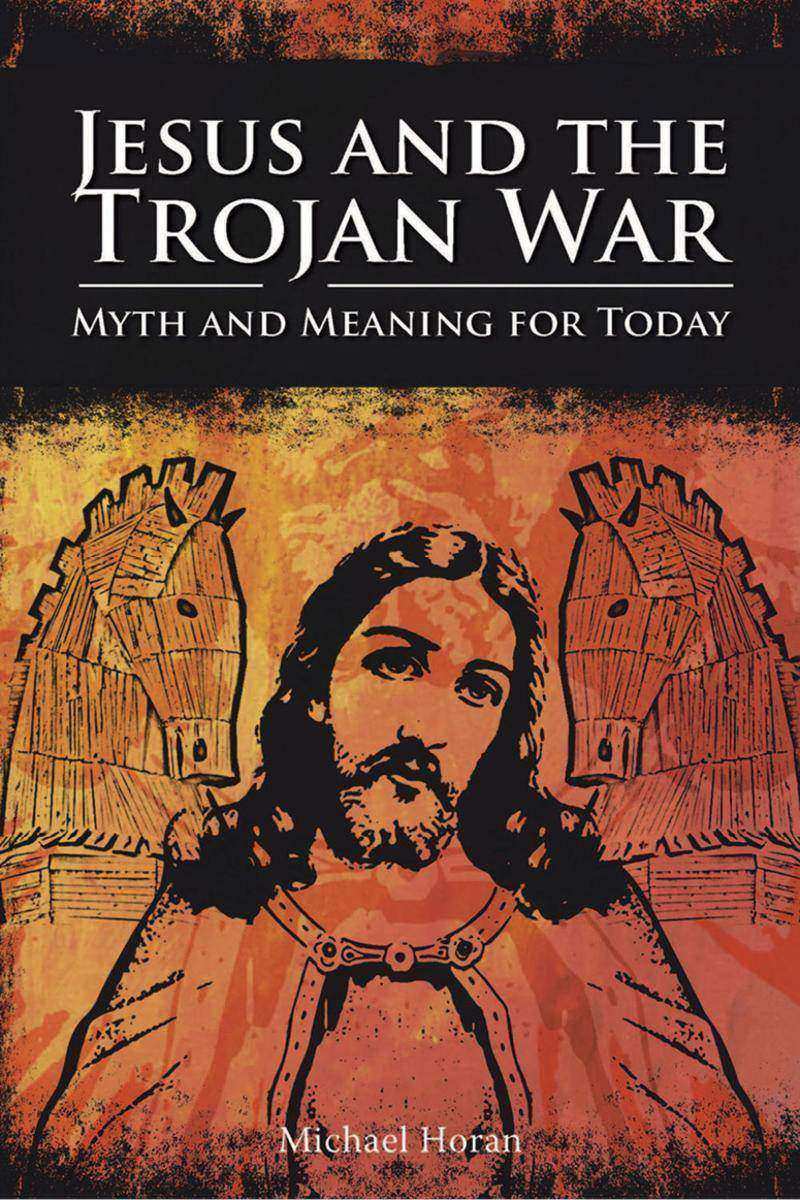
Jesus and the Trojan War
¥107.81
Jesus and the Trojan War looks at ways in which stories are presented and understood; and how story-tellers - and their listeners - may wittingly or unwittingly confuse fact with fiction. This book explores the parallels between four stories (the Trojan war, Moses, King Arthur, and Jesus), and the way their sources relate to their histories and contemporary relevance.


