


 购物车
购物车 个人中心
个人中心
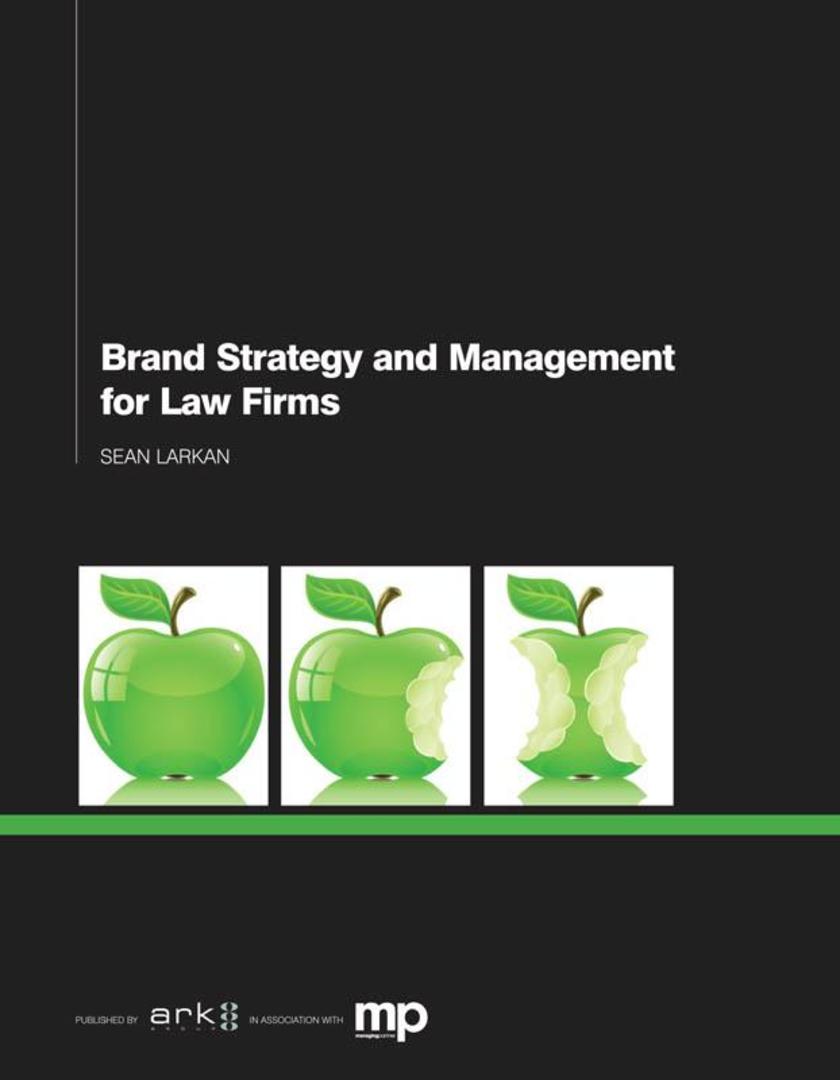
Brand Strategy and Management for Law Firms
¥2452.50
An effective brand strategy that is clearly understood and supported throughout your firm is crucial if you want to attract and retain profitable clients and sustain a talented workforce. Managing Partner’s Brand Strategy and Management for Law Firms report provides a comprehensive framework and guidelines for developing a brand strategy tailored to your firm. Packed with key concepts, practical tools, tips and advice this report will give you an understanding of brand and how it can be developed and strengthened as your firm’s most invaluable asset. Specifically, this report will help you to: Understand the key elements of personal brands, firm brand, and the employment brand – and how they relate to each other; Align your brand strategy with your overall firm strategy, vision and values; Realise the importance of brand names, icons or logos, design and aesthetics; · Understand the key brand considerations when using online channels – websites, blogs, LinkedIn, Twitter and Facebook; · Create a customised brand stress-test and make improvements to strengthen your firm’s brand accordingly and ensure its success; · Get partners and staff on board to support and grow your brand; and · Avoid brand mistakes and overcome the common challenges – including recommended steps for managing your brand before, during and following a merger. · Brand Strategy and Management for Law Firms features insightful case studies, examples and expert contributions from the likes of Norton Rose South Africa, DLA Phillips Fox, Lex Mundi, Lex Africa and more… They reveal practical tips, lessons learned and mistakes made that will prove invaluable in the development and management of your own brand strategy.

The M-Factor
¥151.53
The definitive guide to turning the Millennials' great expectations into even greater results The Millennial generation (those born between 1982 and 2000) has rapidly entered the workforce in greater numbers, but its introduction to the workplace has been anything but seamless. In fact, many companies already report attention-grabbing stories about: the mother who called HR to complain when her Millennial daughter got a mediocre performance review; the new hire who dialed the CEO directly to tell him what the company could be doing better; the young employee who revealed a confidential new product on her Facebook page before it was made public. Clashes like these are happening in workplaces around the world, and they leave leaders and coworkers scratching their heads and wondering, "What do these Millennials wantWhy are they so differentHow do we get the good ones in the doorHow do we keep them there without alienating the other generations?" Going forward, a company's success will depend upon knowing the answers to these questions, because they are the keys to motivating this new generation and to taking advantage of the amazing potential it possesses. In The M-Factor, Baby Boomer Lynne Lancaster and Generation Xer David Stillman draw on cutting-edge case studies, findings from large-scale surveys, and hundreds of interviews to identify the seven trends essential for understanding and managing the Millennials: the role of the parents, entitlement, the search for meaning, great expectations, the need for speed, social networking, and collaboration. Observant, humorous, and savvy, this book the ultimate guide to Millennials in the workplace offers valuable insights and practical, take-action tips and solutions that Traditionalists, Boomers, Gen Xers, and even Millennials can use to bridge generational gaps, be more productive, and achieve organizational success like never before.
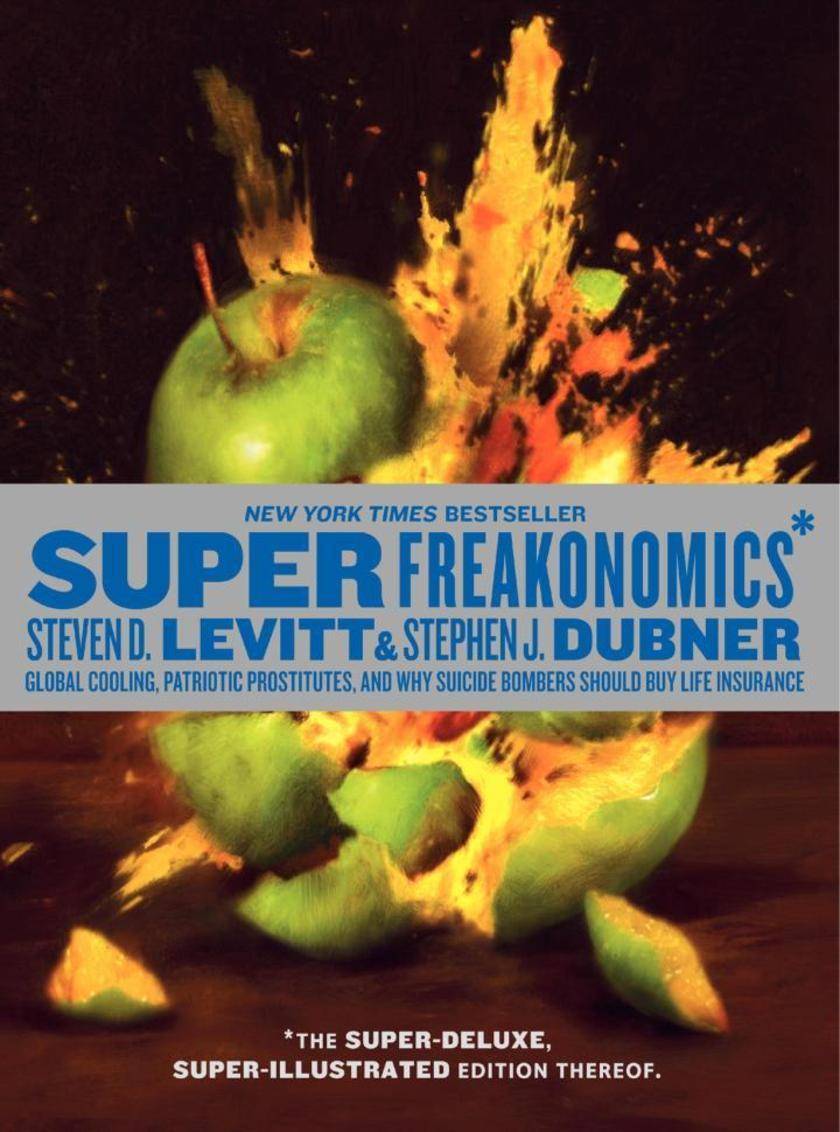
SuperFreakonomics, Illustrated edition
¥223.92
Seeing is believing . . . The Smash Hit SuperFreakonomics is now Bigger and Better SuperFreakonomics was an instant New York Times bestseller that caused a media uproar, continuing the amazing success begun with the groundbreaking, worldwide sensation Freakonomics.With the Illustrated Edition, Steven D. Levitt and Stephen J. Dubner bring alive their smart thinking and great storytelling with an explosion of visual evidence, including: A by-the-numbers tally of a high-priced call girl's career, and a tracking sheet from an intensive survey of Chicago street prostitutes. A visual quiz that lets you pit your memory against the memory of a chess grand master. Images of the hurricane-killing machine and other geo-engineering inventions described in SuperFreakonomics. A look into whether doctors are better at saving lives in TV dramas or in real hospitals. Whether probing the intricacies of sex change oper-ations, the effectiveness of child car seats, or what really motivates people to do good, the Illustrated Edition of SuperFreakonomics employs photographs, drawings, and graphs that will lead readers to see the world in a bold, fresh way.

Minority Rules
¥128.85
In a perfect corporate world, intellect, hard work, and professionalism would be recognized and rewarded regardless of the color of your skin. Kenneth Arroyo Roldan is here to tell you that nobody works in a perfect corporate world. Stellar performance alone will not determine corporate advancement—minorities need to learn and follow the rules of corporate politics. As one African American employee who started as a systems analyst at Xerox observed, "The reality was that despite your ability, if you weren't playing politics correctly, you would be derailed." In Minority Rules, Roldan gives a dose of tough love to minorities in corporate America while educating their majority counterparts. As the CEO of the top U.S. head-hunting firm specializing in placing minorities in fast track jobs, Roldan watched as minority superstars hired at Fortune 500 companies bailed out, disappointed and rejected after only a few years. The problem, Roldan says, is that minorities are not adequately prepared psychologically or culturally for corporate careers. In a six-step plan, he explains how to surmount the obstacles, play corporate hardball, and succeed as a minority in the workplace. Corporate culture is unforgiving to minorities, but it is possible to rise to the top with Roldan as your guide. With refreshing candor, Roldan prepares minorities both psychologically and culturally for corporate careers. Forget about using affirmative action and discrimination lawsuits to level the playing field. The only way to win is to know the landscape and master the rules of the game—from finding the right mentor to learning the art of networking to focusing on self-reliance, patience, and most of all, performance. Roldan shows minorities how to climb to the top jobs—and keep them.
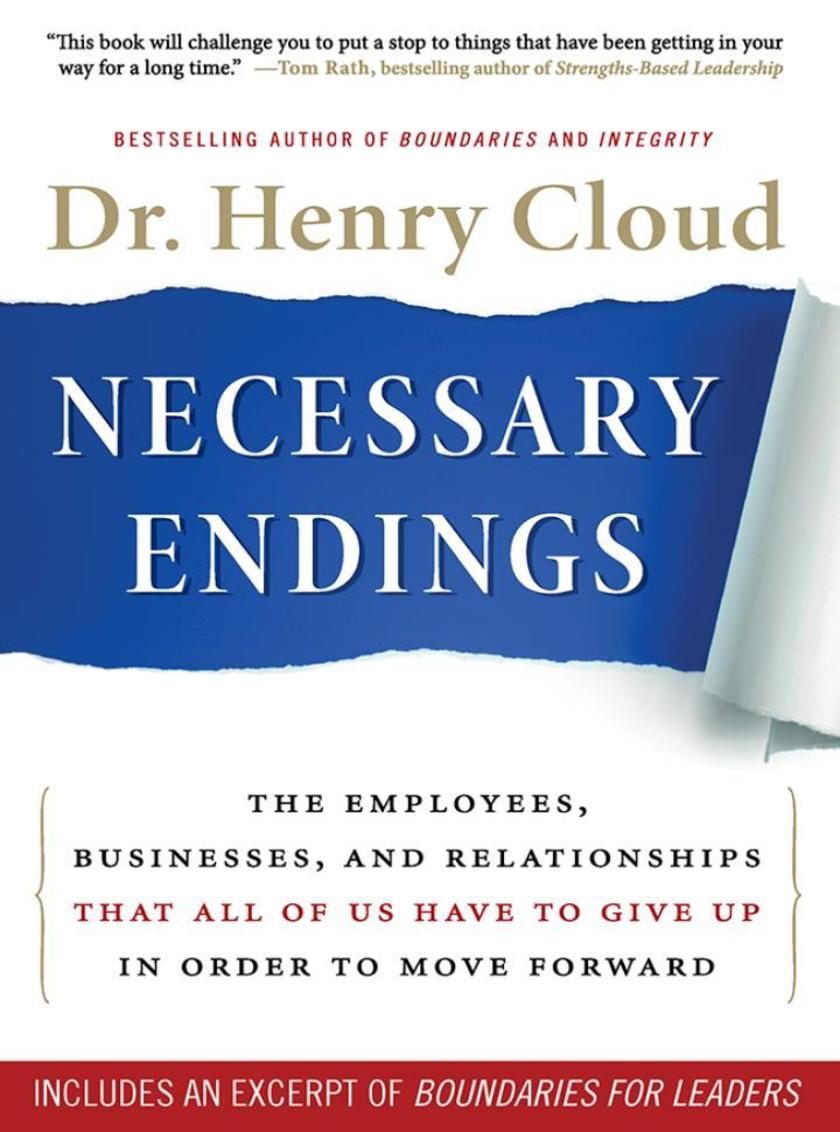
Necessary Endings
¥155.02
End Pain.Foster Personal and Professional Growth.Live Better. While endings are a natural part of business and life, we often experience them with a sense of hesitation, sadness, resignation, or regret. But consultant, psychologist, and bestselling author Dr. Henry Cloud sees endings differently. He argues that our personal and professional lives can only improve to the degree that we can see endings as a necessary and strategic step to something better. If we cannot see endings in a positive light and execute them well, he asserts, the "better" will never come either in business growth or our personal lives.In this insightful and deeply empathetic book, Dr. Cloud demonstrates that, when executed well, "necessary endings" allow us to proactively correct the bad and the broken in our lives in order to make room for the professional and personal growth we seek. However, when endings are avoided or handled poorly as is too often the case good opportunities may be lost, and misery repeated. Drawing on years of experience as an executive coach and a psychologist, Dr. Cloud offers a mixture of advice and case studies to help readers know when to have realistic hope and when to execute a necessary ending in a business, or with an individual; identify which employees, projects, activities, and relationships are worth nurturing and which are not; overcome people's resistance to change and create change that works; create urgency and an action plan for what's important; stop wasting resources needed for the things that really matter. Knowing when and how to let go when something, or someone, isn't working a personal relationship, a job, or a business venture is essential for happiness and success. Necessary Endings gives readers the tools they need to say good-bye and move on.
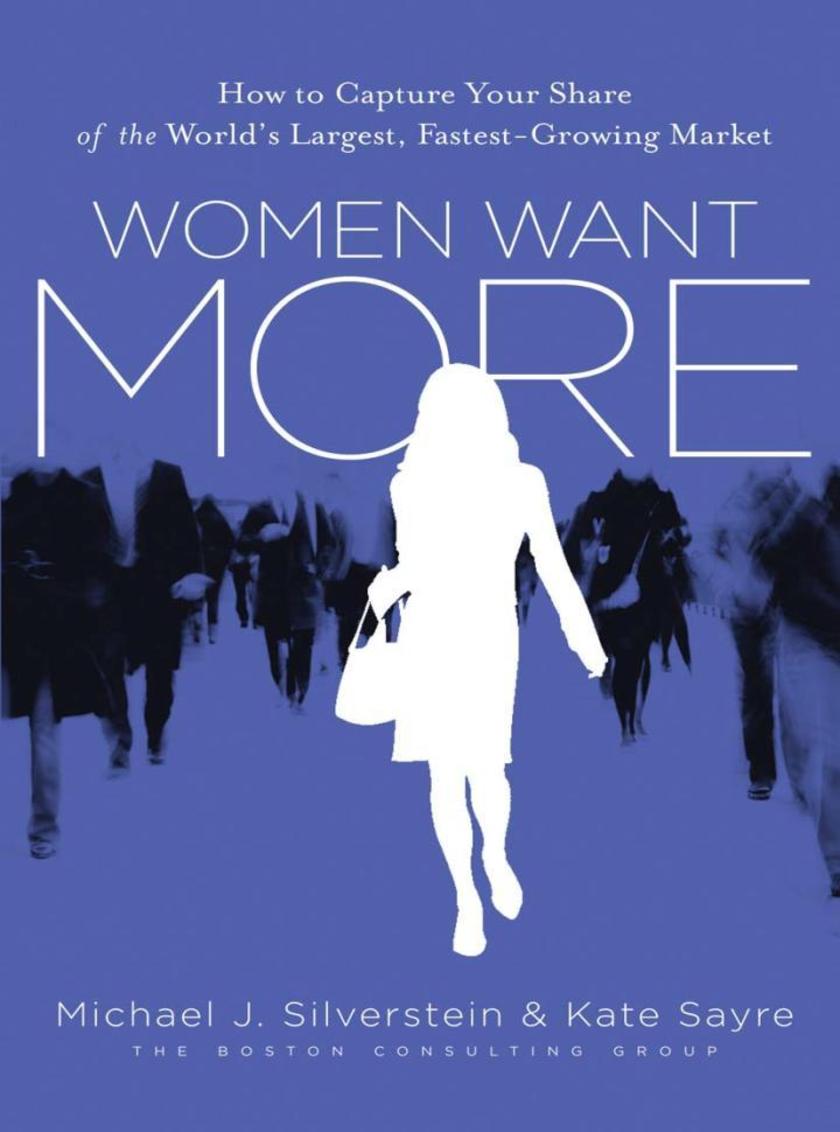
Women Want More
¥157.15
Haven't women gotten everything they wantEconomic powerSocial influenceBusiness cloutYes, but it turns out that these fantastic gains have come at a heavy price, as consumer goods experts Michael J. Silverstein and Kate Sayre discovered in an unprecedented study of 12,000 women in forty countries.That relentless upward climb has left women feeling stressed out, time starved, and overburdened. As a result, they look to products and services that will help them claw back time, juggle multiple roles, and capture a few moments of enjoyment.Women want more much more, in every category of goods and services. And no matter what their age or economic situation or where they live in the world, women will spend trillions of dollars over the next decade on the brands that truly deliver: Home-cleaning products that enable women to do in an hour what used to take a day Financial-services products that recognize that women control half the United States' wealth Food products that help keep the whole family happy and healthy Health care services designed for working-women's hectic schedules In the coming years, women's influence will be so enormous that it will not only help bring us out of the economic downturn but also create one of the most dramatic market opportunities of our lifetime bigger than the rise of China and India; more sustainable than any bailout package.Through quantitative data, profiles of individual women, and stories of winning companies, Women Want More provides business leaders with the understanding and practices they need to capture their share of the rising "female economy."

The Ecology of Commerce
¥105.17
The world has changed in the seventeen years since the controversial initial publication of Paul Hawken's Ecology of Commerce, a stirring treatise about the perceived antagonism between ecology and business. Yet Hawken's impassioned argument that business both causes the most egregious abuses of the environment and, crucially, holds the most potential for solving our sustainability problems is more relevant and resonant than ever.Containing updated and revised material for a new audience, The Ecology of Commerce presents a compelling vision of the restorative (rather than destructive) economy we must create, centered on eight imperatives: Reduce energy carbon emissions 80 percent by 2030 and total natural resource usage 80 percent by 2050. Provide secure, stable, and meaningful employment to people everywhere. Be self-organizing rather than regulated or morally mandated. Honor market principles. Restore habitats, ecosystems, and societies to their optimum. Rely on current income. Be fun and engaging, and strive for an aesthetic outcome.
C-Scape
¥157.15
A bold, pioneering book that shows how businesses can survive and thrive in the digital media revolution Not so long ago, the business landscape was easier to chart. The routes connecting customers, companies, products, and services were predictable, reliable, and understood. Today, that landscape has been upended, and in its place a "C-Scape" has emerged a world where consumers, not producers and marketers, make the choices; where content, not distribution, is king; where curation becomes a primary currency of value; and where convergence continues to revolutionize every part of every business. In C-Scape, Larry Kramer leads the reader through this new, evolving world where the challenges are daunting but the opportunities are huge.A seasoned journalist turned superstar digital entrepreneur and venture capitalist, Kramer learned early on to survive and overcome the forces that are remaking the business landscape: the digital media revolution. Why mediaEvery aspect of every business is increasingly carried out through the media. From advertising and marketing to sales and customer service, from product design to manufacturing, everything that happens anywhere in business is ever more likely to happen on a screen or handheld device. That means any business could fall to the same threats facing the newspaper business and the music industry unless that business learns to navigate the four Cs. Kramer's explanation of this new landscape is a revelation; his visionary advice is both crucial and urgent. No leader, whether at the helm of a small business or a conglomerate, will read this book without seeing the business world anew and finding practical ways to put this book's four powerful precepts immediately to work.
The Upside of Turbulence
¥157.15
A provocative user's guide to a world where the only thing that doesn't change is change itself "Before I die," Albert Einstein once said, "I hope someone will clarify quantum physics for me. After I die, I hope God will explain turbulence to me." Einstein might have been more confused today: Turbulence, in all its manifestations, is on the rise. Financial markets gyrate. Commodity prices zig and zag. New technologies disrupt long-standing businesses and entire industries. Scientific discoveries overturn historical truisms. Dirty bombs and pension busts, natural disasters and flu pandemics, add to the tumult. We live in a world beset by turbulence.We often respond to turbulence by accelerating activities that worked in the past. We lapse into inertia when we should adapt with agility, and we cling to rigid dogmas when we should improvise. But throughout history, volatility has not only dethroned incumbent leaders, it has also created untold possibilities to create economic value. Turbulence has an upside, and companies that seize the opportunities arising out of seething markets will become tomorrow's champions. Based on more than a decade of research, The Upside of Turbulence draws lessons from companies that have consistently spotted and exploited opportunities that rivals have missed. The book explores realms ranging from improvisational comedy to the U.S. Marine Corp's combat doctrine. The result is a series of provocative insights that defy conventional wisdom. The book also introduces practical tools, which have been field-tested by executives around the world, to wrestle triumph out of turmoil.
Begging for Change
¥141.80
You are a good person. You are one of the 84 million Americans who volunteer with a charity. You are part of a national donor pool that contributes nearly $200 billion to good causes every year. But you wonder: Why don't your efforts seem to make a differenceFifteen years ago, Robert Egger asked himself this same question as he reluctantly climbed aboard a food service truck for a night of volunteering to help serve meals to the homeless. He wondered why there were still people waiting in line for soup in this day and age. Where were the drug counselors, the job trainers, and the support team to help these men and women get off the streetsWhy were volunteers buying supplies from grocery stores when restaurants were throwing away unused fresh food every nightWhy had politicians, citizens, and local businesses allowed charity to become an end in itselfWhy wasn't there an efficient way to solve the problemRobert knew there had to be a better way. In 1989, he started the D.C. Central Kitchen by collecting unused food from local restaurants, caterers, and hotels and bringing it back to a central location where hot, nutritious meals were prepared and distributed to agencies around the city. Since then, the D.C. Central Kitchen has been named one of President Bush Sr.'s Thousand Points of Light and has become one of the most respected and emulated nonprofit agencies in the world, producing and distributing more than 4,000 meals a day. Its highly successful 12-week job-training program equips former homeless transients and drug addicts with culinary and life skills to gain employment in the restaurant business. In Begging for Change, Robert Egger looks back on his experience and exposes the startling lack of logic, waste, and ineffectiveness he has encountered during his years in the nonprofit sector, and calls for reform of this $800 billion industry from the inside out. In his entertaining and inimitable way, he weaves stories from his days in music, when he encountered legends such as Sarah Vaughan, Mel Torme, and Iggy Pop, together with stories from his experiences in the hunger movement -- and recently as volunteer interim director to help clean up the beleaguered United Way National Capital Area. He asks for nonprofits to be more innovative and results-driven, for corporate and nonprofit leaders to be more focused and responsible, and for citizens who contribute their time and money to be smarter and more demanding of nonprofits and what they provide in return. Robert's appeal to common sense will resonate with readers who are tired of hearing the same nonprofit fund-raising appeals and pity-based messages. Instead of asking the "who" and "what" of giving, he leads the way in asking the "how" and "why" in order to move beyond our 19th-century concept of charity, and usher in a 21st-century model of change and reform for nonprofits. Enlightening and provocative, engaging and moving, this book is essential reading for nonprofit managers, corporate leaders, and, most of all, any citizen who has ever cared enough to give of themselves to a worthy cause.
The Sellout
¥95.39
The definitive account of Wall Street's stunning collapse From critically acclaimed investigative journalist and CNBC personality Charles Gasparino comes a sweeping examination of the most recent volatile, anxiety-ridden era in our nation's socioeconomic history. The Sellout traces the implosion of the financial services business back to its roots in the late 1970s when Wall Street embraced a new business model predicated on taking enormous risks. It shows how a backwater business involving the trading of risky bonds packed with mortgages showered countless billions in profits on the financial industry but sowed the seeds of its ultimate demise. Gasparino walks readers through Wall Street's three-decades' love affair with risk, revealing a trail of culpability from the government bureaucrats who crafted housing policies that encouraged homeownership, to the Wall Street firms that underwrote and invested in risky debt, to the mortgage sellers who handed out loans to people without the financial wherewithal to pay them back, to the homeowners who became convinced they could afford mansions on blue-collar wages. The ongoing tumult in financial markets and the global economy began when some of our most esteemed financial institutions, our government, and even average citizens abdicated their collective responsibilities, eventually selling out investors and selling off the American Dream itself. In the spirit of classics such as Barbarians at the Gate and Liar's Poker, this page-turning narrative captures how avarice, arrogance, and sheer stupidity eroded Wall Street's dominance and profoundly weakened the financial security of millions of middle-class Americans. Eye-opening and engrossing, The Sellout provides the most thorough investigation to date of this latest gilded era.

Smartcuts
¥149.48
Serial entrepreneur and journalist Shane Snow delves into the reasons why some people and some organizations are able to achieve incredible things in implausibly short time frames, showing how each of us can use these "smartcuts" to rethink convention and accelerate success.Why do some companies attract millions of customers in mere months while others flopHow did Alexander the Great, YouTube phenom Michelle Phan, and Tonight Show host Jimmy Fallon dash to the top in less time than it takes most of us to get a midlevel promotionHow do high-growth businesses, world-class heart surgeons, and underdog marketers beat the norm?Like computer hackers, a handful of innovators in every era use lateral thinking to find better routes to stunning accomplishments. Throughout history, the world's biggest successes have been achieved by those who refuse to follow the expected course and buck the norm.Smartcuts is about bucking the norm. In it, Snow shatters common wisdom about success, revealing how conventions like "paying dues" prevent progress, why kids shouldn't learn multiplication tables, and how, paradoxically, it's easier to build a huge business than a small one.Smartcuts tells the stories of innovators who dared to work differently and lays out practical takeaways for the rest of us. It's about applying entrepreneurial and technological concepts to success, and how, by emulation, we too can leapfrog competitors, grow businesses, and fix society's problems faster than we think.
HarperCollins e-books
¥112.23
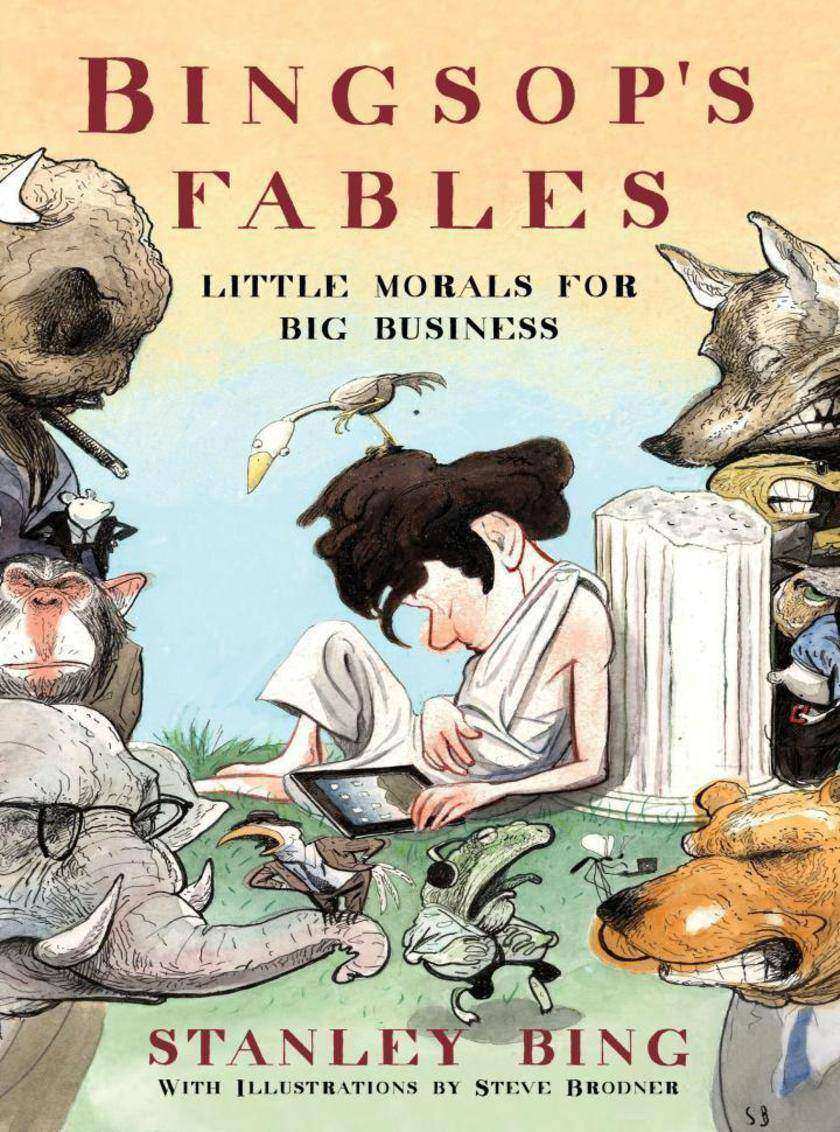
For more than twenty years, Stanley Bing has peerlessly explained corporate culture and strategy with wit and insight. Now he brings us this engaging and instructive book of white-collar fables that have charmed generations of businesspeople since Greece was glorious and Rome was grand, brilliant gems of wisdom flowing from the pen of the mysterious, legendary author known throughout the ancient corporate world by a single name: Bingsop. Bingsop's Fables is animated by a cast of archetypal characters that are as iconic and representative of human nature as were the jackdaw, the dull, the snake, the hare, the lion, the horse, and all the rest of the birds and beasts that populated the stories of that other fabulist, Aesop. The Stupid Investor, the Miserable Misery Mogul, the Ill-Tempered PR Person, and the Potentially Generous CEO each struts and frets his hour upon the stage and, in the end, presents us with a moral that rings so true it would hurt if we were not also laughing. Festooned with provocative, witty illustrations by New Yorker artist Steve Brodner, this lean, muscular edition will equally be at home on the shelves of aspiring hedge fund managers hoping to kill their elders as on the credenzas of those beleaguered executives who hear the next generation coming up fast from behind. No business library should be considered complete without it.
Working Together
¥83.92
Dig deep and you will find the most compelling argument for working together: Happiness. In business there are always unique individual achievers, but pull down the veil and you'll often find someone alongside them. Michael Eisner does just that in Working Together. Using his own collaboration with Frank Wells at Disney as a launching point for examining other famously successful partnerships, Eisner offers us an intimate and deeply personal look at some of the most rewarding business partnerships, uncovering what makes them tick and offering unconventional wisdom and unexpected insights. In this essential book for businesspeople everywhere, Eisner shines a light on these startlingly long-lasting and enriching partnerships, weaving together ten separate narratives from investment gurus to entertainment impresarios, from fashion designers to big-box retailers into a larger story about the true nature of achievement in life and in business.Ten Stories, Ten Magical Partnerships:Michael D. Eisner and Frank Wells (Disney)Warren Buffett and Charlie Munger (Berkshire Hathaway)Bill and Melinda Gates (The Gates Foundation)Brian Grazer and Ron Howard (Imagine Entertainment)Valentino and Giancarlo Giammetti (Valentino)Ian Schrager and Steve Rubell (Studio 54)Arthur Blank and Bernie Marcus (The Home Depot)Susan Feniger and Mary Sue Milliken (restaurateurs)Joe Torre and Don Zimmer (New York Yankees)John Angelo and Michael Gordon (finance) Collectively, the stories you're about to read form a blueprint for building partnerships that matter, that last, and that allow each of us to do our very best work.
Harper Paperbacks
¥90.77
Are you ready for the inevitable day whenyou will have to act as parent to your parentsProtecting Your Parents’ Money is the essential financial handbook that will help you navigate this confusing and difficult transition, providing a game plan for tackling complex issues like estate planning, retirement income and savings, and long-term health care. Most important, it will help bridge the communication barrier between parents and adult children, which often makes the process much more difficult than it needs to be. Important topics include: ?Personal Finance 101, the Senior Years: The essential definitions and workings of the myriad investment options and financial requirements your parents will deal with in retirement. ?The Move: How to find the right nursing homes or retirement communities, comparing costs and factoring your parents’ assets into the mix. ?Understanding Medicare: What it is, how to qualify for coverage, and what it means for your parents’ finances. ?Elder Fraud: How to look for telltale signs that your parents have been victimized.

The Money in You!
¥72.70
From New York Times bestselling financial guru Julie Stav comes The Money in You!, a spot-on primer that pinpoints your financial personality, thus helping you to overcome the self-imposed hurdles that keep you from living the rich life of your dreams. Socrates' guiding rule was "Know thyself." These words are of eternal significance, and, arguably, no better advice has ever been given to man or woman. Yet, what would Socrates have said if he had to dispense practical financial advice in today's hyper-spending, debt-saturated climateWith the myriad pressures involved in building wealth, instilling practical spending habits in ourselves and our kids, and ultimately establishing a life in which money is abundant and our fiscal future secure, undoubtedly he would tell us, "Know thy financial self." In The Money In You!, Julie Stav introduces us to five different financial personality types. According to Julie, it is our financial nature—the way we handle money matters—that forecasts our financial future. Julie shows readers that no amount of data or market expertise trumps the fundamental truth we all forget—that building wealth, attaining security, and establishing personal success can only be achieved when we recognize our strengths and weaknesses. If we are in touch with our motivations, our desires, and our innate tendencies, we can shed the guilt of making the same mistakes over and over; we can halt the vicious cycle of overspending, debt, and ruined relationships. It is then that we are able to restructure our lives to fit our individual goals, whether it's learning to play the stock market or just saving for shoes. Finally, Julie shows us how to establish healthy relationships with the people who are affected by our financial decisions, and who affect us with theirs. Endlessly entertaining, this book will initiate feisty discussions over just who we are and how we interact with others. Julie Stav will both delight and inform.
Everything is Possible
¥140.08
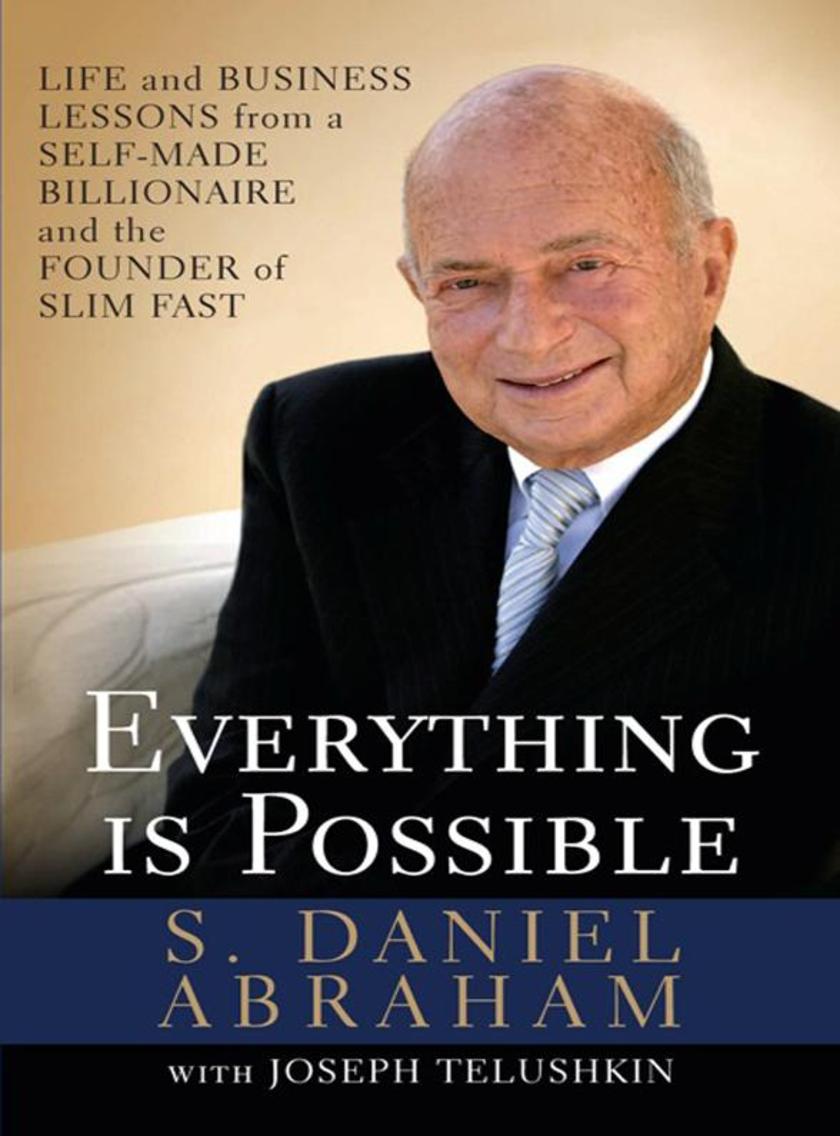
In Everything Is Possible, Dan Abraham, the legendary founder of Slim-Fast, recounts the story of his personal and business life, starting from his childhood and army years and his purchase of Thompson Medical for $5,000 when he was in his early twenties, and culminating in the sale of Slim-Fast for $2.3 billion in 2000. At the heart of Everything Is Possible are 16 life lessons that Abraham has picked up in sixty years of a hard-working business career. Among them: ?There is no such thing as a mistake (see pages 198–202) ?Why I always insured that my suppliers made a profit (see pages 208–9) ?The philosophy of continuous improvement (see pages 202–5) ?If you have a theory and the facts dispute it, drop your theory (pages 205–8) ?The realization that we all have both good and bad luck in our lives, but many of us don't prepare for either (pages 216–9) ?I never saw a man pick a fight with a stronger man (pages 191–5) But this memoir, a brilliant guide for anyone starting and growing a business, is about far more than business. Abraham tells the heartwarming story of growing up in a modest home in Long Beach, New York, and the lessons he learned from his mother, father, and one high school teacher that have guided him ever since. And there is more, much more: a discussion of his beliefs about the pleasure of giving; what he has learned from Judaism about ethics and the Golden Rule; and what he learned from his experiences with the FDA about the importance of compromise and about the necessity to fight hard when you believe you're right. At a time, when newspapers are filled with reports of business fraud and deceptions, and when so many people believe that to have spectacular success in business you have to be ruthless and dishonest, this is an account of a business life that has been lived honorably, passionately, and successfully, and with fun. Everything Is Possible is a book to be savored and shared with young and old alike.
The Millionaire in the Mirror
¥134.46
Learn the keys to Outstanding Success and reveal the millionaire in your mirror Despite never being, as he admits, the best communicator, the most talented manager, or the smartest guy in the room, Gene Bedell quickly worked his way up the corporate ladder accumulating career earnings that put him among the country's top one percent of earners while doing what he loved and always putting family first. By looking at his own career and the careers of others who have achieved Outstanding Success people who all started with nothing he found it was possible for those who put their minds to it to become wealthy while spending their careers doing work they love. Now, in The Millionaire in the Mirror, Bedell reveals how you too can find career fulfillment while earning millions without social connections, an Ivy League education, an MBA, or the kind of earth-shattering managerial talent that makes the world take notice and how you can do it without destroying your personal life, resorting to hucksters' get-rich-quick schemes, or opting out of a traditional career path. Inside you'll find the seven success strategies that will revitalize your days at work, helpful tips for getting "unstuck" at any age or phase of your career, and answers to the crucial career questions that are asked far too infrequently. Approachable but authoritative, this is the book for everyday people who have extraordinary potential. If you have the desire and drive to achieve truly Outstanding Success, you can turn the person you see in the mirror into the millionaire you're destined to become.
Living on the Fault Line
¥152.92
The fault line -- that dangerous, unstable seam in the economy where powerful innovations and savage competition meet and create market-shattering tremors. Every company lives on it; no manager can control it. In the original edition of Living on the Fault Line, Geoffrey Moore presented a compelling argument for using shareholder value (or share price) as the key driver in management decisions. Moore now revisits his argument in the post-Internet bubble world, proving that the methods he espouses are more germane than ever and showing companies how to use them to survive and thrive in today's demanding economy. Extending the themes of Crossing the Chasm and Inside the Tornado, his first two books on the dynamics of the high-tech markets, Moore shows why sensitivity to stock price is the single most important lever for managing in the future, both as a leading indicator of shifts in competitive advantage and as an employee motivator for making necessary changes in organizations heretofore impervious to change. This revised and updated edition includes: A deeper emphasis on core versus context, which has emerged as the key distinction in allocating resources to improve shareholder value A new Competitive Advantage Grid that will aid managers in achieving and sustaining competitive advantage, the most important component in managing for shareholder value An expanded Value Discipline Model as it relates to the Competitive Advantage Grid Analysis of the powerful new trend toward core/context analysis and outsourcing production duties Updated models of organizational change for each stage of market development As disruptive forces continue to buffet the marketplace and rattle the staid practices of the past, Moore offers a brilliant set of navigational tools to help meet today's most compelling management challenges.
Going Wireless
¥151.30
Going Wireless delivers the unexpected by showing how wireless is transforming every type of enterprise from micro-businesses to multi-national conglomerates.Award-winning technology journalist Jaclyn Easton begins with an in-depth look at owning your customers and clients through mobile commerce whether your company focuses on consumers or business-to-business.From there you will learn about the advantages of wirelessly fortifying your mobile workforce of itinerant executives, sales personnel, and field service technicians as well as how wireless is dramatically redefining customer service, marketing, and advertising.Going Wireless also delves deep inside the corporation. First you'll find out why most companies are "handsizing" in addition to deploying wireless technology to rejuvenate warehouses, supply chains, procurement procedures, data collection, competitive intelligence, and much more.The best part is that these scenarios are supported by over 40 brand-name success stories, including: How Sears saves millions by wirelessly enabling 100 percent of their appliance repair technicians; How the Gap proved that by sewing wireless technology in their clothing they could reduce labor distribution costs by 50 percent; How McKessanHBOC a Fortune 40 corporation used mobile technology to entirely eliminate all their manifest imaging costs. While most people associate wireless with cell phones and Palm handhelds, you'll also learn that wireless has been around for over 100 years and has spawned mobile options you've never heard of and is being used in ways you've never imagined.This makes Going Wireless the perfect book for executives and managers who need a comprehensive overview of the wireless options that can make their companies more competitive, more productive, and more profitable.

HarperCollins e-books
¥145.97
The commercial and cultural explosion of the digital age may have been born in California's Silicon Valley, but it reached its high point of riotous, chaotic exuberance in New York City from 1995 to 2000 in the golden age of Silicon Alley. In that short stretch of time a generation of talented, untested twentysomethings deluged the city, launching thousands of new Internet ventures and attracting billions of dollars in investment capital. Many of these young entrepreneurs were entranced by the infinite promise of the new media; others seemed more captivated by the promise of infinite profits. The innovations they launched from online advertising to 24-hour Webcasting propelled both the Internet and the tech-stock boom of the late '90s. And in doing so they sent the city around them into a maelstrom of brainstorming, code-writing, fundraising, drugs, sex, and frenzied hype . . .until April 2000, when the NASDAQ zeppelin finally burst and fell at their feet. In the pages of Digital Hustlers, Alley insiders Casey Kait and Stephen Weiss have captured the excitement and excesses of this remarkable moment in time. Weaving together the voices of more than fifty of the industry's leading characters, this extraordinary oral history offers a ground-zero look at the birth of a new medium. Here are entrepreneurs like Kevin O'Connor of DoubleClick, Fernando Espuelas of StarMedia, and Craig Kanarick of Razorfish; commentators like Omar Wasow of MSNBC and Jason McCabe Calacanis of the Silicon Alley Reporter; and inimitable Alley characters like party diva Courtney Pulitzer and Josh Harris, the clown prince of Pseudo.com. Together they describe a world of sweatshop programmers and paper millionaires, of cocktail-napkin business plans and billion-dollar IPOs, of spectacular successes and flame-outs alike. Candid and open-eyed, bristling with energy and argument, Digital Hustlers is an unforgettable group portrait of a wildly creative culture caught in the headlights of achievement.


